
About Frank Martin
Lived 1890 – 1974 (aged 84). Frank Martin was a Swiss composer, conductor, university teacher, pianist, music educator and librettist.
Frank Théodore Martin (15 September 1890 – 21 November 1974) was a Swiss composer who spent much of his life in the Netherlands.
Childhood and youth Born into a Huguenot family in the Eaux-Vives quarter of Geneva, the youngest of the ten children of a Calvinist pastor named Charles Martin, Frank Martin started to improvise on the piano prior to his formal schooling. At the age of nine he had already written a few songs, without external musical instruction. At age 12, he attended a performance of Bach's St Matthew Passion and was deeply affected by it.
Respecting his parents' wishes, he studied mathematics and physics for two years at Geneva University, but at the same time was also studying piano, composition and harmony with his first music teacher (1864–1953), a Geneva composer and by that time a leading figure of the city's musical scene. In the 1920s, Martin worked closely with Émile Jaques-Dalcroze from whom he learned much about rhythm and musical theory. Between 1918 and 1926 Martin lived in Zürich, Rome and Paris. Compositions of this time show him searching for an authentic musical voice of his own.
In 1926 he established the Chamber Music Society of Geneva, which for the next ten years he conducted, as well as contributing on the clavichord and piano. During this period he also taught music theory and improvisation at the Jaques-Dalcroze Institute, and chamber music at the Geneva Conservatory.
Works Martin's music was often inspired by his Christianity. In this regard, his compositions stemmed from "the individuality rather than universality of his faith ... certainly broader than Calvinism".
Martin based his mature style on his personal variant (first used around 1932) of Arnold Schoenberg's twelve-tone technique, but he did not abandon tonality. Lean textures and habitual rhythmic vehemence distinguish his style from Schoenberg's. Some of Martin's most acclaimed music comes from his last decade. He worked on his last cantata, Et la vie l'emporta, until ten days before his death. Frank Martin died on November 21, 1974, in Naarden. The funeral service was held on December 6 at St. Pierre Cathedral in Geneva. He is buried in Plainpalais Cimetière des Rois.
Martin's music is widely performed in continental Europe, and to a much lesser extent, in the United Kingdom.
Principal works Orchestra Esquisse for orchestra (1920) Rythmes for orchestra (1926) Fox Trot for small orchestra (1927) Guitare for orchestra (1934) Symphonie for orchestra (1936–37) Passacaille for large orchestra (1944/62) Symphonie concertante for orchestra (1944–46) Études for string orchestra (1955–56) Ouverture en hommage à Mozart for orchestra (1956) Les quatre éléments for orchestra (1963–64) Erasmi monumentum for large orchestra and organ (1969)
Concerto Piano Concerto No. 1 (1933–34) Danse de la peur for two pianos and small orchestra (1936) Ballade for alto saxophone or basset horn, string orchestra, piano, timpani and percussion (1938) Ballade for piano and orchestra (1939) Ballade for flute, string orchestra and piano (1939–41) Ballade for trombone or tenor saxophone and small orchestra (1940–41) Petite symphonie concertante for harp, harpsichord, piano and two string orchestras (1944–45) Ballade for violoncello and small orchestra (1949) Concerto for seven wind instruments, timpani, percussion, and string orchestra (1949) Violin Concerto (1950) Concerto for harpsichord and small orchestra (1951–52) Cello Concerto (1965) Piano Concerto No. 2 (1969) Trois danses for oboe, harp, string quintet and string orchestra (1970) Ballade for viola, wind orchestra, harpsichord, harp, timpani and percussion (1972) Polyptyque, for violin and two small string orchestras (1973)
Ballet Das Märchen vom Aschenbrödel (1941)
Chamber Violin Sonata, No. 1 for string quintet (1913) Pavane couleur du temps for string quintet (1920) Piano Quintet (1922) Trio sur des mélodies populaires irlandaises (1925) Violin Sonata No. 2 (1931–32) Rhapsodie for two violins, two violas and double bass (1935) String Trio (1936) Sonata da chiesa for viola d'amore and organ (1938) Ballade for trombone or tenor saxophone and piano (1938) Ballade for flute and piano (1939) Ballade for trombone and piano (1940) String Quartet (1967)
Guitar Quatre pièces brèves (1933) Drey Minnelieder, for soprano, flute and guitar (1960)
Piano Eight Préludes (1947–48) Fantasia on Flamenco Rhythms (1970–73)
Organ Passacaille (1944) Agnus Dei pour orgue (1965/66)
Choral Les Dithyrambes for soloists, chorus and orchestra (1918) Mass for Double Chorus (1922/26) Pilate for soloists, chorus and orchestra (1964) Requiem for soloists, chorus, orchestra and big organ (1971–72) Die Weise von Liebe und Tod des Cornets Christoph Rilke for alto and small orchestra (1942–43) for baritone or alto and orchestra (1943–44) Trois chants de Noël (texts by Albert Rudhardt) (1947) Suite for baritone and orchestra (1952/55) Maria-Triptychon for soprano, violin and orchestra (1967–68) Poèmes de la mort for tenor, baritone, bass and three electric guitars (1969–71) Et la vie l'emporta for alto, baritone, chamber chorus and chamber ensemble (1974)
Opera Der Sturm (1952–55)
Don’t just read it —
keep it.
Full-length biographies made to live with: read them, listen on the way to work, watch them tonight.
- E-book
- Audio
- Video
Instant download · yours to keep · every purchase keeps this site free
Important facts
People in Frank Martin's life
Named in this biography and alive at the same time

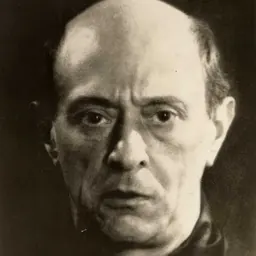
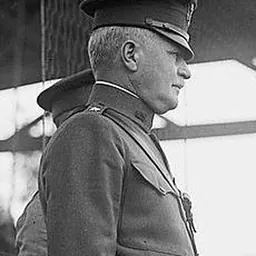
Related people
Same field, nearest in time

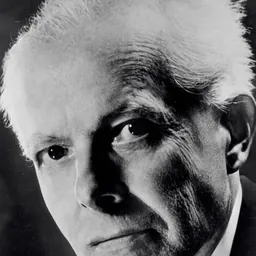

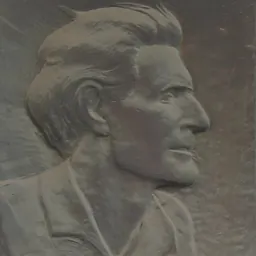


Contemporaries
People whose lives overlapped Frank Martin's



Frequently asked questions
Who was Frank Martin?
Swiss composer (1890–1974)
When was Frank Martin born?
Frank Martin was born on 15 September 1890 in Geneva.
When did Frank Martin die?
Frank Martin died on 21 November 1974 in Naarden.
What was Frank Martin's occupation?
Frank Martin was a composer, conductor, university teacher, pianist, music educator and librettist.
What nationality was Frank Martin?
Frank Martin was Swiss.
Sources & further reading
· DBpedia: Frank Martin (composer)
Cite this page
APA: Biography.guide. (2026). Frank Martin. https://biography.guide/frank-martin-composer/
MLA: "Frank Martin." Biography.guide, https://biography.guide/frank-martin-composer/.
Chicago: "Frank Martin." Biography.guide. https://biography.guide/frank-martin-composer/.
Data last updated: 2026-09-20 · Spot an error? Report a correction.
Page generated 2026-09-27 05:26 UTC