
About Erich Klostermann
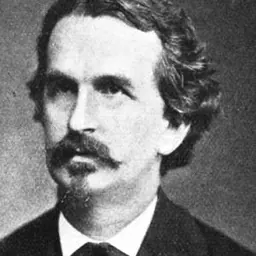
Lived 1870 – 1963 (aged 93). Erich Klostermann was a German theologian, university teacher, classical philologist, cleric and patristic scholar.
Erich Klostermann (14 February 1870 – 18 September 1963) was a German scholar of the New Testament, patristics, and classical philology. He was particularly known for his New Testament commentaries on the gospels of Mark, Matthew, and Luke. He published editions of works of the Church Fathers Eusebius and Origen.
Biography Erich Klostermann was born in Kiel in 1870. His father was the Protestant theologian and Old Testament scholar August Klostermann, a professor at Kiel University. Erich also studied at Kiel, and he received his doctorate in 1892 from the Department of Philology with a dissertation on the Book of Ecclesiastes . He visited Italy for research, but then returned to Germany to further study both theology and Oriental studies. After his doctorate he met with Adolf von Harnack, the most distinguished scholar of patristics of the era, who was able to persuade him to join the Church Fathers Commission of the Prussian Academy of Sciences in Berlin. He worked under both Harnack and historian Theodor Mommsen. In Berlin, he published a series of writings on Origen of Alexandria and Eusebius of Caesarea, as well as translations of their work. These texts were in the series (The Greek Christian Writers of the First Three Centuries). The Berlin Theological Faculty awarded him an honorary licentiate. He completed his habilitation in 1901, and the University of Kiel offered him a position as a lecturer (but not on a tenure track). In 1905, Hans Lietzmann recruited him to work on the (Handbook of the New Testament). He wrote commentaries on Mark (1907), Matthew (1909), and Luke (1919). These commentaries were well-regarded and praised, and stayed in print for some time after Klostermann's death.
In 1907 he was appointed as an associate professor of New Testament and early Christian literature at Kiel. In 1911, he received an honorary doctorate from the University of Jena. He also finally gained a job as a full professor in 1911, at Kaiser-Wilhelm-Universität (the modern University of Strasbourg) in Strassburg, Alsace–Lorraine. During World War I he served as a hospital chaplain in addition to his professorship in Strasbourg. For his work, he received the Red Cross Medal and the Iron Cross, Second Class. At the end of the war in 1918, Alsace was returned to France, and all the German professors were expelled from Strassburg (now Strasbourg). In 1919, he took a job at University of Münster, and in 1923, he moved to the University of Königsberg to teach there.
In 1928, he once again received a full professorship position, this time at Martin Luther University Halle-Wittenberg in Halle (Saale). At Halle he resumed his work on the commentaries, and focused on Origen's commentary on Matthew, taking advantage of the university's extensive collection of patristics which he became the main curator of. After Harnack's death, in 1931 Klostermann became co-editor of (Texts and Studies on the History of Early Christian Literature). Klostermann took emeritus status in 1936. In his retirement, he undertook a new edition of the Homilies of Macarius-Symeon, but he was unable to complete it. After the fall of the Nazi government and subsequent de-Nazification efforts in 1945 removing various compromised staff members, Klostermann was reactivated from retirement to teach again. He continued teaching at Halle until 1954.
Personal life In his personal life, Klostermann married Melania Smugge in 1902. The couple had 2 sons and 1 daughter. While much of the DVNP was eventually co-opted by the Nazi Party (NSDAP), Klostermann was not; he publicly refused to join the NSDAP and financially supported Jewish colleagues who were dismissed from their university jobs after the Nazi rise to power. After 1945, he became a member of the Christian Democratic Union (CDU), a center-right party.
Klostermann's wife Melania died in 1952. Erich Klostermann died in 1963, and was buried in the Protestant cemetery.
Selected works De libri Coheleth versione Alexandrina (on the Book of Ecclesiastes, also known as Qohelet; in Latin) Origenes Werke 3. Band. Jeremiahomilien, Klageliederkommentar, Erklärung der Samuel und Königsbücher. Die griechischen christlichen Schriftsteller der ersten drei Jahrhunderte, Origenes 3. Band. 1901. (translation of works of Origen of Alexandria) Apocrypha Teil I: Reste des Petrusevangeliums, der Petrusapokalypse und des Kerygma Petri (1903) (translations of the Gospel of Peter, Apocalypse of Peter (Akhmim version), and Clementine literature (the Kerygmata Petrou) Eusebius Werke: Das Onomastikon der biblischen Ortsnamen. Die griechischen christlichen Schriftsteller der ersten drei Jahrhunderte, Eusebius Werke Band 3, erste Hälfte, Leipzig 1904. (Translation of works of Eusebius of Caesarea) Eusebius Werke: Gegen Marcell; über die kirchliche Theologie; die Fragmente Marcells. Die griechischen christlichen Schriftsteller der ersten drei Jahrhunderte, Eusebius Werke Band 4, Leipzig 1906. (Translation of works of Eusebius of Caesarea) Das Markusvangelium (1907) Handbuch zum Neuen Testament, Tübingen. (Commentary on the Gospel of Mark) Das Matthäusevangelium (1909) Handbuch zum Neuen Testament, Tübingen. (Commentary on the Gospel of Matthew; 1927 edition linked) Das Lukasevangelium (1919). Handbuch zum Neuen Testament Band II,1 Tübingen. (Commentary on the Gospel of Luke)
Don’t just read it —
keep it.
Full-length biographies made to live with: read them, listen on the way to work, watch them tonight.
- E-book
- Audio
- Video
Instant download · yours to keep · every purchase keeps this site free
Important facts
People in Erich Klostermann's life
Named in this biography and alive at the same time



Related people
Same field, nearest in time
Contemporaries
People whose lives overlapped Erich Klostermann's


Frequently asked questions
Who was Erich Klostermann?
German theologian (1870–1963)
When was Erich Klostermann born?
Erich Klostermann was born on 14 February 1870 in Kiel.
When did Erich Klostermann die?
Erich Klostermann died on 18 September 1963 in Halle (Saale).
What was Erich Klostermann's occupation?
Erich Klostermann was a theologian, university teacher, classical philologist, cleric and patristic scholar.
What nationality was Erich Klostermann?
Erich Klostermann was German.
Sources & further reading
· Wikipedia: Erich Klostermann
Cite this page
APA: Biography.guide. (2026). Erich Klostermann. https://biography.guide/erich-klostermann/
MLA: "Erich Klostermann." Biography.guide, https://biography.guide/erich-klostermann/.
Chicago: "Erich Klostermann." Biography.guide. https://biography.guide/erich-klostermann/.
Data last updated: 2026-09-20 · Spot an error? Report a correction.
Page generated 2026-09-27 05:16 UTC