
Erich Kettelhut
Production designer, Art director, Set decorator
About Erich Kettelhut
Lived 1893 – 1979 (aged 85). Erich Kettelhut was a German art director, production designer, artist and set decorator.
Erich Karl Heinrich Kettelhut (1 November 1893 – 13 March 1979) was a German production designer, art director and set decorator. Kettelhut is considered one of the most important artists in the history of early German cinema, mainly for his set direction for Die Nibelungen and his design and visual effects for Metropolis (1927). His early career was defined by a working relationship with fellow designers Otto Hunte and Karl Vollbrecht, the trio working on many of Fritz Lang's early German films. Despite being best known for his iconic visuals on several of the most important films of German Expressionist cinema, he is also noted for a career spanning into the 1960s and his work on more light-hearted films and musicals.
Career
Early career Kettelhut was born in Berlin in 1893. After leaving school, he received training at a craft school as a theatre artist. In 1909 he first met Otto Hunte, when they were placed in charge of art direction at the Aachen's Stadttheater.
Lang, Hunte and Vollbrecht, 1919–1926 Kettelhut was first employed in cinema for May Film's 1919 production Die Herrin der Welt (The Mistress of the World), an eight-part epic of German cinema. Kettelhut was employed as a production designer on all eight parts and is also credited as a set decorator on the first part. It is on this film that he was re-united with Otto Hunte, to whom he worked as an assistant, and Karl Vollbrecht. Both of whom would work on many films with Kettelhut in the future. Also employed on The Mistress of the World, but as a writer, was Fritz Lang. Kettelhut worked as an assistant to Jacoby-Boy on two further pictures in 1920, the first being Das wandernde Bild (The Moving Image), in which Kettelhut was first introduced to Lang who was directing the film. After producing designs on both parts of 1921's The Indian Tomb, Kettelhut was hired to work on Lang's Dr. Mabuse the Gambler (1922), where he was reunited with Hunte and Vollbrecht. Kettelhut's design work for the mechanical dragon from Die Nibelungen:Siegfried, showing his technical detail and cramped style. In 1924, Kettelhut worked on one of his most important films, Die Nibelungen. With Lang again as director, he reassembled the team of Hunte, Vollbrecht and Kettelhut, charged with designing the mythical world of Siegfried and the Nibelungen. Hunte was placed in charge of set design and construction, while Kettelhut and Vollbrecht assisted as set collaborators, though Kettelhut's speciality was in architectural designs and models. Kettelhut not only created the architectural feel of the film, designing the buildings such as the Icelandic castle surrounded by fire from Part I, but he was also heavily involved in designing more mechanical elements, most notably the life-sized dragon slayed by Siegfried. Die Nibelungen brought Kettelhut into a working relationship with cameraman Günther Rittau. The two worked together several times in the future, but their most impressive collaboration was on their next Fritz Lang film, Metropolis (1927). Kettelhut's drawing's originally featured a large Gothic cathedral style building amongst the skyscrapers, but this was rejected by Lang who had visions of a city which had rejected religion and instead had built a 'Tower of Babel'. Rittau and Kettelhut worked closely, not only to realise Lang's vision, but also on early special effects to bring the enormity of the city to life. Kettelhut's is credited with the positions of Art Direction and Art Department on Metropolis, but also undertook several uncredited roles, including special effects, visual effects and technical consultant.
Hunte and Kettelhut's work during this period is often discussed as a shared output with the two men holding the same design ideology. When they were interviewed to discuss their creations, they would discuss the architectural or mechanical features of their design rather than the artistic. Unlike their contemporaries, Robert Herlth (Faust) and Walter Reimann (The Cabinet of Dr. Caligari), Hunte and Kettelhut preferred to approach a challenge by looking at the economic restrictions and technical difficulties to ensure they did not hit problems at construction. Herlth and Reimann were more concerned with the look and artistic design and encouraged on-set improvisation to overcome technical issues.
After Lang, 1927–1932 After Metropolis, Kettelhut, Hunte and Vollbrecht went their own ways. This allowed Kettelhut to come to the fore as a designer, and from this point he was normally the lead designer in the films he worked on, mainly for UFA. One of Kettelhut's first solo projects was an uncredited role as art director for Walter Ruttmann's documentary Berlin: Die Sinfonie der Großstadt (Berlin: Symphony of a Metropolis). To maintain the integrity of the documentary, Kettelhut hid and sheltered the cameras around the city to allow them to capture the citizens of Berlin without interruption. The street design was originally given to Herlth, but he resigned after falling out with the director; but Herlth's original vision influenced Kettelhut's final design. Examples of this involving Kettelhut include: Bombs on Monte Carlo (German), Le capitaine Craddock (French) and Monte Carlo Madness (English). Of the films Kettelhut contributed during this period, of note from a design context, is 1932's F.P.1 antwortet nicht (also shot as I.F.1 ne répond plus (French version) and F.P.1 (English version)). This science-fiction film centered around a mid-Atlantic aircraft landing platform, which was designed by Kettelhut. He continued to work throughout Germany, being employed by studios in Munich, Hamburg and Berlin. Kettelhut at first found himself designing sets for films similar to those he had been working on during the 1940s, with another Georg Jacoby musical Sensation in San Remo (1951), starring Marika Rökk. He also teamed up with actor Gustav Fröhlich, on one of Fröhlich's few forays into directing, the drama Torreani. In 1954 he found work again with his former boss Erich Pommer who had returned from self-imposed exile in the United States. They made two final films together Eine Liebesgeschichte (1954) and Kinder, Mütter und ein General (Children, Mother, and the General) which became one of the five pictures selected as best foreign film at the 1955 Golden Globe Awards.
In the mid-1950s, Kettelhut found himself in constant demand, working on three or four films a year. In 1955, as well as Kinder, Mütter und ein General he also acted as production designer on Drei Mädels vom Rhein, Drei Tage Mittelarrest and Eine Frau genügt nicht?. In the late 1950s, Kettelhut contributed outstanding design sets to two submarine dramas, the sympathetic anti-war tale (Sharks and Little Fish) and the loose biographical film U 47 – Kapitänleutnant Prien.
With his career in film behind him, Kettelhut found work in the emerging television industry. He provided art direction for the television movies Geschichte einer Geschichte (1963) Das Feuerzeichen (1965) and Schwarzer Freitag (Black Friday) and the short lived 1963 television comedy series Die merkwürdigen Erlebnisse des Hansjürgen Weidlich.
Filmography 1919: Die Herrin der Welt (The Mistress of the World) (All eight parts) 1920: Das wandernde Bild (The Moving Image)A 1920: Die Legende von der heiligen SimpliciaA 1920: Die Schuld der Lavinia Morland 1921: Das indische Grabmal (The Indian Tomb) (uncredited - both parts) 1922: Dr. Mabuse, der Spieler (Dr. Mabuse the Gambler) 1923: Tragödie der Liebe (Tragedy of Love) 1923: Der steinerne Reiter (The Stone Rider)S 1924: Die Nibelungen (both parts)S 1926: MetropolisA 1927: Berlin: Die Sinfonie der Großstadt (Berlin: Symphony of a Metropolis) 1927: Out of the Mist 1927: Dancing Vienna 1928: Doña Juana 1928: Hungarian Rhapsody ' 1929: Asphalt 1929: Fräulein Else (Miss Else) 1929: Melodie des Herzens (Melody of the Heart) 1930: Waltz of Love 1930: Liebling der Götter 1930: Burglars 1931: Ihre Majestät die Liebe 1931: Caught in the Act 1931: Her Grace Commands 1931: Princess, At Your Orders! 1931: Voruntersuchung (Inquest) 1931: About an Inquest 1931: His Highness Love 1931: Bombs on Monte Carlo 1931: Son altesse l'amour (His Highness Love) 1931: Le capitaine Craddock 1932: Monte Carlo Madness 1932: Happy Ever After 1932: Un rêve blond 1932: Stürme der Leidenschaft 1932: Tumultes 1932: Quick 1932: Quick 1932: A Blonde Dream 1932: Le vainqueur 1932: F.P.1 antwortet nicht 1932: I.F.1 ne répond plus 1932: F.P.1 1933: Kind, ich freu' mich auf Dein Kommen 1933: Happy Days in Aranjuez 1933: Young Dessau's Great Love 1934: Die Töchter ihrer Exzellenz 1934: The Girlfriend of a Big Man 1934: Fürst Woronzeff 1934: Playing with Fire 1935: Schwarze Rosen (Black Roses) 1935: Fresh Wind from Canada 1936: SchlußakkordS 1936: Glückskinder (Lucky Kids) 1937: Fanny Elssler 1937: Gasparone 1938: Nanon 1938: Fortsetzung folgt 1939: Hallo Janine! (Hello Janine!) 1939: Der grüne Kaiser (The Green Emperor) 1939: Der Vorhang fällt (The Curtain Falls) 1940: Kora Terry 1941: Frauen sind doch bessere Diplomaten (Women Are Better Diplomats) 1942: Diesel 1942: Der 5. Juni 1943: Du gehörst zu mir 1944: Das schwarze Schaf 1944: Die Frau meiner Träume (The Woman of My Dreams) 1945: The Noltenius Brothers 1948: Journey to Happiness 1950: Drei Mädchen spinnen (Three Girls Spinning) 1951: Sensation in San Remo 1951: Torreani 1951: Die Czardasfürstin (The Csardas Princess) 1952: Pension Schöller 1953: Mask in Blue 1953: Die Rose von Stambul (The Rose of Stamboul) 1953: Der Vetter aus Dingsda 1953: Red Roses, Red Lips, Red Wine 1954: Eine Liebesgeschichte (A Love Story) 1954: Gefangene der Liebe (Prisoners of Love) 1955: Three Girls from the Rhine 1955: Kinder, Mütter und ein General (Children, Mother, and the General) 1955: Three Days Confined to Barracks 1956: Das Mädchen Marion 1956: Nina 1957: (Sharks and Little Fish) 1957: Von allen geliebt 1957: Made in Germany 1958: Gestehen Sie, Dr. Corda! 1958: U 47 – Kapitänleutnant Prien 1959: Marili 1959: Bobby Dodd greift ein 1959: Der Mann, der sich verkaufte (The Man Who Sold Himself) 1960: Storm in a Water Glass 1960: Until Money Departs You 1960: Die 1000 Augen des Dr. Mabuse (The 1000 Eyes of Dr. Mabuse)
Key: As art director; As production designer; S As set decorator; A Art department
Don’t just read it —
keep it.
Full-length biographies made to live with: read them, listen on the way to work, watch them tonight.
- E-book
- Audio
- Video
Instant download · yours to keep · every purchase keeps this site free
Important facts
Family & relationships
People in Erich Kettelhut's life
Named in this biography and alive at the same time

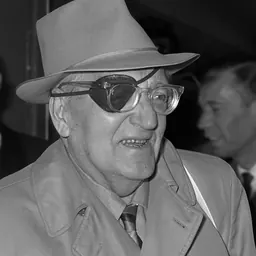


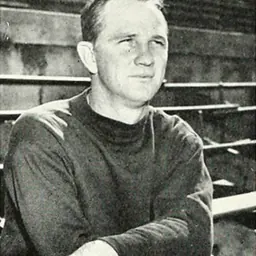
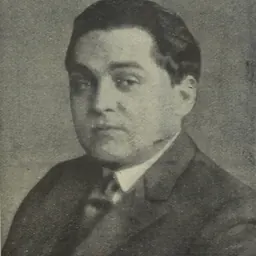

Related people
Same field, nearest in time

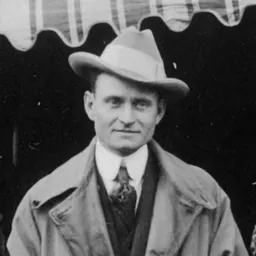



Contemporaries
People whose lives overlapped Erich Kettelhut's

Frequently asked questions
Who was Erich Kettelhut?
Production designer, Art director, Set decorator (1893–1979)
When was Erich Kettelhut born?
Erich Kettelhut was born on 1 November 1893 in Berlin.
When did Erich Kettelhut die?
Erich Kettelhut died on 13 March 1979 in Hamburg.
What was Erich Kettelhut's occupation?
Erich Kettelhut was an art director, production designer, artist and set decorator.
What nationality was Erich Kettelhut?
Erich Kettelhut was German.
Sources & further reading
Cite this page
APA: Biography.guide. (2026). Erich Kettelhut. https://biography.guide/erich-kettelhut/
MLA: "Erich Kettelhut." Biography.guide, https://biography.guide/erich-kettelhut/.
Chicago: "Erich Kettelhut." Biography.guide. https://biography.guide/erich-kettelhut/.
Data last updated: 2026-09-22 · Spot an error? Report a correction.
Page generated 2026-09-27 05:33 UTC