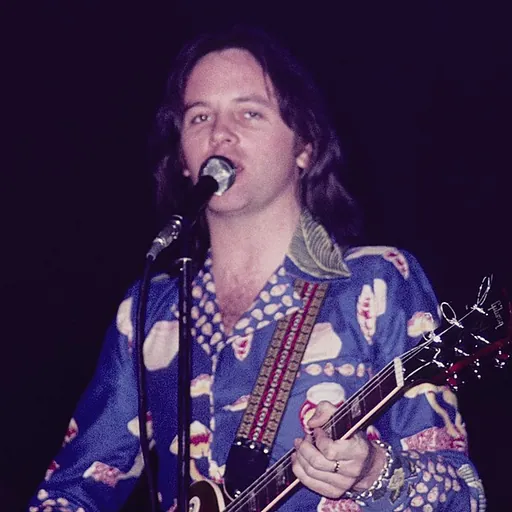
About Eric Stewart
Born 1945. Eric Stewart is a British singer-songwriter, musician, composer, singer and record producer.
Eric Michael Stewart (born 20 January 1945) is an English singer-songwriter, multi-instrumentalist and record producer, best known as a founding member of the rock groups the Mindbenders with whom he played from 1963 to 1968, and likewise of 10cc from 1972 to 1995. Stewart co-owned Strawberry Studios in Stockport, England, from 1968 to the early 1980s, where he recorded albums with 10cc and artists including Neil Sedaka and Paul McCartney. Stewart collaborated with McCartney extensively in the 1980s, playing on or co-writing songs for McCartney's solo albums Tug of War, Pipes of Peace (1983), Give My Regards to Broad Street (1984), and Press to Play (1986). Since 1980, Stewart has released four solo studio albums.
Career
Early-mid 1960s: The Mindbenders Eric Stewart was born 20 January 1945 in Droylsden, a housing overflow area for neighbouring Manchester, and now part of Greater Manchester. Around 1960, he joined local band Jerry Lee and the Staggerlees, which after a year changed its name to the Emperors of Rhythm. Stewart remained with the band for two years and was at the Oasis club in Manchester in early 1963 on the evening that Wayne Fontana had an audition with a record company representative. Fontana's drummer and guitarist did not turn up for the audition, and Fontana asked Stewart and drummer Ric Rothwell if they would 'sit in' for the audition. After a few minutes' rehearsal, the quartet played three well known songs of the time. Fontana was offered a record deal on condition that the musicians who played at the audition formed the band.
Fontana's band was called The Jets, but due to an existing band using the name, an alternative name had to be sought – it was decided that the band would take the name "The Mindbenders", which was the name of a film on release at the time – Wayne Fontana and the Mindbenders then came into being. The band initially played rhythm and blues relying on outside material; however, Stewart and Fontana co-wrote several songs during that period: "Since You've Been Gone" (with bassist Bob Lang), the B-side of the band's sixth single "The Game of Love" (April 1965), which hit No. 2 in the UK and No. 1 in the US, "One More Time" and "Long Time Comin'", the latter B-side of "It's Just a Little Bit Too Late" (June 1965).
The band toured the US with Herman's Hermits in July and August 1965, producing wild scenes Stewart compared with Beatlemania. "The hotels we stayed in were under constant guard by security people and there were always girls waiting outside in the hundreds", he recalled. "They were always yanking off my glasses and pulling out tufts of hair, which was very, very painful." The Mindbenders split with Fontana in late 1965 and continued with a successful UK and US No. 2 hit "A Groovy Kind of Love" in early 1966 with Stewart on vocals. They reached the top 20 later that year with "Ashes To Ashes". Stewart was also devoting more time to songwriting having written several B-sides ("Love Is Good", "My New Day and Age", "Yellow Brick Road", "The Man Who Loved Trees") and album tracks ("You Don't Know About Love", "The Morning After", "Rockin' Jaybee", the latter written with band members Bob Lang and Ric Rothwell). The group appeared in the 1967 film To Sir, with Love. Stewart became disenchanted with the Mindbenders towards the end of its existence, realising the material they were playing was drifting further from the music for which they had gained chart success.
"Because of the sort of records we'd had, everyone thought of us as a sort of ballads group, but we really weren't like that at all. I think we were probably the first of the three-piece heavy groups – but the sort of music we preferred to play was totally unacceptable to the sort of people who were prepared to book the Mindbenders", he said.
Within months the pair were joined by a further investor – songwriter and former Mindbenders bassist Graham Gouldman, who injected a further £2000. In mid-1969 Stewart and Gouldman began working with two other musicians, Lol Creme and Kevin Godley, on a project that rock manager and entrepreneur Giorgio Gomelsky was developing for his Marmalade Records label. Gomelsky was impressed with songs Godley and Creme had written and was planning to market them as a duo. Stewart was invited to play lead guitar at one session and he and Gouldman soon began offering the pair regular session work at Strawberry. (One single, "I'm Beside Myself" b/w "Animal Song" was issued under the name of Frabjoy and Runcible Spoon, plus two tracks on the Marmalade LP sampler 100 Proof issued under the names of Kevin & Lol and Graham Gouldman, before Marmalade closed its doors).
In December 1969, a deal was struck with the American record producers Jerry Kasenetz and Jeffry Katz of Super K Productions, to book the studios solidly for three months to record bubblegum songs, using the talents of Gouldman, Stewart, Godley and Creme.
In 2025, Gouldman said that the pair have not seen one another for decades. Godley does not speak to Stewart, but Creme and Stewart maintain a relationship of sorts, as both men are married to a pair of sisters.
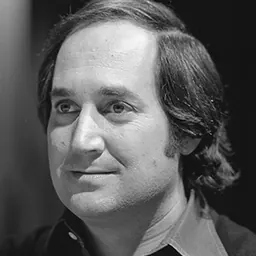
Beyond 10cc Stewart has engineered and/or produced albums recorded in Strawberry Studios including artists like Ramases (Space Hymns, 1971), Neil Sedaka (Solitaire, 1972, The Tra-La Days Are Over, 1973) and Justin Hayward and John Lodge (Blue Jays, 1975).
Stewart released two solo albums sandwiched between 10cc's 1980s output – Girls (1980) and Frooty Rooties (1982).
After 10cc split, Stewart continued his career as a producer and worked with Sad Café (Facades, 1979, Sad Café, 1980) and Agnetha Fältskog (Eyes of a Woman, 1985).
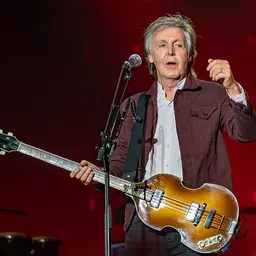
Stewart became involved with Paul McCartney from the early 1980s. He played on three of McCartney's albums (Tug of War, Pipes of Peace and Give My Regards to Broad Street), took part in the "Take It Away" and "So Bad" music videos as well as the Give My Regards to Broad Street film. Later Stewart started writing music together with McCartney which eventually led to Stewart co-writing more than half of Paul McCartney's Press to Play. Stewart's original role was also planned as a producer but during the early stages of work on the album he was replaced by Hugh Padgham, the choice he would later criticise. Padgham acknowledged their differences in 2024, "I remember it in a different way to Eric, and I kind of regret the way he talks about me. I had mucho respect for him, because I grew up listening to 10cc."
From 1990, Stewart began to participate as a guest vocalist on the last The Alan Parsons Project album Freudiana (1990) and later on Parsons' Try Anything Once (1993) and On Air (1996). Stewart reflected:
In 2000s, Stewart returned to recording solo albums with Do Not Bend (2003), while his fourth solo album, Viva la Difference, was originally planned to come out in 2007, but delayed until 2009.
In 2017, Stewart released his autobiography titled The Things I Do for Love as an iOS ebook.
Don’t just read it —
keep it.
Full-length biographies made to live with: read them, listen on the way to work, watch them tonight.
- E-book
- Audio
- Video
Instant download · yours to keep · every purchase keeps this site free
Important facts
People in Eric Stewart's life
Named in this biography and alive at the same time




Related people
Same field, nearest in time



Contemporaries
People whose lives overlapped Eric Stewart's




Frequently asked questions
Who is Eric Stewart?
British musician
When was Eric Stewart born?
Eric Stewart was born on 20 January 1945 in Droylsden.
What is Eric Stewart's occupation?
Eric Stewart is a singer-songwriter, musician, composer, singer and record producer.
What nationality is Eric Stewart?
Eric Stewart is British.
Sources & further reading
Cite this page
APA: Biography.guide. (2026). Eric Stewart. https://biography.guide/eric-stewart-singer-songwriter/
MLA: "Eric Stewart." Biography.guide, https://biography.guide/eric-stewart-singer-songwriter/.
Chicago: "Eric Stewart." Biography.guide. https://biography.guide/eric-stewart-singer-songwriter/.
Data last updated: 2026-09-24 · Spot an error? Report a correction.
Portrait: Wikimedia Commons · author & licence
Page generated 2026-09-27 05:09 UTC