
About Epes Sargent
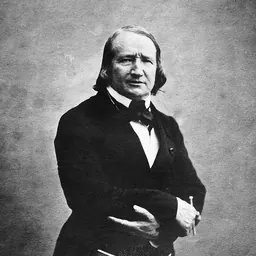
Lived 1813 – 1880 (aged 67). Epes Sargent was an American writer, journalist and poet.
Epes Sargent (September 27, 1813– December 30, 1880) was an American editor, poet and playwright.
Early life Epes Sargent was the son of Epes Sargent (1784–1853) and Hannah Dane Coffin (1787–1819), and was born in Gloucester, Massachusetts, on September 27, 1813, where his father was a ship master. In 1818 the family moved to Roxbury, Massachusetts. From 1823 to 1829 he attended the Boston Latin School, but his education was put on hold while he traveled for six months to Saint Petersburg, Russia with his father. Upon his return he helped start the school's first literary journal, where he wrote about his travels to Russia. He then attended Harvard University where he contributed to the Harvard Collegian, a college literary journal which was started by his older brother, John Osborn Sargent (1811–1891), who became a successful politician and journalist.
Career
By 1831 he was working as an editor for the Boston Daily Advertiser. He then went to work editing the Boston Daily Atlas where he also served as its Washington D.C. correspondent. While reporting political affairs he became friends with Henry Clay, Daniel Webster and John C. Calhoun. During this time he also collaborated with Samuel Griswold Goodrich, writing the Peter Parley books, which embellished the biographies of our founding fathers with "fancy and legend".
Sargent's first play, The Bride of Genoa, premiered at Boston's Tremont Theatre on February 13, 1837, with a lead role written for American actress Josephine Clifton. Set in Genoa in 1593, the play was based on the historical Antonio Montaldo, a commoner who falls in love with the daughter of a nobleman named Laura Catelli, a role given to Charlotte Cushman when it played at the Park Theater in New York in November. In 1837, he wrote the tragedy Velasco for British actress Ellen Tree. It was produced in several theaters in the United States and had moderate success in London. Velasco was critically admired by playwright Thomas Talfourd Around this time, Sargent wrote the words to the song, "A Life on the Ocean Wave".
In 1839, Sargent moved to New York where he was associated with a succession of newspapers and magazines. He was first hired by George Pope Morris to edit the New York Mirror. Eventually he left the Mirror and went to work for Park Benjamin, Sr. as the editor of The New World. He published a biography on Henry Clay in 1842 and in 1843 started his own, short-lived, literary magazine, Sargent's New Monthly Magazine. In 1844 his collection The Light of the Lighthouse and Other Poems was published and then in 1845, he published his first novel, Fleetwood, or the Stain of Birth, a novel about American life.
Later years Sargent was a very respected literary figure by the time he returned to Boston in 1847, when he became editor to The Boston Evening Transcript. It was noted that under his care the newspaper "showed an increasing tenderness toward the Abolitionists". He continued to publish poems, fiction and dramas prodigiously.
Sargent became captivated with the notion of communicating with "the beyond". He hosted many séances, and philosophical discussions. He published Planchette, or the Despair of Science (1869), The Proof Palpable of Immortality (1875), and The Scientific Basis of Spiritualism (1880).
His monumental book, Harper's Cyclopaedia of British and American Poets (1881), was not published until after his death. Sargent died in Boston from oral cancer on December 30, 1880.
Works The Bride of Genoa (1836) Velasco: A Tragedy in Five Acts (1839) Wealth and Worth: or, Which Makes the Man? (1842) The Light of the Lighthouse and Other Poems (1844) Fleetwood, or the Stain of Birth (1845) Songs of the Sea and Other Poems (1847) The Life and Services of Henry Clay (1848) Poems (1858) Peculiar: A Tale of the Great Transition (1864) Planchette, or the Despair of Science (1869) The Woman Who Dared (1870) The Proof Palpable of Immortality (1875) The Scientific Basis of Spiritualism (1880) Harper's Cyclopaedia of British and American Poets (1881) The Scientific Basis of Spiritualism (1891)
Don’t just read it —
keep it.
Full-length biographies made to live with: read them, listen on the way to work, watch them tonight.
- E-book
- Audio
- Video
Instant download · yours to keep · every purchase keeps this site free
Important facts
People in Epes Sargent's life
Named in this biography and alive at the same time






Related people
Same field, nearest in time

Contemporaries
People whose lives overlapped Epes Sargent's




Frequently asked questions
Who was Epes Sargent?
American editor, poet and playwright (1813-1880)
When was Epes Sargent born?
Epes Sargent was born on 24 September 1813 in United States.
When did Epes Sargent die?
Epes Sargent died on 30 December 1880 in Boston.
What was Epes Sargent's occupation?
Epes Sargent was a writer, journalist and poet.
What nationality was Epes Sargent?
Epes Sargent was American.
Sources & further reading
· DBpedia: Epes Sargent (poet)
Cite this page
APA: Biography.guide. (2026). Epes Sargent. https://biography.guide/epes-sargent-writer/
MLA: "Epes Sargent." Biography.guide, https://biography.guide/epes-sargent-writer/.
Chicago: "Epes Sargent." Biography.guide. https://biography.guide/epes-sargent-writer/.
Data last updated: 2026-09-20 · Spot an error? Report a correction.
Page generated 2026-09-27 05:20 UTC