
About Enrique Alvear Urrutia
Lived 1916 – 1982 (aged 66). Enrique Alvear Urrutia was a Chilean catholic priest and catholic bishop.
Enrique Alvear Urrutia (31 January 1916 – 29 April 1982) was a Chilean Roman Catholic prelate who served as the Bishop of San Felipe from 1965 until 1974 when he was made one of the two auxiliaries for the Santiago de Chile archdiocese. He was a vocal critic during the dictatorship of Augusto Pinochet and braved potential detention and death threats to condemn human rights abuses and other atrocities the regime undertook.
The process for his potential beatification opened in 2012 and he is titled as a Servant of God. He has also been referred to as the "bishop of the poor" for his dedication to the poor and oppressed.
Life Enrique Alvear Urrutia was born on 31 January 1916 in Cauquenes in Chile as the eighth of eleven brothers to Clorindo Alvear Zurita and Teodorinda Urrutia Pérez.
He spent his education first in his hometown and then in the Luis Campino Humanities Institute before he pursued a law degree from 1934 in the Pontifica Universidad Católica de Chile. In one spiritual retreat of Monsignor Carlos Casanueva Opazo he discovered his call to the priesthood and he began his ecclesial studies.
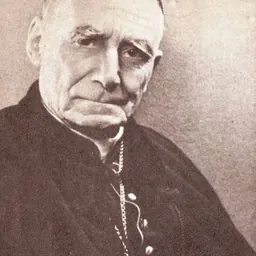
He received his ordination to the priesthood in the Santiago Cathedral on 20 September 1941 from José María Caro Rodríguez and then started pastoral work in archdiocese. He was engaged in an active apostolate in parishes, in Catholic Action, in catechism and in the popular missions. He was a professor on the faculty of Theology of the Catholic University in addition to being a spiritual director for seminarians. " In 1961 he was appointed Vicar General of Santiago.
Bishop At the request of Bishop Manuel Larraín Errazuriz, Pope John XXIII appointed him in 1963 as a bishop assigned as one of the auxiliaries for the Talca diocese while making him the Titular Bishop of Columnata. He received his episcopal consecration at the Basilica of Lourdes a month after the appointment from Raúl Silva Henríquez; the co-consecrators were Manuel Larraín Errazuriz and Eladio Vicuña Aránquiz. He chose as his motto "The Lord sent me to evangelize the poor".
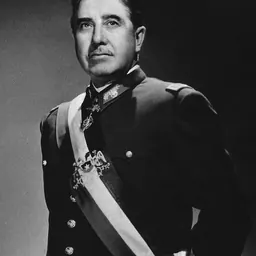
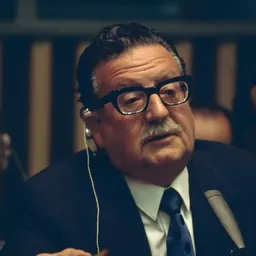
He opposed human rights abuses during the Pinochet dictatorship and defended the regime's victims all the while braving potential detention and death threats. In the evening on 11 September 1973 - against the advice of his aides - he went to prisons to inquire about people who were rounded up in a wave of arrests as part of Pinochet's coup against the sitting President Salvador Allende. There was also one occasion where bombs were placed in his office in a failed attempt to intimidate him into silence. "There are multiple documents, letters, homilies, and reflections found in the Documentation and Archive Center of the Vicariate of Solidarity and that express his particular form of courage and serenity when defending the persecuted." He later became involved with the Episcopal Conference of Latin America and the Caribbean.
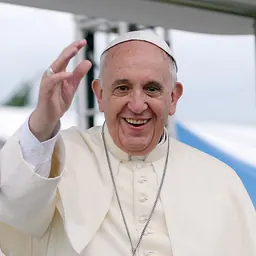
He died of lymphoma on 29 April 1982 and his remains were interred in the Marian shrine Nuestra Señora de Lourdes in Quinta Normal until their transferral on 13 April 2008 to the San Luis Beltrán church. Pope Francis - during his trip to Chile in 2018 - made an unscheduled visit to the late bishop's tomb for some brief moments of reflection.
Beatification process Alvear's documentation and teachings are preserved by the Bishop Enrique Alvear Foundation. The beatification process was initiated in the Santiago archdiocese; initial steps towards opening the cause came on 16 December 2011 when the then-Archbishop (now cardinal) Ricardo Ezzati Andrello named the Enrique Alvear Urrutia Foundation as the official actor for promoting the cause. Ezzati later inaugurated the diocesan phase for the cause on 9 March 2012 and closed it later on 3 December 2014; during 2013 the Congregation for the Causes of Saints declared "nihil obstat" (no objections) to the cause.
The current postulator for the cause is the Jesuit priest Pascual Cebollada Silvestre.
Notes and references
Don’t just read it —
keep it.
Full-length biographies made to live with: read them, listen on the way to work, watch them tonight.
- E-book
- Audio
- Video
Instant download · yours to keep · every purchase keeps this site free
Important facts
People in Enrique Alvear Urrutia's life
Named in this biography and alive at the same time


Related people
Same field, nearest in time


Contemporaries
People whose lives overlapped Enrique Alvear Urrutia's



Frequently asked questions
Who was Enrique Alvear Urrutia?
Priest and bishop (1916-1982)
When was Enrique Alvear Urrutia born?
Enrique Alvear Urrutia was born on 29 January 1916 in Cauquenes.
When did Enrique Alvear Urrutia die?
Enrique Alvear Urrutia died on 29 April 1982 in Santiago.
What was Enrique Alvear Urrutia's occupation?
Enrique Alvear Urrutia was a catholic priest and catholic bishop.
What nationality was Enrique Alvear Urrutia?
Enrique Alvear Urrutia was Chilean.
Sources & further reading
· Wikipedia: Enrique Alvear Urrutia
· DBpedia: Enrique Alvear Urrutia
Cite this page
APA: Biography.guide. (2026). Enrique Alvear Urrutia. https://biography.guide/enrique-alvear-urrutia/
MLA: "Enrique Alvear Urrutia." Biography.guide, https://biography.guide/enrique-alvear-urrutia/.
Chicago: "Enrique Alvear Urrutia." Biography.guide. https://biography.guide/enrique-alvear-urrutia/.
Data last updated: 2026-09-20 · Spot an error? Report a correction.
Page generated 2026-09-27 05:19 UTC