
About Endel Ruberg
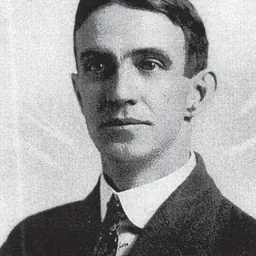
Lived 1917 – 1989 (aged 72). Endel Ruberg was an Estonian and Canadian painter, partisan and artist.
Endel Ruberg (21 May 1917 – 29 December 1989) was an Estonian-Canadian artist, naturalist, and humanitarian. He is best known for his leather and watercolour artwork as well as his volunteer work with children.
Biography Endel Ruberg in 1989 wearing his medals while discussing his artwork. Inset shows detailed view of medals.
Endel Ruberg was born in Virumaa, Estonia. After the Soviet invasion and occupation of Estonia, Ruberg became a member of the Forest Brothers and fought against the Soviets. In 1941, he fled to Finland and participated in the Continuation War as part of the soomepoisid; a unit in the Finnish army during World War II made up mostly of Estonian volunteers, who preferred to fight against the Soviet Union in the ranks of the Finnish army instead of the armed forces of Germany. He was severely wounded in action in 1942. In August 1944, he returned to Estonia to fight against the advancing Red Army. In September 1944, fled by boat across the sea to Sweden. In 1951 he emigrated from Sweden to Canada. He died in 1989 in Stockholm, Sweden while on holiday.
Leather art
Leather relief technique Ruberg created leather artwork in low relief using traditional leather tooling methods and in high relief using a technique he developed himself. The high relief technique relies on applying a homemade paste to the reverse side of a leather piece for support, and then wrinkling, twisting, squeezing the front side to form three-dimensional shapes.
Direct contact with nature Ruberg worked mostly in the forest of the Laurentian Mountains of Quebec, in direct contact with nature. He valued the freedom and simplicity of nature, and felt that working outdoors was more inspiring and truthful to his art. The film critic Natalie Edwards, in reviewing the documentary Ruberg, describes Ruberg's austere work environment as complementing his simple philosophy of life: … the bird sounds, forest sights, rustic life, and devotion to nature create an atmosphere at one with the artist … we listen with openness to the simple unsophisticated beliefs of Ruberg as he speaks of the greater artistic value resulting from the simpler and more primitive handling of the work.
Themes Võitlus idatuulega, leather in high relief, 55.0cm x 60.0cm. Collection of Kembi Talu. Resilience in the face of adversity is a unifying theme in Ruberg's artwork. The objects of nature, such as trees and rocks, which must endure the harsh forces of weather are personified by Ruberg. He believed that "Every rock has its own face, its own attraction. Rocks are symbols of character. God has filled them with his teachings." The akvarelli külmutustehnika relies on painting outdoors during winter, allowing the cold air to condense and crystallize the watercolour paints as they dry. In those cold working conditions Ruberg painted with urgency, his brushwork displaying a fluid and spontaneous style. The akvarelli külmutustehnika introduces unpredictable geometric patterns, which appear as dendrite formations, needle-like structures, and arrow-like patterns depending on the wind conditions. Ruberg intentionally wanted the natural environment to contribute to his artwork, to enhance the atmospheric quality of the work and to establish a collaboration between artist and nature. giving them opportunities to paint and work in leather under his guidance. He also volunteered for three years to help blind and disabled children and guide teachers at the Mackay Centre School in Montreal. On art education, Ruberg said I am there for guidance and assistance. Perhaps most important of all is encouragement. The young get discouraged easily. The finished [art] work is good incentive. Through early achievement comes patience and eventually maturity.
Endel Ruberg fervently supported an end to Soviet occupation in Estonia. During the 1985 Canadian Ski Marathon he distributed informational material advocating 'Freedom for Estonia!' At times his activism led to mild controversies, such as when his Boy Scout troop was barred from exhibiting at Expo 67 due to Ruberg's distribution of anti-Soviet "propaganda". Ruberg died before the Dissolution of the Soviet Union and the restoration of independence to Estonia.
Don’t just read it —
keep it.
Full-length biographies made to live with: read them, listen on the way to work, watch them tonight.
- E-book
- Audio
- Video
Instant download · yours to keep · every purchase keeps this site free
Important facts
People in Endel Ruberg's life
Named in this biography and alive at the same time

Related people
Same field, nearest in time

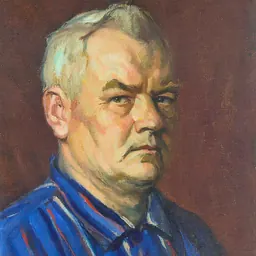
Contemporaries
People whose lives overlapped Endel Ruberg's


Frequently asked questions
Who was Endel Ruberg?
Estonian-Canadian painter (1917–1989)
When was Endel Ruberg born?
Endel Ruberg was born on 21 May 1917 in Sõmeru Rural Municipality.
When did Endel Ruberg die?
Endel Ruberg died on 29 December 1989 in Stockholm.
What was Endel Ruberg's occupation?
Endel Ruberg was a painter, partisan and artist.
What nationality was Endel Ruberg?
Endel Ruberg was Estonian and Canadian.
Sources & further reading
Cite this page
APA: Biography.guide. (2026). Endel Ruberg. https://biography.guide/endel-ruberg/
MLA: "Endel Ruberg." Biography.guide, https://biography.guide/endel-ruberg/.
Chicago: "Endel Ruberg." Biography.guide. https://biography.guide/endel-ruberg/.
Data last updated: 2026-09-22 · Spot an error? Report a correction.
Page generated 2026-09-27 04:59 UTC