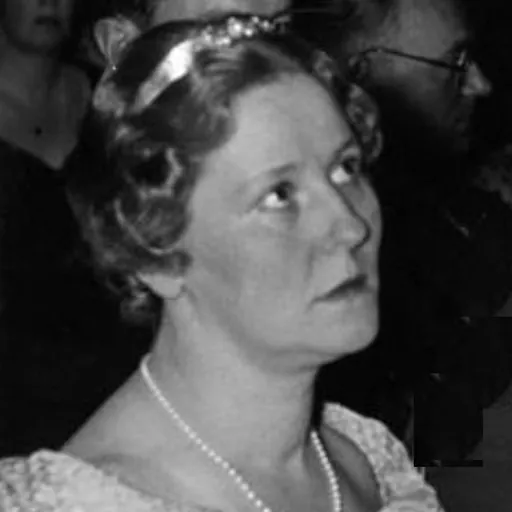
About Emmy Göring
Lived 1893 – 1973 (aged 80). Emmy Göring was a German stage actor, film actor, autobiographer, art collector and actor.
Emma Johanna Henny "Emmy" Göring (; 24 March 1893 – 8 June 1973) was a German actress and the second wife of Luftwaffe Commander-in-Chief Hermann Göring. She served as Adolf Hitler's hostess at many state functions and thereby staked a claim to the title of "First Lady of the Third Reich", a title also sometimes conferred upon Magda Goebbels.
Early life
She was born Emma Johanna Henny Sonnemann in Hamburg, Germany, on 24 March 1893 to a wealthy salesman. After schooling, she became an actress at the National Theatre in Weimar.
On 13 January 1916, Sonnemann married actor Karl Köstlin in Trieste, Austria-Hungary. Thereafter, she was known as Emmy Köstlin. In her autobiography, Göring said that she and Köstlin soon realized that they were more suited as friends and soon separated. They eventually divorced in 1926.
Marriage to Hermann Göring
On 10 April 1935, in a church ceremony she married the prominent Nazi and Luftwaffe chief Hermann Göring, becoming Emmy Göring. It was also Göring's second marriage; his first wife, Carin, had died in October 1931.
Their daughter, Edda Göring, was born on 2 June 1938, when Emmy was 45 years old. Edda was reported as being named after the Countess of Cortellazzo and Buccari, eldest child of Benito Mussolini. Time reported: "Herr and Frau Göring became her fast friends." However, in her autobiography, Göring said her daughter was named after one of her friends.
In 1940, Der Stürmer magazine printed a story alleging that Edda had been conceived by artificial insemination, implying that her husband was impotent. Hermann Göring demanded that the Nazi Party take action against the editor, Julius Streicher. Streicher, whose position was already shaky within the party, was stripped of party titles, but allowed to go on publishing Der Stürmer from his farm near Nuremberg. German anti-Nazi diarist Friedrich Reck-Malleczewen recorded in 1941 that he had personally overheard the "wife of Göring’s personal physician give the details...to her companion on exactly how the artificial insemination of Frau Goring had been achieved."
Hermann Göring named his country house Carinhall after his first wife, while referring to his hunting lodge at Rominten (now Krasnolesye)the Reichsjägerhofas "Emmyhall".
"First Lady of the Third Reich" Emmy served as Hitler's hostess at many state functions prior to the Second World War. This and her claim to be the "First Lady of the Third Reich" created much animosity between herself and Hitler's future wife, Eva Braun, whom she snubbed and openly despised. Hitler consequently issued angry instructions to Hermann Göring demanding that Emmy treat Eva with more respect; one of the outcomes of Emmy's condescending attitude toward Eva was that she was no longer invited to Hitler's Bavarian retreat, the Berghof. As for Eva Braun, she allegedly never forgave Emmy for having assumed the role of "First Lady of the Reich". Emmy and Magda Goebbels, the wife of Propaganda Minister Joseph Goebbels, also tried to outshine each other, hosting lavish parties and dressing like royalty. She also hosted foreign dignitaries, such as Edward, Duke of Windsor and Wallis Simpson in 1937. Following her husband's promotion to in 1940, she was addressed as , that is (literally) Mrs. Reichsmarschall.
After the end of the war, she was arrested at her home in Sackdilling and was imprisoned at Straubing camp, from Nuremberg, A German denazification court convicted her of being a Nazi and sentenced her to one year in jail. When she was released, 30 percent of her property was confiscated, and she was banned from the stage for five years. She was unable to revive her career.
Later years and death Some years after her release from jail, Emmy secured a very small flat in a building in the city of Munich and remained there for the rest of her life. In her final years, she suffered from sciatica. She wrote an autobiography, An der Seite meines Mannes (1967), published in English as My Life with Goering in 1972.
Emmy died in Munich on 8 June 1973 at the age of 80. She is buried at Munich Waldfriedhof.
Selected filmography William Tell (1934)
Don’t just read it —
keep it.
Full-length biographies made to live with: read them, listen on the way to work, watch them tonight.
- E-book
- Audio
- Video
Instant download · yours to keep · every purchase keeps this site free
Important facts
Family & relationships
People in Emmy Göring's life
Named in this biography and alive at the same time

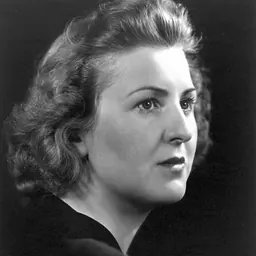


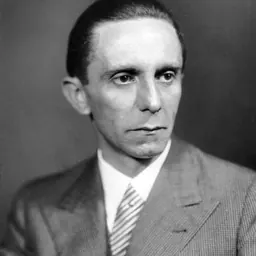

Related people
Same field, nearest in time



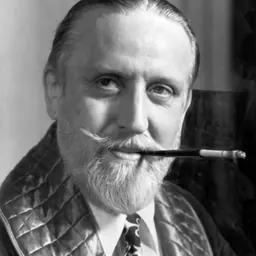
Contemporaries
People whose lives overlapped Emmy Göring's





Frequently asked questions
Who was Emmy Göring?
German actress, art collector (1893-1973)
When was Emmy Göring born?
Emmy Göring was born on 24 March 1893 in Hamburg.
When did Emmy Göring die?
Emmy Göring died on 8 June 1973 in Munich.
What was Emmy Göring's occupation?
Emmy Göring was a stage actor, film actor, autobiographer, art collector and actor.
What nationality was Emmy Göring?
Emmy Göring was German.
Sources & further reading
Cite this page
APA: Biography.guide. (2026). Emmy Göring. https://biography.guide/emmy-goring/
MLA: "Emmy Göring." Biography.guide, https://biography.guide/emmy-goring/.
Chicago: "Emmy Göring." Biography.guide. https://biography.guide/emmy-goring/.
Data last updated: 2026-09-23 · Spot an error? Report a correction.
Portrait: Wikimedia Commons · author & licence
Page generated 2026-09-27 05:06 UTC