
Emmanuel Ifeajuna
Nigerian army major and high jumper
About Emmanuel Ifeajuna
Lived 1935 – 1967 (aged 31–32). Emmanuel Ifeajuna was a Nigerian soldier, athlete and athletics competitor.
Emmanuel Arinze Ifeajuna (; 1935 – 25 September 1967) was a Nigerian military officer and high jumper. He was the first Black African to win a gold medal at an international sports event when he won at the 1954 British Empire and Commonwealth Games. His winning mark and personal best of 6 ft 8 in (2.03 m) was a game record and a British Empire record at the time.
An ethnic Igbo from Onitsha, he was a science graduate of the University College of Ibadan and became involved in politics. He later joined the Nigerian military and played a leading role in the 1966 Nigerian coup d'état.
Life and career High jumping Born in Onitsha, he attended Dennis Memorial Grammar School in his home town and displayed the characteristics that would later define his life. He trained in the high jump under his games teacher, and he also took part in a protest that closed down the school for a term. He graduated from high school in 1951. Ilesa Grammar School also claims him as a past alumnus. This is disputed, although he did do summer school teaching at the institution.
The 1954 Nigerian Athletics Championships saw him establish himself among the nation's best high jumpers. A jump of 6 feet 5.5 inches (1.97 m) meant Ifeajuna was chosen to represent his country at the 1954 British Empire and Commonwealth Games, alongside Nafiu Osagie. and three Nigerian jumpers made the top twenty at the 1952 Olympic high jump.
At the 1954 Games in Vancouver, he competed wearing only his left shoe yet managed to clear 6 ft 8 in (2.03 m), which was both a Games record and a British Empire record for the discipline. The resulting gold medal made him the first Black African to win at a major international sports competition. Ifeajuna was also a close friend of Emeka Anyaoku, later Commonwealth Secretary-General. He was deeply involved in Ibadan's Students' Union and became the organisation's Director of Information, encouraging protests. Major Chukwuma Kaduna Nzeogwu was the face of the coup attempt, which involved five other army majors: Timothy Onwuatuegwu, Chris Anuforo, Adewale Ademoyega and Humphrey Chukwuka.
One of the coup's prominent targets, Major-General Johnson Aguiyi-Ironsi, caught wind of the plot and escaped capture. He then began to move against the coup conspirators. Ironsi eventually managed to prevent the coup and was later appointed to take over leadership and bring stability to the country. Nkrumah's regime was overthrown shortly afterwards and Ifeajuna returned to Nigeria after assurances from Emeka Ojukwu that his life would not be at risk. He again became involved in the military, this time within the Biafran Army – the Republic of Biafra declared its secession from Nigeria, beginning the Nigerian Civil War. Ifeajuna, Victor Banjo, Phillip Alale and Sam Agbam were accused by Ojukwu of negotiating with the federal Nigerian officials, via British agents, hoping to bring about a ceasefire, overthrow Ojukwu, and gain prominent positions for themselves. They were hastily tried and sentenced to death by firing squad for treason. Ifeajuna claimed the plan was to preserve civilian life in Enugu from an oncoming assault by federal troops. Ifeajuna and his three co-conspirators were executed on 25 September 1967. Enugu, the Biafran capital, was captured by federal Nigerian forces two days later.
Ifeajuna has had a mixed legacy. His unpublished manuscript has attracted much attention, including that of Olusegun Obasanjo, an army general and now former President of Nigeria. The 1966 coup attempt is seen by many as an Igbo plot, although conspirators included non-Igbos, some coup targets were Igbos, and General Ironsi who prevented the coup was himself an Igbo. The manuscript is seen as a possible historical source for assessing both the racial element to the coup and Ifeajuna's role in it, which ranges from co-conspirator to intellectual leader. even when calls were made for him to be honoured posthumously. Upon his death in 2011, former Biafran leader Ojukwu received the highest military accolades from Nigeria and his funeral was attended by the Nigerian President Goodluck Jonathan In a 1992 interview, Ojukwu dismissed claims that Chukwuma Kaduna Nzeogwu was the leader of the plot, as was widely believed. A Nigerian Police Special Branch report, its first part partially redacted and the second part missing, stated that Ifeajuna, Don Okafor and Captain Ogbu Oji were the creators and protagonists of the coup plot in 1965, with Nzeogwu only becoming involved at a late stage. Ifeajuna is seen by some as the assassin of Prime Minister Balewa, which brought down the First Republic and caused civil war.
Ifeajuna's legacy within Black African sports history has been overshadowed by his political actions following his feats.
Personal life During his time at university, Ifeajuna met his wife Rose in 1955. Four years later the pair married and went on to have two sons.
International competition record
Don’t just read it —
keep it.
Full-length biographies made to live with: read them, listen on the way to work, watch them tonight.
- E-book
- Audio
- Video
Instant download · yours to keep · every purchase keeps this site free
Important facts
People in Emmanuel Ifeajuna's life
Named in this biography and alive at the same time

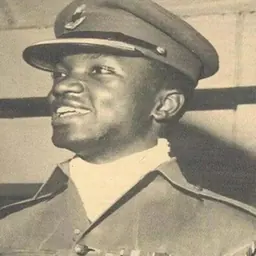




Related people
Same field, nearest in time


Contemporaries
People whose lives overlapped Emmanuel Ifeajuna's



Frequently asked questions
Who was Emmanuel Ifeajuna?
Nigerian army major and high jumper
When was Emmanuel Ifeajuna born?
Emmanuel Ifeajuna was born in 1935 in Onitsha.
When did Emmanuel Ifeajuna die?
Emmanuel Ifeajuna died on 25 September 1967 in Enugu.
What was Emmanuel Ifeajuna's occupation?
Emmanuel Ifeajuna was a soldier, athlete and athletics competitor.
What nationality was Emmanuel Ifeajuna?
Emmanuel Ifeajuna was Nigerian.
Sources & further reading
· Wikipedia: Emmanuel Ifeajuna
Cite this page
APA: Biography.guide. (2026). Emmanuel Ifeajuna. https://biography.guide/emmanuel-ifeajuna/
MLA: "Emmanuel Ifeajuna." Biography.guide, https://biography.guide/emmanuel-ifeajuna/.
Chicago: "Emmanuel Ifeajuna." Biography.guide. https://biography.guide/emmanuel-ifeajuna/.
Data last updated: 2026-09-20 · Spot an error? Report a correction.
Page generated 2026-09-27 05:28 UTC