
About Émile Masqueray
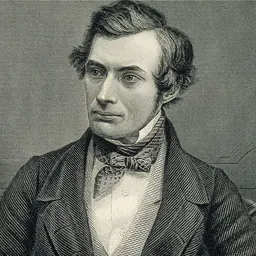
Lived 1843 – 1894 (aged 51). Émile Masqueray was a French lexicographer, anthropologist, linguist and historian.
Émile Masqueray (20 March 1843 – 19 August 1894) was a 19th-century French anthropologist, linguist, and writer. He was an expert on the Berber–Tuareg peoples of North Africa.
He graduated from the Lycée Pierre-Corneille and the École Normale, where he became a professor of history in 1869. In pursuit of an archaeological assignment, he began teaching at a high school in Algiers in 1872.
In 1873 he began learning Arabic and several Berber languages and was interested in their philology and the social structures of Berber society. Another interest was in archaeology, especially the Roman ruins of Aures. He spent nearly two months in Mzab where he translated Beni Mzab the Kitab of the Nile and the Chronicle of Abu Zakaria Yahyá ibn Abi Bakr al-Warjalani, which were religious and legislative histories that described the origins of the Ibadi sect. (Algiers, A. Jordan, 1890) The following year, he published "Comparaison du dialecte des Zenaga du Sénégal avec le vocabulaire des Chaïa et des Beni-M'zab" (a comparison of the Zenaga dialect of Senegal, which included a vocabulary of Chaia and Beni M'zab).
Masqueray then taught history and African antiquity at the School of Arts in Algiers before being appointed the Paul Bert Director in 1878. This influenced his friend Jules Ferry to embrace Berber culture and resulted in four schools being opened in Kabylie in 1881.
His work "Formation des Cités chez les populations sédentaires de l'Algérie" had a lasting influence in academia. He refuted the colonial idea sedentary and nomadic lifestyles were associated with race and instead argued that these ways of life were determined by their environment.
Émile Masqueray also created the "Bulletin de correspondance africaine".
The cities of Rouen and Saint-Étienne-du-Rouvray have named streets after him.
Works Dictionnaire français-touareg, dialecte des taïtoq, suivi d’observations grammaticales, Paris, E. Leroux, 1893. Formation des cités chez les populations sédentaires de l’Algérie (Kabyles du Djurdjura, Chaiuïa de l’Aourâs, Beni Mezâb), Paris, E. Leroux, 1886. Formation des cités chez les populations sédentaires de l’Algérie : Kabyles du Djurdjura, Chaouïa de l’Aourâs, Beni Mezâb, Éd. Fanny Colonna, Aix-en-Provence, Edisud, 1886 ; 1983 . Note concernant les Aoulad-Daoud du Mont-Aurès (Aourâs), Alger, A. Jourdan, 1879. Observations grammaticales sur la grammaire touareg et textes de la tamahaq des Taïtoq, Éd. René Basset, Maurice Gaudefroy-Demombynes, Paris, E. Leroux, 1896-1897. Ruines anciennes de Khenchela (Mascula) a Besseriani (Ad Majores), Alger, A. Jourdan, 1879. Souvenirs et visions d’Afrique, Éd. Michèle Salinas, Paris, La Boîte à Documents, 1894 ; 1997 .
Don’t just read it —
keep it.
Full-length biographies made to live with: read them, listen on the way to work, watch them tonight.
- E-book
- Audio
- Video
Instant download · yours to keep · every purchase keeps this site free
Important facts
People in Émile Masqueray's life
Named in this biography and alive at the same time




Related people
Same field, nearest in time


Contemporaries
People whose lives overlapped Émile Masqueray's

Frequently asked questions
Who was Émile Masqueray?
French linguist and anthropologist (1843–1894)
When was Émile Masqueray born?
Émile Masqueray was born on 20 March 1843 in Rouen.
When did Émile Masqueray die?
Émile Masqueray died on 19 August 1894 in Saint-Étienne-du-Rouvray.
What was Émile Masqueray's occupation?
Émile Masqueray was a lexicographer, anthropologist, linguist and historian.
What nationality was Émile Masqueray?
Émile Masqueray was French.
Sources & further reading
Cite this page
APA: Biography.guide. (2026). Émile Masqueray. https://biography.guide/emile-masqueray/
MLA: "Émile Masqueray." Biography.guide, https://biography.guide/emile-masqueray/.
Chicago: "Émile Masqueray." Biography.guide. https://biography.guide/emile-masqueray/.
Data last updated: 2026-09-22 · Spot an error? Report a correction.
Page generated 2026-09-27 05:14 UTC