
About Nishi Amane
Lived 1829 – 1897 (aged 67). Nishi Amane was a Japanese lexicographer, linguist, philosopher, writer and politician.
Baron was a Japanese philosopher. He studied law and economics in the Netherlands. He became a political advisor to Tokugawa Yoshinobu before and after the Meiji Restoration. He served as a bureaucrat in the Ministry of War, the Ministry of Education, the Ministry of Popular Affairs, and the Ministry of the Imperial Household under the Meiji government. He was involved in the drafting of the Military Precepts and the Imperial Rescript to Soldiers and Sailors. With Mori Arinori and others, he formed the Meirokusha and worked to introduce Western philosophy.
Early life Nishi was born in the Tsuwano Domain of Iwami Province (present day Tsuwano town, Shimane Prefecture) as the son of a samurai physician who practiced Chinese medicine. A child prodigy, he is said to have read the Classic of Filial Piety at the age of four and Four Books and Five Classics at the age of six. In 1853, after studying Confucianism at his domain school and in Osaka, Nishi was sent to Edo to study rangaku, with the goal of becoming an interpreter for conducting business with the outside world via Dutch traders based at Dejima in Nagasaki. His duties also included the translation of European books into Japanese for review by a select group of government officials within the Tokugawa bakufu. In 1854 Nishi, as well as several fellow Japanese intellectuals of the time, denounced the Japanese feudal system and their samurai status in favor of a pursuit of Western studies, as these intellectuals believed that the Japanese feudal system was incompatible with Western studies. Nishi was then appointed by the government as a Yōgakusha or specialist scholar of Western learning. Aside from Nishi, the Yōgakusha included Fukuzawa Yukichi, Mori Arinori, and Nakamura Masanao, who were all schooled in kangaku, a kind of traditional Chinese learning. Later, in 1857, Nishi was appointed a professor at the Bansho Shirabesho.
With increasing foreign pressure on Japan to end its national isolation policy, in 1862 the Shogunate decided to send Nishi and Tsuda Mamichi to the Netherlands to learn western concepts of political science, constitutional law, and economics. They departed in 1863 with a Dutch physician Dr. J. L. C. Pompe van Meerdervoort, who had set up the first teaching hospital for western medicine in Nagasaki.
The two Japanese students were put in the care of Professor Simon Vissering, who taught Political Economy, Statistics and Diplomatic History at the University of Leyden. They developed a genuine friendship with Vissering who was conscious of the long-standing friendship between Japan and the Netherlands. He felt that the students' desire for knowledge would make them likely future participants in Japan's modernization. Vissering, a member of La Vertu Lodge No, 7, Leyden introduced them to Freemasonry, of which they became the first Japanese adherents on October 20, 1864.
Meiji philosopher Nishi returned to Japan in 1865, and was an active participant in the Meiji Restoration. He promoted contact with the West and Western intellectualism because he feared that in the long run, a domestic resistance to modernization and change in relation to contact with the West would be more destructive to Japan than any plausible repercussions of contact with the West. As for empiricism, Nishi and the rest of the Yogakusha intellectuals became leading figures in the Meiji Enlightenment (bummei kaika, i.e. "civilization and enlightenment" Nishi felt that if the new state were to become enlightened as it should be, there would be no more conflict between political and scholarly obligations within the Meiji Six Society, and within Japanese society in general. To Nishi, morality is an omnipresent thing existing within every human activity, but law is strictly limited to its defined aspects of human relations. Though morality must rely on the law within politics to keep order, it is morality, rather than the law, that will eventually penetrate and shape the people’s minds and values. By using classical Chinese terminology, that is, something of cultural importance and tradition to Meiji Japan, Nishi was able to generate enthusiasm for reform, as traditional Chinese characters were seen by the Eastern population as a notion of authority. Furthermore, it is the nature of Chinese characters to be combined in various ways to form neologisms, as the characters often obtain multiple meanings and are capable of interchangeability.
Tetsugaku is the first known recording of an Eastern term representing the notion of philosophy, which Nishi referred to as “the study of human nature and the principles of things.” Though Nishi felt that Confucius for the East was comparable to Socrates for the West, Moreover, Nishi did not concur that philosophy even existed in the East, as he studied philosophy solely in the context of the Western style. However, regardless of Nishi’s personal beliefs on the definition of “philosophy”, it is still because of him that China and Japan have even been able to engage in the discourse of “philosophy.” Korean and Vietnamese triết học.
Nishi Amane former residence
The building which Nishi Amane used as his study from the age of 4 to 25 in Tsuwano still exists and is preserved as a museum. The site is surrounded by earthen walls, and in addition to the main house and storehouse, there is a garden and a farmland on the back side, which is the basic layout of a samurai residence. The main building where Nishi lived was destroyed in a fire in 1853, and the main building that remains today was rebuilt after the fire. However, the storehouse survived the fire, and is a one-story wooden structure with earthen walls and a thatched roof. Nishi's study was a three tatami mat room on the left side of the building. It was designated a National Historic Site in 1987. Across the Tsuwano River, is the former residence of Mori Ogai.
Don’t just read it —
keep it.
Full-length biographies made to live with: read them, listen on the way to work, watch them tonight.
- E-book
- Audio
- Video
Instant download · yours to keep · every purchase keeps this site free
Important facts
People in Nishi Amane's life
Named in this biography and alive at the same time
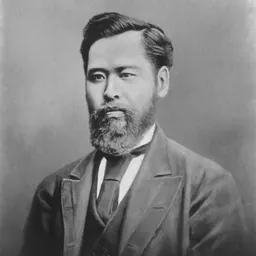



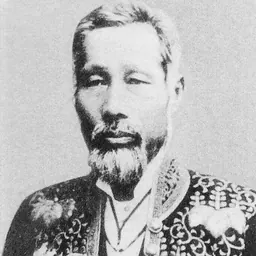
Related people
Same field, nearest in time

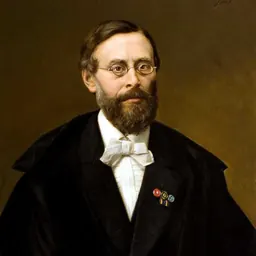
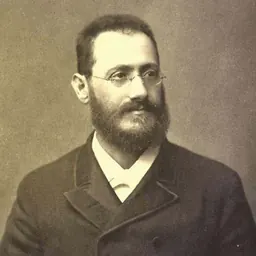


Contemporaries
People whose lives overlapped Nishi Amane's



Frequently asked questions
Who was Nishi Amane?
Japanese philosopher and politician (1829–1897)
When was Nishi Amane born?
Nishi Amane was born on 7 March 1829 in Tsuwano.
When did Nishi Amane die?
Nishi Amane died on 30 January 1897 in Ōiso-machi.
What was Nishi Amane's occupation?
Nishi Amane was a lexicographer, linguist, philosopher, writer and politician.
What nationality was Nishi Amane?
Nishi Amane was Japanese.
Sources & further reading
Cite this page
APA: Biography.guide. (2026). Nishi Amane. https://biography.guide/nishi-amane/
MLA: "Nishi Amane." Biography.guide, https://biography.guide/nishi-amane/.
Chicago: "Nishi Amane." Biography.guide. https://biography.guide/nishi-amane/.
Data last updated: 2026-09-25 · Spot an error? Report a correction.
Page generated 2026-09-27 05:12 UTC