
About Emil Szittya
Lived 1886 – 1964 (aged 78). Emil Szittya was a Hungarian and French writer, journalist, painter and poet.
Emil Szittya is the name under which the originally Austria-Hungarian multi-faceted libertarian writer Adolf/Avraham Schenk (18 August 1886 – 26 November 1964) published his first book, and it is the name by which he was and is most frequently known. The very many pseudonyms under which he may sometimes be identified include "Chronist, Emszi" and "Emil Lesitt". Along with his work as a novelist and journalist, he is also sometimes classified as an art critic and/or an inveterate traveller-vagabond. His earlier work was written in Hungarian. Later, as a young man, he also wrote in German. During the second half of his life he lived principally in France and wrote in French. Later that year he moved to Ticino, living during 1906/07 as part of the Monte Verità community on the edge of Ascona. It was here that he first met the communard brothers Karl and Gustav Gräser. The next year he was in Leipzig when, during the course of his travels, he met the flamboyant Swiss-born modernist novelist-poet Blaise Cendrars, with whom he would later collaborate in Paris.
By 1911 (not for the last time in his life) he had returned to Paris, where during 1911 and 1912 he worked on Les Hommes nouveaux, a newly launched Franco-German literary journal produced by a group of proto-libertarians with Cendrars. Between 1914 and 1918 he lived predominantly in Zürich. In 1915 he crossed paths with a group of Russian revolutionaries, including Vladimir Lenin, Karl Radek and Leon Trotsky. Published in Zürich it was, Szittya wrote in 1923, "the first [pan-]European magazine to be set up during the war .... scorned by the entire Swiss press, and unfortunately, only taken seriously [much] later". During 1916 he became a regular presence at the short-lived Cabaret Voltaire, known to posterity as the cradle of the Dadaist movement, of which at least one admirer credits Szittya as a co-founder. In 1918–1919 he teamed up with Karl Lohs and Hans Richter to produce the short-lived Dadaist literary periodical "Horizont-Flugschriften" which was published in Berlin, Vienna and Budapest.
He lived between 1921 and 1926 in Berlin, writing and publishing several novels in German during this period. He was becoming increasingly networked with other members of Europe's avant-garde. In 1923 he published "Kuriositäten-Kabinett: Begegnungen mit seltsamen Begebenheiten, Landstreichern, Verbrechern, Artisten, religiös Wahnsinnigen, sexuellen Merkwürdigkeiten, Sozialdemokraten, Syndikalisten, Kommunisten, Anarchisten, Politikern und Künstlern", a volume of pen-portraits and memories. With mentions of around 1,000 individuals, it has been described as an indispensable information pool on Europe's counter-culture during the early decades of the twentieth century, though critics have complained that some of the detail is, allegedly, unreliable.
In 1927 Szittya returned to Paris, When he died more than thirty years later and Erika found herself going through his papers, it became evident that he had never told her, and she had never known, very much about his former life as a foot-loose "vagabond". There were eight editions published between 1933 and 1934, including one special edition commemorating the murder, twenty years before, of Jean Jaurès. The tone of "Die Zone" was uncompromisingly anti-fascist or, in Szittya's own words, "anti-Hitlerisch". Sources are silent concerning Szittya's Résistance activities. During their four years in Limoges, with his wife Erika, he also undertook an unusual and intriguing research project. They systematically visited and interrogated the local people about their dreams. Their subjects included Résistance fighters, peasants-farmers, men, women and children. And they carefully noted down the details, producing in the process a psychoanalytical portrait of the area at a key stage in history. They refrained from adding any sort of "interpretation" in the notes they took, though the direction of their thinking is sometimes apparent from the answers to their follow-up questions. Biographical descriptions of each of the 82 subjects are restricted to a couple of lines. The fascinating result was published in Paris in 1963, shortly before the author's death, but its appearance went little remarked. However, a reissue, with an introduction by Emmanuel Carrère appeared in 2019, and was enthusiastically reviewed by at least one scholarly critic, who wrote that the 220 page work "cries out for a German [translation and] publisher". Selbstmörder. Ein Beitrag zur Kulturgeschichte aller Zeiten und Völker. Leipzig 1925. Ernesto de Fiore. Mailand 1927. Hoetger. Paris o.J. (ca. 1928). Ausgedachte Dichterschicksale. Paris 1928. Herbert Garbe et la Sculpture Allemande. O.O., o.J. (um 1929). Neue Tendenzen in der Schweizer Malerei. Édition Ars, Paris (1929). Le Paysage Français. Paris 1929. Deutsch: Die französische Landschaft. Paris 1929. Leopold Gottlieb. Paris 1930. Leo von König. Paris 1931. Arthur Bryks. Paris 1932. L'Art allemand en France. (übersetzt von Lazare Lévine), Paris (1933) Notes sur Picasso. Paris 1947. Marquet parcourt le monde. Paris 1949. Soutine et son temps. Paris 1955. Der Mann, der immer dabei war. Hgg. Sabine Haaser. Manfred Lamping. Wien 1986. Ein Spaziergang mit manchmal Unnützigem. Prosa 1916–1920. Vergessene Autoren der Moderne, 59. Hg. Walter Fähnders. Siegen 1994. Ahasver Traumreiter. Verstörung der Legende. Mit editorischer Notiz. Illustr. Matjaz Vipotnik. Klagenfurt: Wieser 1991. . Bibliographie pp. 135–137. Mit Franz Jung durchquert das Fieber die Strassen. Briefe an Franz Jung. In: Archiv für die Geschichte des Widerstandes und der Arbeit, 18. Fernwald: Germinal 2008. pp. 365–376. Reise durch das anarchistische Spanien. In: Archiv für die Geschichte des Widerstandes und der Arbeit, 19. Fernwald: Germinal 2011. S. 197–212. Kommentar: Walter Fähnders, Rüdiger Reinecke: Das andere, das verborgene Spanien. In: Archiv für die Geschichte des Widerstandes und der Arbeit, 19. Fernwald: Germinal 2011. pp. 213–220. Spaziergang in sich. Roman. In: Gegner. Quartalsschrift, 30. Basisdruck, Berlin 2012. pp. 9–16. Kommentar: Walter Fähnders: Es war ihm unangenehm, im Nichts zu sein. Gegner. Quartalsschrift, 30. Basisdruck, Berlin 2012. pp. 16–22. Herr Außerhalb illustriert die Welt. Mit Erstdrucken aus dem Nachlass. Reihe: Pamphlete, 28. Hg. Walter Fähnders. Basisdruck, Berlin 2014. . Erich Mühsam. Eine Rede. Erstdruck aus dem Nachlass. In: Improvisationen in mehr als zwei Bildern. Hg. von Gregor Ackermann und Walter Delabar. Bielefeld 2015, , pp. 153–170. (Juni. Magazin für Literatur 49/50.) Die sieben Jahre. Ein Kriegsepos. Erstdruck aus dem Nachlass in literaturkritik.de 2016. Man will die Spanier zu Sklaven machen und Spanien 1939. In: Archiv für die Geschichte des Widerstandes und der Arbeit, Nr. 20 (2016), pp. 565–570.. Kommentar: Walter Fähnders: „Die Felder atmen nicht mehr“. Zum Erstdruck von Emil Szittyas Spanien-Texten. Ebenda, pp. 571–578.
Pen-portraits of artist contemporaries Szittya included pen-portraits of leading artists of his generation in many of his books, usually in the form of concise carefully crafted monographs. Those whom he treated in this way included Henri Rousseau, Pablo Picasso, Vincent van Gogh, Marc Chagall, August Wilhelm Dressler, Otto Dix, Oskar Kokoschka, Braque and Masereel.
Don’t just read it —
keep it.
Full-length biographies made to live with: read them, listen on the way to work, watch them tonight.
- E-book
- Audio
- Video
Instant download · yours to keep · every purchase keeps this site free
Important facts
People in Emil Szittya's life
Named in this biography and alive at the same time


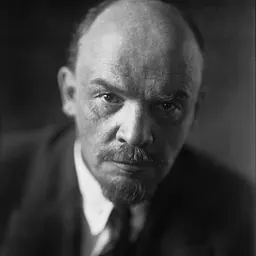
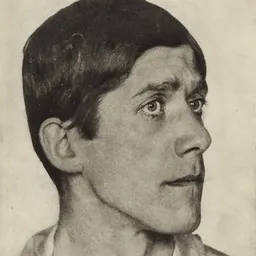

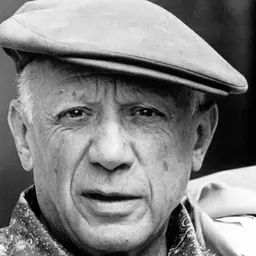

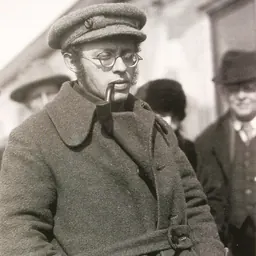
Related people
Same field, nearest in time





Contemporaries
People whose lives overlapped Emil Szittya's



Frequently asked questions
Who was Emil Szittya?
writer, poet, painter (1886–1964)
When was Emil Szittya born?
Emil Szittya was born on 18 August 1886 in Budapest.
When did Emil Szittya die?
Emil Szittya died on 26 November 1964 in Paris.
What was Emil Szittya's occupation?
Emil Szittya was a writer, journalist, painter and poet.
What nationality was Emil Szittya?
Emil Szittya was Hungarian and French.
Sources & further reading
Cite this page
APA: Biography.guide. (2026). Emil Szittya. https://biography.guide/emil-szittya/
MLA: "Emil Szittya." Biography.guide, https://biography.guide/emil-szittya/.
Chicago: "Emil Szittya." Biography.guide. https://biography.guide/emil-szittya/.
Data last updated: 2026-09-22 · Spot an error? Report a correction.
Page generated 2026-09-27 05:24 UTC