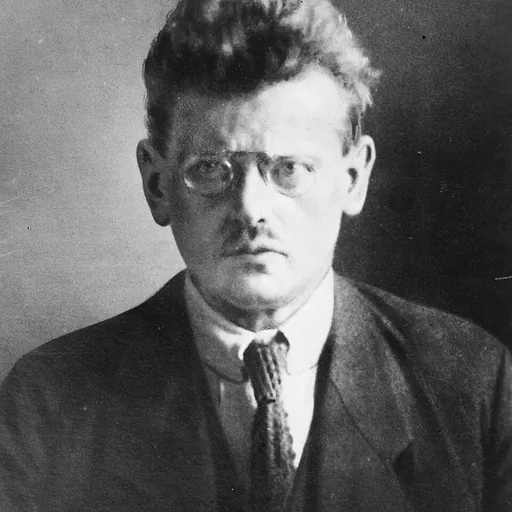
About Emil Barth
Lived 1879 – 1941 (aged 61–62). Emil Barth was a metalworker, politician, editing staff and social democrat.
Emil Barth (Heidelberg, 23 April 1879 – Berlin, 17 July 1941) was a German Social Democratic party worker and socialist politician who became a key figure in the German Revolution of 1918.
Life Barth was born into a working-class family.
Barth joined the anti-war Independent Social Democratic Party (USPD) in 1917, and became leader of the revolutionary shop stewards in January 1918.
He was one of six members of the Council of the People's Deputies (Rat der Volksbeauftragten) created on 10 November 1918 in Berlin to govern Germany after Kaiser Wilhelm II had abdicated and the Republic had been proclaimed by Karl Liebknecht and Philipp Scheidemann. Three members of the Council were Majority Social Democrats (Ebert, Scheidemann and Landsberg), and three were Independent Social Democrats (Haase, Dittmann and Barth). While the former two USPD commissioners were moderate and interested in conciliation with the MSPD, Barth was the most left-wing, associated with Karl Liebknecht, who refused to serve on the Council because it had a non-revolutionary majority.
Although he became somewhat more moderate by the end of 1918, Barth had always been the Council's most radical member, calling on workers, for instance, not to 'debase the revolution to a movement for wages,' since that would merely ameliorate conditions, making fundamental change less likely (in an article in Die Rote Fahne, 28 November 1918). In 1920 Barth published his memoirs as From the Workshop of the Revolution, in which he claimed that the USPD had worked toward fomenting revolution against the German war machine already years earlier, and portrayed himself somewhat grandiosely as a major leader. That book was later (for instance in the 1925 Dolchstoss-Trial) used as evidence that the left had undermined the war effort.
In 1921/22 Barth became a member of the Social Democrats (SPD) when the MSPD and USPD merged into one party again. (He did not join the more radical Communist Party KPD, which had split from the USPD in early 1919.) He held some speeches for the SPD during the 1920s, and was arrested several times during the Nazi period after 1933. He died in 1941.
Works
Emil Barth, Geldwert, Geldentwertung und Proletariat (Berlin: A. Hoffmann, 1919), 37 pages. Emil Barth, Sozialisierung: Ihre Notwendigkeit, ihre Möglichkeit (Neukölln: Selbstverlag, 1920), 37 pages. Emil Barth et al., Aus der Werkstatt der deutschen Revolution (Berlin: A. Hoffmann, 1920), 158 pages. Emil Barth, "Die Revolution vom Januar 1918 bis Marz 1919," NL Barth, K II: "Manuskripte und Aufsatze," No. 275 (Archiv der Sozialen Demokratie, Bonn).
Emil Barth, Cajetan Freund, and Theodor Heller, Das Erbauungsbuch des guten Handwerkers [exhibition Munich, 1927: "Das Bayerische Handwerk"] (Munich: Deukula-Verlag Grassinger & Co., 1927), 68 pages.
Secondary Literature
Contemporaries' Accounts Dittmann, Wilhelm, Erinnerungen (ed. by Jürgen Rojahn, 3 vols.) (Frankfurt: Campus, 1995). Müller, Richard, Vom Kaiserreich zur Republik (Berlin: Malikverlag, 1925; Berlin: Olle & Wolter, 1979)(2 vols.). Müller-Franken, Hermann, Die Novemberrevolution: Erinnerungen (Berlin: Der Bücherkreis, 1928).
Scholarly Works
Broue, Pierre, Ian Birchall, and Brian Pearce, The German Revolution, 1917–1923 (Chicago: Haymarket, 2006), 991 pages (translated by John Archer). Coper, Rudolf, Failure of a Revolution: Germany in 1918–1919 (Cambridge University Press, 1955). Harman, Chris, The Lost Revolution: Germany 1918 to 1923 (Chicago: Haymarket, 2003). [see especially the glossary entry on Barth, p. 309] Hoffrogge, Ralf: Working-Class Politics in the German Revolution, Richard Müller, the Revolutionary Shop Stewards and the Origins of the Council Movement, Brill Publishers, Leiden 2014. Maehl, William Harvey, The German Socialist Party (American Philosophical Society, 1987). This work draws on unpublished manuscripts in Barth's papers in the Archiv der Sozialen Demokratie in Bonn. Matthias, Erich and Susanne Miller, Die Regierung der Volksbeauftragten 1918/19: Erster Teil (Düsseldorf, Droste, 1969). Miller, Susanne, "Der Nachlass Emil Barth," IWK 3(1966), 26-27. Ryder, A.J., The German Revolution of 1918: A Study of German Socialism in War and Revolt (Cambridge University Press, 1967).
Don’t just read it —
keep it.
Full-length biographies made to live with: read them, listen on the way to work, watch them tonight.
- E-book
- Audio
- Video
Instant download · yours to keep · every purchase keeps this site free
Important facts
People in Emil Barth's life
Named in this biography and alive at the same time
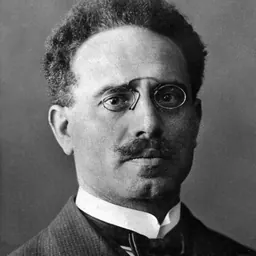


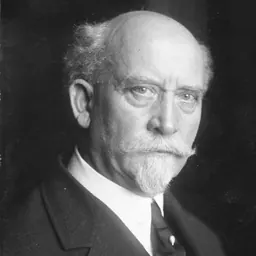




Related people
Same field, nearest in time


Contemporaries
People whose lives overlapped Emil Barth's


Frequently asked questions
Who was Emil Barth?
German politician (1879-1941)
When was Emil Barth born?
Emil Barth was born in 1879 in Heidelberg.
When did Emil Barth die?
Emil Barth died in 1941 in Berlin.
What was Emil Barth's occupation?
Emil Barth was a metalworker, politician, editing staff and social democrat.
What nationality was Emil Barth?
Emil Barth's recorded nationality: German Reich.
Sources & further reading
Cite this page
APA: Biography.guide. (2026). Emil Barth. https://biography.guide/emil-barth/
MLA: "Emil Barth." Biography.guide, https://biography.guide/emil-barth/.
Chicago: "Emil Barth." Biography.guide. https://biography.guide/emil-barth/.
Data last updated: 2026-09-20 · Spot an error? Report a correction.
Page generated 2026-09-27 05:10 UTC