
About Brian Pearce
Lived 1915 – 2008 (aged 92–93). Brian Pearce was a British translator and historian.
Brian Leonard Pearce (8 May 1915 – 25 November 2008) was a British Marxist political activist, historian, and translator. Adept and prolific in Russian-to-English translation, Pearce was regarded at the time of his death as "one of the most acute scholars of Russian history and British communism never to have held an academic post."
Early years Pearce was born in Weymouth, Dorset on 9 May 1915. His father was an upwardly mobile engineer, his mother a domestic servant of Irish extraction. Brian was their only child, a shy and precocious boy, poor at athletics and not popular among his peers. His father's growing prosperity allowed Brian the freedom to travel. In 1931 he went to Germany and in 1933 to France, where he further developed the language skills he had learned in school.
Although his parents were Tories, Brian's father investigated a few early issues of the Communist Party of Great Britain's organ, The Daily Worker, which Brian read thoroughly. He was also greatly influenced by an uncle who worked as a railwayman and was a partisan of the socialist Independent Labour Party.
Pearce had been expected to get a first in History and win a scholarship to further pursue his research in the Tudor period, en route to a career in academia, but instead received an upper second on his last exam. His only choice if he was to proceed onto a PhD programme would be to work under the close direction of a supervisor on a topic not of his own choosing. He laboured at that unpleasant task for two years before discovering that another person was almost finished ploughing the same research ground, making award of a PhD unlikely. Pearce henceforth chose a different path.
Career Pearce married for the first time in 1939 to a party comrade, Lilla Fox. The pair had three children before separating in the late 1940s. He subsequently left the civil service to work in various Communist Party-related capacities, including as a member of the staff of The Daily Worker, for the Anglo-Soviet Friendship Society, and as a teacher of English at various East European embassies in London. His papers are in the process of being catalogued at Aberdeen University, which will hold the Brian Pearce Archive.
Footnotes
Selected works
Writings
Early History of the Communist Party of Great Britain (London: Socialist Labour League, 1966). Essays on the History of Communism in Britain. With Michael Woodhouse. (Basingstoke: Macmillan, 1975). How Haig Saved Lenin. (London: Macmillan, 1987). The Staroselsky Problem, 1918–20: An Episode in British-Russian Relations in Persia (London: University of London, 1994). "The Brian Pearce Dossier", Revolutionary History, vol. 9, no. 3 (2006), pp. 105–143. —Selection of Pearce's correspondence.
Translations (partial list) E. Preobrazhensky, The New Economics (London: Oxford University Press, 1965). Leon Trotsky, The Intelligentsia and Socialism (London: Fourth International, 1966). Nikolai Valentinov, Encounters with Lenin. With Paul Rosta (London: Oxford University Press, 1968). A. D. Lublinskaya, French Absolutism: The Crucial Phase, 1620–1629 (Cambridge: Cambridge University Press, 1968). Ernest Mandel, Marxist Economic Theory. In two volumes (New York: Monthly Review Press, 1970). Ernest Mandel, The Formation of the Economic Thought of Karl Marx: 1843 to Capital (London: New Left Books, 1971). E.A. Preobrazhensky, From NEP to Socialism: A Glance into the Future of Russia and Europe (London: New Park Publications, 1973). Samir Amin, Accumulation on a world scale (New York: Monthly Review Press, 1974). Maxime Rodinson, Islam and Capitalism (London: Allen Lane, 1974, and Penguin, 1977) Marcel Liebman, Leninism Under Lenin (London: Jonathan Cape, 1975). Fernando Claudín, The Communist Movement from Comintern to Cominform. In two volumes (New York: Monthly Review Press, 1975). Leon Trotsky, Tasks Before the Twelfth Congress of the Russian Communist Party (London: New Park Publications, 1975). Samir Amin, Unequal Development (New York: Monthly Review Press, 1976). Charles Bettelheim, Class Struggles in the USSR. Volumes 1 and 2. (New York: Monthly Review Press, 1976–78). Carmen Claudín-Urondo, Lenin and the Cultural Revolution (Sussex: Harvester Press, 1977). Communist International, Baku: Congress of the Peoples of the East (London: New Park Publications, 1977). Roland Mousnier, The Institutions of France under the Absolute Monarchy, 1598–1789 (Chicago: University of Chicago Press, 1979). Leon Trotsky, How the Revolution Armed. In five volumes. (London: New Park Publications, 1979–1982). Leon Trotsky, The War Correspondence of Leon Trotsky: The Balkan Wars, 1912–13 (New York: Monad Press, 1980). F.F. Raskolnikov, Kronstadt and Petrograd in 1917. (London: New Park Publications, 1982). Maxime Rodinson, Israel and the Arabs (Penguin, 1982). Roy Medvedev, Khrushchev (New York: Anchor Press/Doubleday, 1983). Boris Kagarlitsky, The Thinking Reed: Intellectuals and the Soviet State from 1917 to the Present (London: Verso, 1988). Paul Veyne, Bread and Circuses (London: Allen Lane, 1990). Marc Ferro, Nicholas II: The Last of the Tsars (New York: Oxford University Press, 1993). Louis Châtellier, The Religion of the poor: rural missions in Europe and the formation of modern catholicism, c. 1500-1800 (Cambridge: University Press, 1997). Daniel Roche, A History of Everyday Things: The Birth of Consumption in France, 1600–1800 (Cambridge: Cambridge University Press, 2000) Sergo Beria, Beria, My Father: Inside Stalin's Kremlin (London: Gerald Duckworth and Co., 2001).
Don’t just read it —
keep it.
Full-length biographies made to live with: read them, listen on the way to work, watch them tonight.
- E-book
- Audio
- Video
Instant download · yours to keep · every purchase keeps this site free
Important facts
People in Brian Pearce's life
Named in this biography and alive at the same time
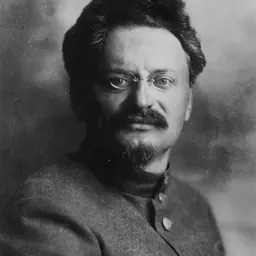

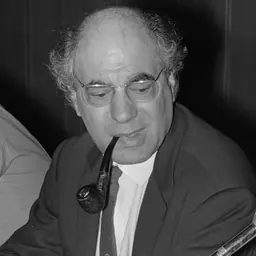

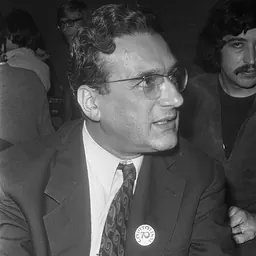
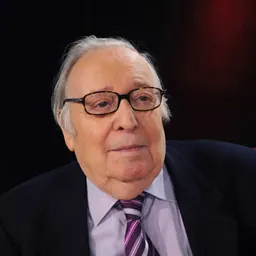

Related people
Same field, nearest in time




Contemporaries
People whose lives overlapped Brian Pearce's



Frequently asked questions
Who was Brian Pearce?
British historian
When was Brian Pearce born?
Brian Pearce was born in 1915.
When did Brian Pearce die?
Brian Pearce died on 25 November 2008.
What was Brian Pearce's occupation?
Brian Pearce was a translator and historian.
What nationality was Brian Pearce?
Brian Pearce was British.
Sources & further reading
Cite this page
APA: Biography.guide. (2026). Brian Pearce. https://biography.guide/brian-pearce/
MLA: "Brian Pearce." Biography.guide, https://biography.guide/brian-pearce/.
Chicago: "Brian Pearce." Biography.guide. https://biography.guide/brian-pearce/.
Data last updated: 2026-09-20 · Spot an error? Report a correction.
Page generated 2026-09-27 05:01 UTC