
About Samir Amin
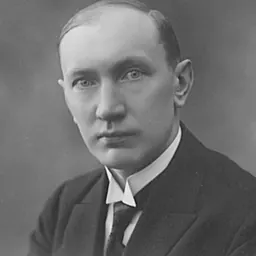
Lived 1931 – 2018 (aged 86). Samir Amin was a French and Egyptian economist, geopolitical analyst, academic, writer and politician.
Samir Amin (; 3 September 1931 – 12 August 2018) was an Egyptian-French Marxian economist, and considered a pioneer of dependency theory.
Biography Amin was born in Cairo, the son of a French mother and an Egyptian father (both medical doctors). He spent his childhood and youth in Port Said; there he attended a French high school, leaving in 1947 with a .
It was at high school that Amin was first politicized when, during the Second World War, Egyptian students were split between communists and nationalists; Amin belonged to the former group. By then Amin had already adopted a resolute stance against fascism and Nazism. While the upheaval against British domination in Egypt informed his politics, he rejected the idea that the enemy of their enemy, Nazi Germany, was the Egyptians' friend.
In 1947 Amin left for Paris where he obtained a second high school diploma with a specialization in elementary mathematics from the prestigious Lycée Henri-IV. He gained a diploma in political science at Sciences Po (1952) before graduating in statistics at INSEE (1956) and also in economics (1957).
In his autobiography Itinéraire intellectuel (1990) he wrote that in order to spend a substantial amount of time in "militant action" he could devote only a minimum to preparing for his university exams. The intellectual and the political struggle remained inseparable for Amin all throughout his life. Rather than explaining the world and its atrocities he meant to highlight and to be part of struggles aimed at changing the world.
According to Amin, capitalism and its evolution can only be understood as a single integrated global system, composed of 'developed countries', which constitute the Center, and of 'underdeveloped countries', which are the Peripheries of the system. Development and underdevelopment consequently constitute both facets of the unique expansion of global capitalism. Underdeveloped countries should not be considered as 'lagging behind' because of the specific - social, cultural, or even geographic - characteristics of these so-called 'poor' countries. Underdevelopment is actually only the result of the forced permanent structural adjustment of these countries to the needs of the accumulation benefiting the system's Center countries.
History is not ruled by the infallible unfolding of the law of pure economy. It is created by the societal reactions to these tendencies that express themselves in these laws and that determine the social conditions in whose framework these laws operate. The 'anti-systemic' forces impact and also influence real history as does the pure logic of the capitalist accumulation. (Samir Amin)
Imperialism and monopoly capitalism The system of worldwide value as described above means that there is one imperial world system, encompassing both the global North and the global South. Scholars have applied his framework to contemporary issues such as financial crises, climate change, and persistent disparities between the Global North and Global South. Amin’s emphasis on the interconnected nature of economic and political systems has also informed debates on globalization and alternative development strategies. In addition to his theoretical contributions, his engagement with international organizations and intellectual networks helped shape critical research agendas across Africa, Latin America, and Asia. His work continues to be cited in discussions of imperialism, dependency, and the possibilities for more equitable global economic systems.
Cambodia Amin was long an influence on and supporter of the leaders of Cambodia's Khmer Rouge regime, becoming acquainted with the Khmer Rouge's future leaders in post-World War II Paris, where Pol Pot, Khieu Samphan, and other Cambodian students were studying. Khieu Samphan's doctoral thesis, which he finished in 1959, noted collaborations with Amin and claimed to apply Amin's theories to Cambodia. In the late 1970s, Amin praised the Khmer Rouge as superior to Communist movements in China, Vietnam, or the Soviet Union, and recommended the Khmer Rouge model for Africa.
Amin continued to actively praise the Khmer Rouge into the 1980s. At a 1981 talk in Tokyo, Amin praised Pol Pot's work as "one of the major successes of the struggle for socialism in our era" and as necessary against "expansionism" from the Soviet Union or from Vietnam. Some scholars, such as Marxist anthropologist Kathleen Gough, have noted that Khmer Rouge activists in Paris in the 1950s already held ideas of eliminating counter-revolutionaries and organizing a party center whose decisions could not be questioned.
Views on world order Samir Amin expressed view on world order and international relations: "Yes, I do want to see the construction of a multipolar world, and that obviously means the defeat of Washington's hegemonic project for military control of the planet."
In 2006, he stated:
He also stated:
Hence, Europe must end its "Atlanticist option" and take the course of the "Eurasian rapprochement" with Russia, China, India and the rest of Asia and Africa. This "Eurasian rapprochement" is necessary for the head-on collision with the United States.
Views on political Islam While his personal religious beliefs are unknown, Samir Amin was a harsh critic of political Islam and Islamism.
According to Samir Amin, political Islam leads its struggle on the terrain of culture, wherein "culture" is intended as "belongingness to one religion". Islamist militants are not actually interested in the discussion of dogmas which form religion, but on the contrary are concerned about the ritual assertion of membership in the community. Such a world view is therefore not only distressing, as it conceals an immense poverty of thought, but it also justifies imperialism's strategy of substituting a "conflict of cultures" for a conflict between the liberal, imperialist centres and the backward, dominated peripheries.
Amin argued that this importance attributed to culture allows political Islam to obscure from every sphere of life the realistic social dichotomy between the working classes and the global capitalist system which oppresses and exploits them.
Besides, beyond being reactionary on definite matters (such as that regarding women) and being responsible for fanatical excesses against non-Muslim citizen (such as the Copts in Egypt), political Islam even defends the sacred character of property and legitimises inequality and all the prerequisites of capitalist reproduction.
Hence, political Islam aligns itself in general with capitalism and imperialism, without providing the working classes with an effective and non-reactionary method of struggle against their exploitation.
Amin was careful to distinguish his analysis of political Islam from Islamophobia, thus remaining sensitive to the anti-Muslim attitudes that currently affect Western Society.
Awards The Ibn Rushd Prize for Freedom of Thought for the year 2009 in Berlin.
Publications 1957, Les effets structurels de l'intégration internationale des économies précapitalistes. Une étude théorique du mécanisme qui an engendré les éonomies dites sous-développées (thesis) 1965, Trois expériences africaines de développement: le Mali, la Guinée et le Ghana 1966, L'économie du Maghreb, 2 vols. 1967, Le développement du capitalisme en Côte d'Ivoire 1969, Le monde des affaires sénégalais 1969, The Class struggle in Africa 1970, Le Maghreb moderne (translation: The Maghreb in the Modern World) 1970, L'accumulation à l'échelle mondiale (translation: Accumulation on a world scale) 1970, with C. Coquery-Vidrovitch, Histoire économique du Congo 1880–1968 1971, L'Afrique de l'Ouest bloquée 1973, Le développement inégal (translation: Unequal development) 1973, L'échange inégal et la loi de la valeur 1973, 'Le developpement inegal. Essai sur les formations sociales du capitalisme peripherique' Paris: Editions de Minuit. 1974, Neocolonialism in West Africa 1974, with K. Vergopoulos: La question paysanne et le capitalisme 1975, with A. Faire, M. Hussein and G. Massiah: La crise de l'impérialisme 1976, 'Unequal Development: An Essay on the Social Formations of Peripheral Capitalism' New York: Monthly Review Press. 1976, L'impérialisme et le développement inégal (translation: Imperialism and unequal development) 1976, La nation arabe (translation: The Arab Nation) 1977, The lessons of Cambodia 1977, La loi de la valeur et le matérialisme historique (translation: The law of value and historical materialism) 1979, Classe et nation dans l'histoire et la crise contemporaine (translation: Class and nation, historically and in the current crisis) 1980, L'économie arabe contemporaine (translation: The Arab economy today) 1981, L'avenir du Maoïsme (translation: The Future of Maoism) 1982, Irak et Syrie 1960–1980 1982, with G. Arrighi, A. G. Frank and I. Wallerstein): La crise, quelle crise? (translation: Crisis, what crisis?) 1984, 'Was kommt nach der Neuen Internationalen Wirtschaftsordnung? Die Zukunft der Weltwirtschaft' in 'Rote Markierungen International' (Fischer H. and Jankowitsch P. (Eds.)), pp. 89–110, Vienna: Europaverlag. 1984, Transforming the world-economy? : nine critical essays on the new international economic order. 1985, La déconnexion (translation: Delinking: towards a polycentric world) 1988, Impérialisme et sous-développement en Afrique (expanded edition of 1976) 1988, L'eurocentrisme (translation: Eurocentrism) 1988, with F. Yachir: La Méditerranée dans le système mondial 1989, La faillite du développement en Afrique et dans le tiers monde 1990, with Andre Gunder Frank, Giovanni Arrighi and Immanuel Wallerstein: Transforming the revolution: social movements and the world system 1990, Itinéraire intellectuel; regards sur le demi-siècle 1945-90 (translation: Re-reading the post-war period: an Intellectual Itinerary) 1991, Les enjeux stratégiques en Méditerranée 1991, with G. Arrighi, A. G. Frank et I. Wallerstein): Le grand tumulte 1992, L'Empire du chaos (Translated as 'Empire of Chaos') New York: Monthly Review Press 1994, L'Ethnie à l'assaut des nations 1995, La gestion capitaliste de la crise 1996, Les défis de la mondialisation 1997, 'Die Zukunft des Weltsystems. Herausforderungen der Globalisierung. Herausgegeben und aus dem Franzoesischen uebersetzt von Joachim Wilke' Hamburg: VSA. 1997, Critique de l'air du temps 1999, "Judaism, Christianity and Islam: An Introductory Approach to their Real or Supposed Specificities by a Non-Theologian" in "Global capitalism, liberation theology, and the social sciences: An analysis of the contradictions of modernity at the turn of the millennium" (Andreas Mueller, Arno Tausch and Paul Zulehner (Eds.)), Nova Science Publishers, Hauppauge, Commack, New York 1999, Spectres of capitalism: a critique of current intellectual fashions 2000, L'hégémonisme des États-Unis et l'effacement du projet européen 2002, Mondialisation, comprendre pour agir 2003, Obsolescent Capitalism 2004, The Liberal Virus: Permanent War and the Americanization of the World 2005, with Ali El Kenz, Europe and the Arab world; patterns and prospects for the new relationship 2006, Beyond US Hegemony: Assessing the Prospects for a Multipolar World 2007, 'A Life Looking Forward: Memoirs of an Independent Marxist' 2008, with James Membrez, The World We Wish to See: Revolutionary Objectives in the Twenty-First Century 2009, 'Aid for Development' in 'Aid to Africa: Redeemer or Coloniser?' Oxford: Pambazuka Press 2010, 'Eurocentrism - Modernity, Religion and Democracy: A Critique of Eurocentrism and Culturalism' 2nd edition, Oxford: Pambazuka Press 2010, 'Ending the Crisis of Capitalism or Ending Capitalism?' Oxford: Pambazuka Press 2010, 'Global History - a View from the South' Oxford: Pambazuka Press 2011, 'Maldevelopment - Anatomy of a Global Failure' 2nd edition, Oxford: Pambazuka Press 2011, 'Imperialism and Globalization' : Monthly Review Press 2013, 'The Implosion of Contemporary Capitalism': Monthly Review Press 2016, 'Russia and the Long Transition from Capitalism to Socialism': Monthly Review Press 2017, October 1917 Revolution: A Century Later. Wakefield, Canada: Daraja Press. 2018, 'Modern Imperialism, Monopoly Finance Capital, and Marx's Law of Value': Monthly Review Press 2019, 'The Long Revolution of the Global South: Toward a New Anti-Imperialist International' - Memoirs (adapted translation of 'L'Éveil du Sud'): 2019, 'Only People Make Their Own History: Writings on Capitalism, Imperialism, and Revolution'
Don’t just read it —
keep it.
Full-length biographies made to live with: read them, listen on the way to work, watch them tonight.
- E-book
- Audio
- Video
Instant download · yours to keep · every purchase keeps this site free
Important facts
People in Samir Amin's life
Named in this biography and alive at the same time


Related people
Same field, nearest in time


Contemporaries
People whose lives overlapped Samir Amin's

Frequently asked questions
Who was Samir Amin?
Egyptian-French economist and political theorist (1931-2018)
When was Samir Amin born?
Samir Amin was born on 3 September 1931 in Cairo.
When did Samir Amin die?
Samir Amin died on 12 August 2018 in Paris, 14th arrondissement of Paris.
What was Samir Amin's occupation?
Samir Amin was an economist, geopolitical analyst, academic, writer and politician.
What nationality was Samir Amin?
Samir Amin was French and Egyptian.
Sources & further reading
Cite this page
APA: Biography.guide. (2026). Samir Amin. https://biography.guide/samir-amin/
MLA: "Samir Amin." Biography.guide, https://biography.guide/samir-amin/.
Chicago: "Samir Amin." Biography.guide. https://biography.guide/samir-amin/.
Data last updated: 2026-09-20 · Spot an error? Report a correction.
Page generated 2026-09-27 05:25 UTC