
About Elvia Carrillo
Lived 1878 – 1968 (aged 89). Elvia Carrillo was a Mexican politician, feminist, suffragist and suffragette.
Elvia Carrillo Puerto (30 January 1881 – 18 April 1965) was a Mexican socialist politician and feminist activist. She is known for her work with various feminist organizations and for her attempts to run for office in Yucatán and San Luis Potosí. Some refer to her as "The Red Nun of the Mayab".
Carrillo was born to a middle-class family in Motul, Yucatán. She became politically active by 1910, when she served as a courier and spy in the against dictator Porfirio Díaz and his favored candidate in the 1909 Yucatán gubernatorial election, Enrique Muñoz Arístegui. She founded the Rita Cetina Gutiérrez Feminst League in 1919, which advocated for birth control and literacy for rural women. In 1923, she was elected to the Yucatán legislature but fled during political unrest following the assassination of her brother, Yucatán Governor Felipe Carrillo Puerto. She also campaigned to become a deputy in San Luis Potosí's fourth district. Despite winning the popular vote, her victory was overturned on the grounds that women were ineligible for office.
In the late 1920s and 1930s, Carrillo advocated for women's suffrage and labor rights by organizing national conferences and working with feminist organizations such as the Sole Front for Women's Rights (, FUPDM). However, she experienced financial hardship later in life and ultimately died of bronchopneumonia in Mexico City in 1965. The Mexican Senate established the Elvia Carrillo Puerto medal in 2013 to honor women advocating for gender equality and women's rights, and she has been commemorated with several statues. She is recognized for her pivotal role in advancing women's rights and women's suffrage in Mexico.
Early life Elvia Carrillo Puerto was born in Motul, Yucatán, on 30 January 1881, to Justiniano Carrillo and Adela Puerto. She was the sixth of 14 children. Her family was middle class, with her father working as the owner of a hardware store and as a political operative for Francisco Cantón, a politician who had served as a commander in the Caste War of Yucatán. Both Justiniano and Adela spoke a Mayan language, which Elvia learned to speak as well. While little is known about Elvia's education, she did complete elementary school, and some sources state that she was educated by a Catalan anarchist priest named Serafín García. She allegedly learned to play violin at García's home, and was also introduced to works by feminist and socialist authors in his library. Some also state that she was a student of Mexican educator Rita Cetina Gutiérrez, co-founder of the ( 'Liveforever') school and literary society. In 1900, at the age of 19, Carrillo married Vicente Pérez Mendiburu, a 28-year-old merchant. The couple had two children: Marcial and Gloria, the latter of whom died shortly after birth.
Between 1909 and 1910, Carrillo became involved in opposition to dictator Porfirio Díaz's regime. Díaz's regime, which lasted for over three decades, was marked by industrialization and modernization, as well as economic inequality, intensified policing, increased government surveillance, and an enlarged prison system. Throughout the 1900s, political reformer Francisco I. Madero opposed the Díaz regime. In Yucatán, Madero's adherents, the Maderistas, and an anti-Díaz faction called the Independent Electoral Center challenged Díaz's candidate, Enrique Muñoz Arístegui, in the 1909 gubernatorial elections, leading to the arrest of many opposition leaders. As a result, the opposition devised the Plan of Dzelkoop, which called for an uprising in Valladolid, Yucatán. Carrillo participated in this uprising, called the , acting as a courier and spy for the insurrectionists. All of their correspondences in the leadup to the uprising were routed through her father's hardware store under her name and distributed to their intended recipients. The uprising ultimately took place on 4 June 1910, with 1,500 participating in total. It was suppressed by a federal battalion from Veracruz.
Early feminist activism
Some sources state that Carrillo organized the first Peasant Feminist League in 1912. against the advice of local liberal politicians, who believed that it would be "impossible" to find a woman in the state who was neither a Catholic nor a "reactionary". However, Manrique was removed from office in November 1925. According to academic Graciela Yolanda Estrada Alcorta, this was because of "radical socialist reforms" he pursued, which she alleges led to labor unrest, unemployment, and opposition from the ASARCO mining company, which had significant investments in the state. His replacement, Abel Cano, was strongly opposed to Carrillo's candidacy. He took various measures to obstruct her campaign, and near its end, her opponent's alternate attempted to assassinate her. Despite this, she won the popular vote by 4,576. However, the ruled that Carrillo's candidacy was invalid because women were ineligible for office, thereby officially confirming her opponent's election. With no legal recourse to challenge the college's decision, she abandoned her candidacy and moved to Mexico City. In 1926, Carrillo presented a petition to the Congress of the Union to amend Article 34 of the Constitution of Mexico. Article 34 was written using the grammatical masculine gender, which meant that only men explicitly had a right to participate in the electoral process. The petition received thousands of signatures.
Sole Front for Women's Rights
As of 1931, Carrillo was an employee of the Secretariat of Agriculture and Development. Politically, she aligned herself with the National Revolutionary Party (, PNR) and was a member of the party's Women's Action Guiding League, which advocated for women's labor rights and suffrage. She also helped to organize three national congresses of working-class and peasant women: one in 1931, one in 1933, and one in 1934. The 1934 congress, with guidance from Carrillo and María del Refugio García, led to the establishment of the Sole Front for Women's Rights (, FUPDM), which united numerous women's groups into a single organization with over 50,000 members.
The FUPDM was the dominant feminist organization during the late 1930s in Mexico, and its platform called for wage increases for women, the establishment of maternity homes, and women's suffrage. Furthermore, beyond gender-specific reforms, the FUPDM also called for agrarian redistribution, the implementation of an eight-hour workday, price reductions for essential goods, and increased welfare spending. Some sectors of the FUDPM such as the Women's Revolutionary Institute, where Carrillo served as secretary as of 1938, differentiated themselves by distinguishing gender- from class-based oppression. The relationship between class- and gender-based oppression had been a topic of considerable debate at the three national congresses.
Carrillo was employed as a statistician at the Secretariat of Economy, but was terminated from her position in January 1938. Meanwhile, her son was also dismissed from his position as a stamp inspector in Sonora. That February, President Lázaro Cárdenas proposed that the women of the FUPDM be integrated into the newly renamed Party of the Mexican Revolution (, PRM, formerly the PNR) as a "vital sector". Carrillo signed a document agreeing to this proposal in her capacity as the secretary of the Women's Revolutionary Institute. This led to the fragmentation of the FUPDM into smaller interest groups for workers, peasants, the military, and other sectors. Some FUPDM members criticized the move, with Adelina Zendejas arguing that "the way to control women was to incorporate them into each sector", with women's leaders advocating "only for those in their little chapel".
Later life
After being terminated from her position at the Secretariat of Economy, Carrillo struggled financially. In both 1938 and 1939, she wrote to Cárdenas describing her financial difficulties. At a subsequent audience, Cárdenas agreed to restore her and her son to their previous positions but failed to actually do so. To support herself during this time, she provided music lessons and other private classes, supplementing her income with financial assistance from friends. However, her financial difficulties were further exacerbated by a traffic collision in 1941, which left her nearly blind. After the accident, she asked for and received financial assistance from Manuel Ávila Camacho, who had become president in 1940.
In 1952, the Mexican government accorded Carrillo a "Revolutionary Merit" award in recognition of her work with working-class and peasant women. In 1953, under the administration of Adolfo Ruiz Cortines, Mexico's constitution was amended to give women the right to vote and run for office. Carrillo gave a speech before the Chamber of Deputies celebrating the amendment. However, she continued to struggle financially for the remainder of her life, sustaining herself by giving music lessons. According to her niece, she lived in a small apartment in the center of Mexico City. She died on 18 April 1965 (According to her official biography published online by the Senate, she died on 15 April 1968.) visiting a statue of Carrillo in Motul, Yucatán The Senate of Mexico established the Elvia Carrillo Puerto medal in 2013 in Carrillo's honor. The medal is awarded every 8 March to women who have distinguished themselves for their work in the "defense, protection, exercise, and/or investigation of women's human rights and gender equality in [Mexico]". In 2017, she was the subject of a Google Doodle. A statue of Carrillo was erected in Motul in 2020. She was also one of twelve women to be honored with a sculpture at the in Mexico City. In 2021, her name was inscribed on the Wall of Honor at the Legislative Palace of San Lázaro.
Several scholars, including Juan Ricardo Cuéllar Montero, have noted Carrillo's contributions to women's rights in Mexico, with historian Piedad Peniche Rivero arguing that Carrillo was one of the "most consistent" advocates for women's suffrage after the Mexican Revolution because of her belief that women's participation in electoral processes would lead to "the socialization of marriage", as well as "the end of double standards and the male monopoly on political and economic power". Meanwhile, Sauri argues that Carrillo faced various forms of political violence but was able to transcend the "social and familial forces" affecting contemporary women through personal resilience.
Don’t just read it —
keep it.
Full-length biographies made to live with: read them, listen on the way to work, watch them tonight.
- E-book
- Audio
- Video
Instant download · yours to keep · every purchase keeps this site free
Important facts
People in Elvia Carrillo's life
Named in this biography and alive at the same time
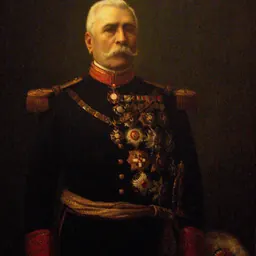


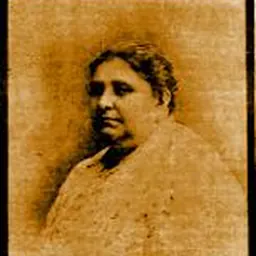
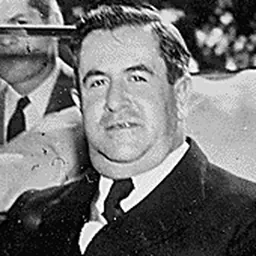

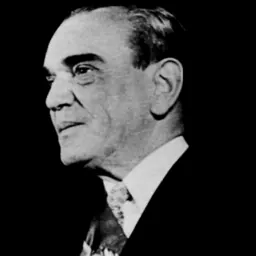

Related people
Same field, nearest in time




Contemporaries
People whose lives overlapped Elvia Carrillo's



Frequently asked questions
Who was Elvia Carrillo?
Mexican politician
When was Elvia Carrillo born?
Elvia Carrillo was born on 6 December 1878 in Motul.
When did Elvia Carrillo die?
Elvia Carrillo died on 15 April 1968 in Mexico City.
What was Elvia Carrillo's occupation?
Elvia Carrillo was a politician, feminist, suffragist and suffragette.
What nationality was Elvia Carrillo?
Elvia Carrillo was Mexican.
Sources & further reading
· DBpedia: Elvia Carrillo Puerto
Cite this page
APA: Biography.guide. (2026). Elvia Carrillo. https://biography.guide/elvia-carrillo/
MLA: "Elvia Carrillo." Biography.guide, https://biography.guide/elvia-carrillo/.
Chicago: "Elvia Carrillo." Biography.guide. https://biography.guide/elvia-carrillo/.
Data last updated: 2026-09-22 · Spot an error? Report a correction.
Page generated 2026-09-27 05:25 UTC