
Elizabeth Lucas Pinckney
American planter and agriculturalist
About Elizabeth Lucas Pinckney
Lived 1722 – 1793 (aged 70–71). Elizabeth Lucas Pinckney was an American horticulturist, planter class and agronomist.
Elizabeth Pinckney ( Lucas; December 28, 1722 May 27, 1793) was an American farmer. Pinckney transformed agriculture in colonial South Carolina, where she developed indigo as one of its most important cash crops. Its cultivation and processing as dye produced one-third the total value of the colony's exports before the Revolutionary War. The manager of three plantations, Pinckney had a major influence on the colonial economy.
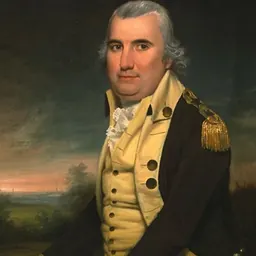
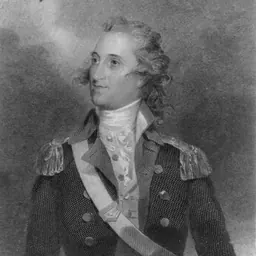
Together with her husband Charles Pinckney, Eliza raised a daughter, Harriott Pinckney Horry, and two sons, Charles Cotesworth Pinckney and Thomas Pinckney, who became prominent politicians in South Carolina and were nominated for president and vice president of the United States by the Federalist Party.
Early life and education Elizabeth (known as Eliza) Lucas was born on December 28, 1722, on the island of Antigua, in the colony of the British Leeward Islands in the Caribbean. Lucas grew up on Poorest, one of her family's three sugarcane plantations on the island. She was the eldest child of Lieutenant Colonel George Lucas, of Dalzell's Regiment of Foot in the British Army, and Ann (probably Meldrum) Lucas. She had two brothers, Thomas and George, and a younger sister Mary (known to her family as Polly).
Colonel and Mrs. Lucas sent all their children to London for schooling. It was customary for elite colonists to send boys to England for their education when they might be as young as 8 or 9. Girls would be sent in their mid-teens when nearing marriageable age. During this period, many parents believed that girls' futures of being wives and mothers made education in more than "the three Rs" and social accomplishments less necessary. But Eliza's ability was recognized. She treasured her education at boarding school, where studies included French and music, but she said her favorite subject was botany. She wrote to her father that she felt her "education, which [she] esteems a more valuable fortune than any [he] could have given [her], … Will make me happy in my future life."
Move to South Carolina In 1738, the year Eliza would turn 16, Colonel Lucas moved his family from Antigua to South Carolina, where he had inherited three plantations from his father. With tensions increasing between Spain and England, he believed his family would be safer in Carolina than on the tiny, exposed island in the West Indies. Eliza's grandfather, John Lucas, had acquired and developed three tracts of land: Garden Hill, a 1,500-acre plantation producing tar and timber on the Combahee River; a 3,000-acre rice plantation on the Waccamaw River; and the 600-acre Wappoo Plantation along Wappoo Creek—a tidal creek that connected the Ashley and Stono Rivers. They chose to reside at Wappoo, which was 17 miles by land to Charleston (then known as Charles Town) and six miles by river.
In 1739, Colonel Lucas had to return to his post in Antigua to deal with the political conflict between England and Spain. He was appointed lieutenant governor of the island. England's involvement in the War of the Austrian Succession thwarted his attempts to move back to South Carolina with his family. Eliza's letters to him show that she regarded her father with great respect and deep affection, and demonstrate that she acted as head of the family in terms of managing the plantations. Her mother and sister Polly returned to Antigua to be with Colonel Lucas in 1744, at which time Colonel Charles Pinckney proposed to Eliza and they were married. The plantations were heavily mortgaged by her father to attain higher rank in the military. He arranged a lease of their home on Wappoo Creek before his wife and daughter departed. An arrangement was made with Pinckney to have only a small dowry settlement of all rights to the indigo crop there from Wappoo (According to the letterbook of Eliza Lucas Pinckney xvi, xi).
Career Eliza was 16 years old when she became responsible for managing Wappoo Plantation and its 20 slaves, plus supervising overseers at the other two Lucas plantations.
Eliza used her 1744 crop to make seed and shared it with other planters, leading to an expansion in indigo production.
Writings From the time that she began her life in South Carolina on Wappoo Plantation to the time that she died in 1793, Eliza carefully copied all her conversations and letters into a "letter-book."
Personal life
Eliza knew independence at a very young age. Her determination to stay independent carried over into her personal life. Her father presented two potential suitors—both wealthy, connected, South Carolina socialites—to Eliza in the years before she fell in love with and married Charles Pinckney. Eliza rejected both suitors, which was unusual in 18th-century colonial America.
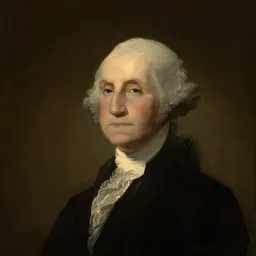
Eliza and Charles Pinckney, a planter on a neighboring plantation, became attached after the death of his first wife. Eliza had been very close to the couple before his wife's death. They were married on May 25, 1744. She was 21 years old and took her family responsibilities seriously, vowing:to make a good wife to my dear Husband in all its several branches; to make all my actions Correspond with that sincere love and Duty I bear him… I am resolved to be a good mother to my children, to pray for them, to set them good examples, to give them good advice, to be careful both of their souls and bodies, to watch over their tender minds. Shortly after their return in 1758 to South Carolina, Charles Pinckney contracted malaria and died. Widowed, Eliza continued to manage their extensive plantations, in addition to the Lucas holdings. Most of her agricultural experiments took place before this time. President George Washington served as a pallbearer at her funeral at St. Peter's Church in Philadelphia where she had traveled for treatment.
Honors and legacy 1753 - Pinckney was granted an audience with Augusta, the Dowager Princess of Wales, in London. She presented the princess with a dress made of silk produced on the Pinckney plantations. 2008 - Inducted into the South Carolina Hall of Fame
In popular culture Natasha Boyd published The Indigo Girl, a novel about Eliza Lucas, in 2017.
Don’t just read it —
keep it.
Full-length biographies made to live with: read them, listen on the way to work, watch them tonight.
- E-book
- Audio
- Video
Instant download · yours to keep · every purchase keeps this site free
Important facts
People in Elizabeth Lucas Pinckney's life
Named in this biography and alive at the same time

Related people
Same field, nearest in time



Contemporaries
People whose lives overlapped Elizabeth Lucas Pinckney's


Frequently asked questions
Who was Elizabeth Lucas Pinckney?
American planter and agriculturalist (1722–1799)
When was Elizabeth Lucas Pinckney born?
Elizabeth Lucas Pinckney was born on 28 December 1722 in British Leeward Islands.
When did Elizabeth Lucas Pinckney die?
Elizabeth Lucas Pinckney died in 1793 in Philadelphia.
What was Elizabeth Lucas Pinckney's occupation?
Elizabeth Lucas Pinckney was a horticulturist, planter class and agronomist.
What nationality was Elizabeth Lucas Pinckney?
Elizabeth Lucas Pinckney was American.
Sources & further reading
· Wikipedia: Elizabeth Lucas Pinckney
Cite this page
APA: Biography.guide. (2026). Elizabeth Lucas Pinckney. https://biography.guide/elizabeth-lucas-pinckney/
MLA: "Elizabeth Lucas Pinckney." Biography.guide, https://biography.guide/elizabeth-lucas-pinckney/.
Chicago: "Elizabeth Lucas Pinckney." Biography.guide. https://biography.guide/elizabeth-lucas-pinckney/.
Data last updated: 2026-09-20 · Spot an error? Report a correction.
Page generated 2026-09-27 05:15 UTC