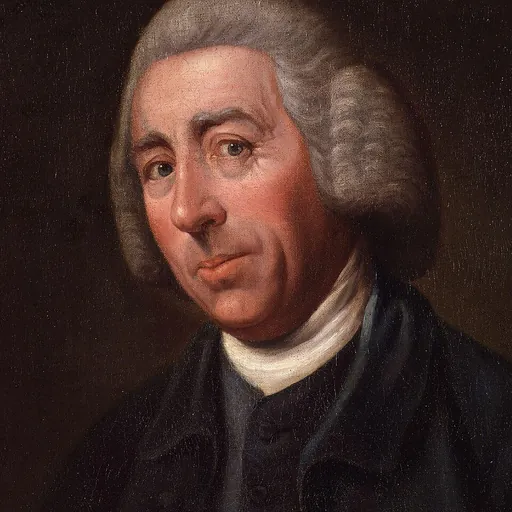
About Lancelot Brown
Lived 1716 – 1783 (aged 66–67). Lancelot Brown was a British horticulturist, architect, landscape architect, gardener and garden designer.
Lancelot "Capability" Brown (born c. 1715–16, baptised 30 August 1716 – 6 February 1783) was an English gardener and landscape architect, a notable figure in the history of the English landscape garden style.
Unlike other architects including William Kent, he was a hands-on gardener and provided his clients with a full turnkey service, designing the gardens and park, and then managing their landscaping and planting. He is most famous for the landscaped parks of English country houses, many of which have survived reasonably intact. However, he also included in his plans "pleasure gardens" with flower gardens and the new shrubberies, usually placed where they would not obstruct the views across the park of and from the main facades of the house. Few of his plantings of "pleasure gardens" have survived later changes. He also submitted plans for much smaller urban projects, for example the college gardens along The Backs at Cambridge.
Criticism of his style, both in his own day and subsequently, mostly centres on the claim that "he created 'identikit' landscapes with the main house in a sea of turf, some water, albeit often an impressive feature, and trees in clumps and shelterbelts", giving "a uniformity equating to authoritarianism" and showing a lack of imagination and even taste on the part of his patrons.
He designed more than 170 parks, many of which survive to this day. He was nicknamed "Capability" because he would tell his clients that their property had "capability" for improvement. His influence was so great that the contributions to the English garden made by his predecessors Charles Bridgeman and William Kent are often overlooked; even Kent's champion Horace Walpole allowed that Kent "was succeeded by a very able master".
Early life and Stowe Lancelot Brown was the fifth child of a land agent and a chambermaid, born in the village of Kirkharle, Northumberland, and educated at a school in Cambo until he was 16. Brown's father, William Brown, had been Sir William Loraine's land agent and his mother, Ursula (née Hall ), had been in service at Kirkharle Hall. His eldest brother, John, became the estate surveyor and later married Sir William's daughter. His older brother George became a mason-architect.
After school Lancelot worked as the head gardener's apprentice at Sir William Loraine's kitchen garden at Kirkharle Hall until he was 23. In 1739 he journeyed south to the port of Boston, Lincolnshire. Then he moved further inland, where his first landscape commission was for a new lake in the park at Kiddington Hall, Oxfordshire. He moved to Wotton Underwood House, Buckinghamshire, seat of Sir Richard Grenville. Ha-ha (the hidden ditch in the foreground) and house at Berrington Hall in Herefordshire, Brown's last big project, a new-build designed by his son-in-law, placed to exploit views in two directions.
In 1741, Brown joined Lord Cobham's gardening staff as undergardener at Stowe Gardens, Buckinghamshire, He made the Grecian Valley at Stowe under William Kent's supervision. It is an abstract composition of landform and woodland. Lord Cobham let Brown take freelance work from his aristocratic friends, thus making him well known as a landscape gardener. As a proponent of the new English style, Brown became immensely sought after by the landed families. By 1751, when Brown was beginning to be widely known, Horace Walpole wrote somewhat slightingly of Brown's work at Warwick Castle:
The castle is enchanting; the view pleased me more than I can express, the River Avon tumbles down a cascade at the foot of it. It is well laid out by one Brown who has set up on a few ideas of Kent and Mr. Southcote. By the 1760s he was earning on average £6,000 a year, usually £500 for one commission. As an accomplished rider he was able to work fast, taking only an hour or so on horseback to survey an estate and rough out an entire design. In 1764, Brown was appointed George III's Master Gardener at Hampton Court Palace, succeeding John Greening and residing at the Wilderness House.
Landscape gardens It is estimated that Brown was responsible for more than 170 gardens surrounding the finest country houses and estates in Britain. His work endures at Belvoir Castle, Croome Court (where he also designed the house), Blenheim Palace, Warwick Castle, Harewood House, Chatsworth, Highclere Castle, Appuldurcombe House, Milton Abbey (and nearby Milton Abbas village), Marden Park (now Woldingham School) and in traces at Kew Gardens and many other locations.
Brown's Pond at Sandleford, Berkshire. One of a string of former priory fish ponds adapted by Brown who was at Sandleford on behalf of Elizabeth Montagu from 1781. At Hampton Court Brown encountered Hannah More in 1782 and she described his "grammatical" manner in her literary terms: Now there' said he, pointing his finger, 'I make a comma, and there' pointing to another spot, 'where a more decided turn is proper, I make a colon; at another part, where an interruption is desirable to break the view, a parenthesis; now a full stop, and then I begin another subject. Brown's patrons saw the idealised landscapes he was creating for them in terms of the Italian landscape painters they admired and collected, as Kenneth Woodbridge first observed in the landscape at Stourhead, a "Brownian" landscape (with an un-Brownian circuit walk) in which Brown himself was not involved.thumb
Criticism Perhaps Brown's sternest critic was his contemporary Uvedale Price, who likened Brown's clumps of trees to "so many puddings turned out of one common mould." Russell Page, who began his career in the Brownian landscape of Longleat but whose own designs have formal structure, accused Brown of "encouraging his wealthy clients to tear out their splendid formal gardens and replace them with his facile compositions of grass, tree clumps and rather shapeless pools and lakes."
Richard Owen Cambridge, the English poet and satirical author, declared that he hoped to die before Brown so that he could "see heaven before it was 'improved'." This deftness of touch was recognised in his own day; one anonymous obituary writer opined: "Such, however, was the effect of his genius that when he was the happiest man, he will be least remembered; so closely did he copy nature that his works will be mistaken." In 1772, Sir William Chambers (though he did not mention Brown by name) complained that the "new manner" of gardens "differ very little from common fields, so closely is vulgar nature copied in most of them."
Architecture Capability Brown produced more than 100 architectural drawings, and his work in the field of architecture was a natural outgrowth of his unified picture of the English country house in its setting: "In Brown's hands the house, which before had dominated the estate, became an integral part of a carefully composed landscape intended to be seen through the eye of a painter, and its design could not be divorced from that of the garden" but Brown's work as an architect is overshadowed by his great reputation as a designer of landscapes. Repton was bound to add: "He was inferior to none in what related to the comfort, convenience, taste and propriety of design, in the several mansions and other buildings which he planned". Brown's first country house project was the remodelling of Croome Court, Worcestershire, (1751–52) for the 6th Earl of Coventry, in which instance he was likely following sketches by the gentleman amateur Sanderson Miller. but during the twentieth century his reputation rose again. Tom Turner has suggested that the latter resulted from a favourable account of his talent in Marie-Luise Gothein's History of Garden Art which predated Christopher Hussey's positive account of Brown in The Picturesque (1927). Dorothy Stroud wrote the first full monograph on Capability Brown, fleshing out the generic attributions with documentation from country house estate offices.
Later landscape architects like William Sawrey Gilpin would opine that Brown's 'natural curves' were as artificial as the straight lines that were common in French gardens. Brown's portrait by Nathaniel Dance, c. 1773, is conserved in the National Portrait Gallery, London. His work has often been favourably compared and contrasted ("the antithesis") to the œuvre of André Le Nôtre, the French jardin à la française landscape architect. He became both "rich and honoured and had 'improved' a greater acreage of ground than any landscape architect" who preceded him. published a large amount of new research on Brown's work and held over 500 events across Britain as part of the celebrations. Royal Mail issued a series of Landscape Stamps in his honour in August 2016.
The Gardens Trust, with support from Historic England, published Vulnerability Brown: Capability Brown landscapes at risk in October 2017 to review the issues facing the survival of these landscapes as well as suggested solutions.
A commemorative fountain in Westminster Abbey's cloister garth was dedicated for Lancelot 'Capability' Brown after Evensong on Tuesday 29 May 2018 by the Dean of Westminster, Dr John Hall. The fountain sits over an old monastic well in the garth. It was designed by Ptolemy Dean, the Abbey's Surveyor of the Fabric, and was developed with the assistance of gardener Alan Titchmarsh. The fountain was made in lead by sculptor Brian Turner.
Personal life
On 22 November 1744 he married Bridget Wayet (affectionately called Biddy) from Boston, Lincolnshire, in Stowe parish church. Her father was an alderman and landowner while her family had surveyors and engineers among its members. They had eight children: Bridget in 1746, Lancelot (known as Lance), William (who died young), John in 1751, a son in 1754 who died shortly afterwards, Anne who was born and died in 1756, Margaret (known as Peggy) in 1758, and Thomas in 1761.
In 1768 he purchased the manor of Fenstanton in Huntingdonshire in East Anglia for £13,000 from Lord Northampton. This came with two manor houses, two villages and 2,668 acres of land. The property stayed in the family until it was sold in lots in 1870s and 1880s. Ownership of the property allowed him to stand for and serve as High sheriff of Huntingdonshire from 1770 to 1771. He continued to work and travel until his sudden collapse and death on 6 February 1783, on the doorstep of his daughter Bridget Holland's house, at 6 Hertford Street, London while returning after a night out at Lord Coventry's.
Horace Walpole wrote to Lady Ossory: "Your dryads must go into black gloves, Madam, their father-in-law, Lady Nature's second husband, is dead!". Brown was buried in the churchyard of St. Peter and St. Paul, the parish church of Brown's small estate at Fenstanton Manor. He left an estate of approximately £40,000 , which included property in Cambridgeshire, Huntingdonshire and Lincolnshire. His eldest daughter Bridget married the architect Henry Holland. Brown sent two of his sons to Eton. One of them, Lancelot Brown the younger, became the MP for Huntingdon. His son John joined the Royal Navy and rose to become an admiral.
Gardens and parks
Many of Capability Brown's parks and gardens may still be visited today. A partial list of the landscapes he designed or worked on includes:
Adderbury House, Oxfordshire (designs not thought to be implemented) Addington Place, Croydon Alnwick Castle, Northumberland Althorp, Northamptonshire Ampthill Park, Ampthill, Bedfordshire Ancaster House, Richmond, Surrey Appuldurcombe House, Isle of Wight Ashburnham Place, East Sussex Ashridge House, Hertfordshire Aske Hall, North Yorkshire Astrop Park, Northamptonshire Audley End, Essex Aynhoe Park, Northamptonshire The Backs, Cambridge Badminton House, Gloucestershire Ballyfin House, Ireland Basildon Park, Berkshire Battle Abbey, East Sussex Beaudesert, Staffordshire Beechwood, Bedfordshire Belhus, Essex Belvoir Castle, Leicestershire Benham, Berkshire Benwell Tower, near Newcastle upon Tyne Berrington Hall, Herefordshire Blenheim Palace, Oxfordshire Bowood House, Wiltshire Branches Park, Cowlinge, Suffolk Brentford, Ealing Brightling Park, East Sussex Broadlands, Hampshire Brocklesby Hall, Lincolnshire Burghley House, Cambridgeshire Burton Constable Hall, East Riding of Yorkshire Burton Park, West Sussex Burton Pynsent House, Somerset Byram, West Yorkshire Cadland, Hampshire Capheaton Hall, Northumberland Chillingham Castle, Northumberland Cardiff Castle, Cardiff Castle Ashby House, Northamptonshire Caversham Park, Berkshire Chalfont House, Buckinghamshire Charlecote, Warwickshire Charlton, Wiltshire Chatsworth, Derbyshire Chilham Castle, Kent Chillington Hall, West Midlands Church Stretton Old Rectory, Shropshire Clandon Park, Surrey Claremont, Surrey Clumber Park, Nottinghamshire Compton Verney, Warwickshire Coombe Abbey, Coventry Corsham Court, Wiltshire Croome Park, Worcestershire Dodington Park, Gloucestershire Danson Park, Bexley Borough of London Darley Abbey Park, Derby Ditchingham Hall, Ditchingham, Norfolk Euston Hall, Suffolk Farnborough Hall, Warwickshire Fawley Court, Oxfordshire Gatton Park, Surrey Grimsthorpe Castle, Lincolnshire Hampton Court Palace, Surrey Kirtlington, Oxfordshire Knowsley Hall, near Liverpool Kyre Park, Herefordshire Lacock Abbey, Wiltshire Laleham Abbey, Surrey Langley, Berkshire Langley Park, Buckinghamshire Langley Park, Norfolk Latimer Park, Amersham, Buckinghamshire Leeds Abbey, Kent Littlegrove, Barnet, London Lleweni Hall, Clwyd Longford Castle, Wiltshire Longleat, Wiltshire Lowther, Cumbria Luton Hoo, Bedfordshire Madingley Hall, Cambridgeshire Maiden Earley, Berkshire Mamhead House, Devon Melton Constable Hall, Norfolk Milton Abbey, Dorset Moccas Court, Herefordshire Moor Park, Rickmansworth, Hertfordshire Mount Clare, Roehampton, South West London Navestock Hall, Essex Newnham Paddox, Warwickshire Newton Park, Newton St Loe, Somerset New Wardour Castle, Wiltshire North Cray Place, near Sidcup, Bexley, London North Stoneham Park, Eastleigh, Hampshire Nuneham House, Nuneham Courtney, Oxfordshire Oakley, Shropshire Packington Park, Warwickshire Paddenswick Manor, West London Patshull Hall, Staffordshire Paultons Park, Hampshire Peper Harow House, Surrey Peterborough House, Hammersmith, London Petworth House, West Sussex Pishiobury, Hertfordshire Porter's Park, Hertfordshire Prior Park, Somerset Ragley Hall, Warwickshire Redgrave Park, Suffolk Roche Abbey, South Yorkshire Sandleford, Berkshire Savernake Forest, Wiltshire Schloss Richmond (Richmond Palace) in Braunschweig, Germany Scampston Hall, North Yorkshire Sheffield Park, East Sussex Sherborne Castle, Dorset Sledmere House, East Riding of Yorkshire Southill Park, Bedfordshire South Stoneham House, Southampton, Hampshire Stoke Park, Buckinghamshire Stowe Landscape Garden Syon House, West London Temple Newsam, Leeds Thorndon Hall, Essex Trentham Gardens, Staffordshire Ugbrooke Park, Devon Wallington, Northumberland Warwick Castle, Warwick Wentworth Castle, South Yorkshire West Hill, Putney, South London Weston Park, Staffordshire Whitehall, London Whitley Beaumont, West Yorkshire Widdicombe Park, near Slapton, Devon Wimbledon House, South West London Wimbledon Park, South West London Wimpole Hall, Cambridgeshire Woburn Abbey, Bedfordshire Wolterton Hall, Norfolk Woodchester, Gloucestershire Woodside, Berkshire Wootton Place Rectory, Oxfordshire Wotton, Buckinghamshire Wrest Park, Bedfordshire Wrotham Park, Hertfordshire Wycombe Abbey, Buckinghamshire Wynnstay, Clwyd, Wales Youngsbury, Hertfordshire
More than 30 of the gardens are open to the public.
Don’t just read it —
keep it.
Full-length biographies made to live with: read them, listen on the way to work, watch them tonight.
- E-book
- Audio
- Video
Instant download · yours to keep · every purchase keeps this site free
Important facts
People in Lancelot Brown's life
Named in this biography and alive at the same time


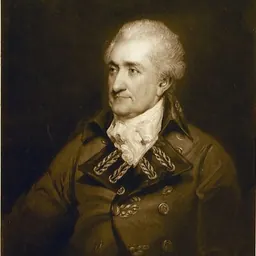

Related people
Same field, nearest in time


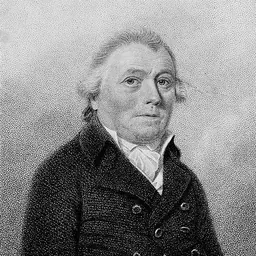
Contemporaries
People whose lives overlapped Lancelot Brown's

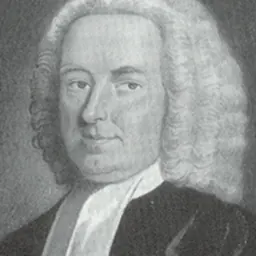
Frequently asked questions
Who was Lancelot Brown?
British landscape architect (1716–1783)
When was Lancelot Brown born?
Lancelot Brown was born in 1716 in Kirkharle.
When did Lancelot Brown die?
Lancelot Brown died on 6 February 1783 in London.
What was Lancelot Brown's occupation?
Lancelot Brown was a horticulturist, architect, landscape architect, gardener and garden designer.
What nationality was Lancelot Brown?
Lancelot Brown was British.
Sources & further reading
Cite this page
APA: Biography.guide. (2026). Lancelot Brown. https://biography.guide/lancelot-brown/
MLA: "Lancelot Brown." Biography.guide, https://biography.guide/lancelot-brown/.
Chicago: "Lancelot Brown." Biography.guide. https://biography.guide/lancelot-brown/.
Data last updated: 2026-09-20 · Spot an error? Report a correction.
Portrait: Wikimedia Commons · author & licence
Page generated 2026-09-27 04:57 UTC