
About Elizabeth Bonhôte
Lived 1744 – 1818 (aged 74). Elizabeth Bonhôte was a British novelist, essayist, writer and poet.
Elizabeth Bonhôte, née Mapes (baptised 11 April 1744 – 11 June 1818) was an English novelist, essayist and poet. Her most successful work was Bungay Castle, a Gothic romance written after her husband had bought the ruins of the real Bungay Castle.
Life Born Elizabeth Mapes in Bungay, Suffolk, in April 1744, Elizabeth was the elder surviving child of James Mapes (baptised 1714–1794), a baker and grocer, and his wife, Elizabeth, née Galliard (died 1789).
She married on 13 October 1772 Daniel Bonhôte, a Bungay solicitor and landowner, by whom she bore three children between 1773 and 1777. One of her daughters, also called Elizabeth, married Rev. Richard Dreyer, rector of Thwaite and a former curate of St Mary's in Bungay. Daniel Bonhôte later became under-sheriff of Suffolk and captain of a militia company. He died in 1804, after they had moved to Bury St Edmunds.
Little else is known of Elizabeth Bonhôte's appearance or personality. After her death at Bungay on 11 June 1818, her will disposed of several dwelling houses and a bakery and shop in the town, as well as £3500 in cash and annuities. A cul-de-sac near the centre of Bungay has been named Elizabeth Bonhote Close.
Work Elizabeth Mapes wrote several elegies and poems in praise of the monarchy, and a first anonymous novel, Hortensia, or, The Distressed Wife in 1769. She is said to have been a royalist "perfectly satisfied with our laws and constitution". In the year of her marriage she had her second novel published, The Rambles of Mr Frankly, Published by his Sister in 1772. This is a moralistic work thought to have been influenced in its form by Laurence Sterne's A Sentimental Journey through France and Italy (1768). Frankly learns from observing people during his walks in Hyde Park. The book became highly popular and was translated into German. Two further novels, Darnley Vale, or, Emelia Fitzroy (1789) and Ellen Woodley (1790) were both reviewed in the Monthly Review.
Bonhôte wrote occasional verse throughout her life. Her final publication was one such piece: Feeling, or, Sketches from Life: a Desultory Poem (1810).
Don’t just read it —
keep it.
Full-length biographies made to live with: read them, listen on the way to work, watch them tonight.
- E-book
- Audio
- Video
Instant download · yours to keep · every purchase keeps this site free
Important facts
People in Elizabeth Bonhôte's life
Named in this biography and alive at the same time
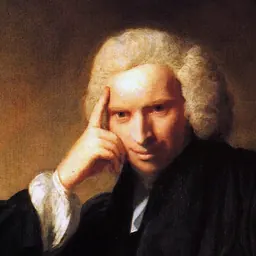
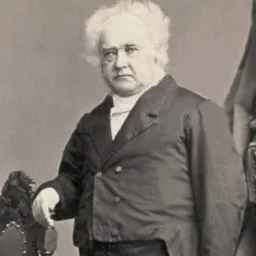
Related people
Same field, nearest in time
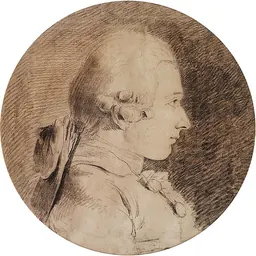
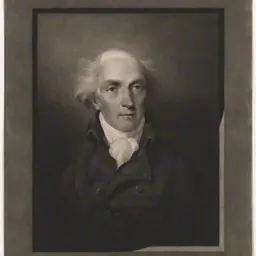


Contemporaries
People whose lives overlapped Elizabeth Bonhôte's





Frequently asked questions
Who was Elizabeth Bonhôte?
English novelist, essayist and poet, 1744–1818
When was Elizabeth Bonhôte born?
Elizabeth Bonhôte was born on 11 April 1744 in Bungay.
When did Elizabeth Bonhôte die?
Elizabeth Bonhôte died on 11 June 1818 in Bungay.
What was Elizabeth Bonhôte's occupation?
Elizabeth Bonhôte was a novelist, essayist, writer and poet.
What nationality was Elizabeth Bonhôte?
Elizabeth Bonhôte was British.
Sources & further reading
· Wikipedia: Elizabeth Bonhôte
Cite this page
APA: Biography.guide. (2026). Elizabeth Bonhôte. https://biography.guide/elizabeth-bonhote/
MLA: "Elizabeth Bonhôte." Biography.guide, https://biography.guide/elizabeth-bonhote/.
Chicago: "Elizabeth Bonhôte." Biography.guide. https://biography.guide/elizabeth-bonhote/.
Data last updated: 2026-09-20 · Spot an error? Report a correction.
Page generated 2026-09-27 05:33 UTC