
About Elizabeth Barry
Lived 1658 – 1713 (aged 54–55). Elizabeth Barry was a British stage actor.
Elizabeth Barry (after Sir Godfrey Kneller) changed "like Nature which she represents, from Passion to Passion, from Extream to Extream, with piercing Force and with easy Grace".
Elizabeth Barry (1658 – 7 November 1713) was an English actress of the Restoration period.
Elizabeth Barry's biggest influence on Restoration drama was her presentation of performing as the tragic actress. She worked in large, prestigious London theatre companies throughout her successful career: from 1675 in the Duke's Company, 1682–1695 in the monopoly United Company, and from 1695 onwards as a member of the actors' cooperative usually known as Betterton's Company, of which she was one of the original shareholders. Her stage career began 15 years after the first-ever professional actresses had replaced Shakespeare's boy heroines on the London stage.
The actor Thomas Betterton said that her acting gave "success to plays that would disgust the most patient reader", and the critic and playwright John Dennis described her as "that incomparable Actress changing like Nature which she represents, from Passion to Passion, from Extream to Extream, with piercing Force and with easy Grace".
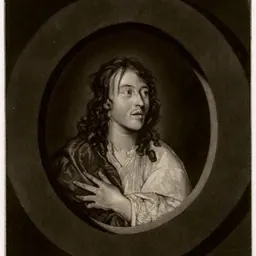
Early career Barry's first performance was at the age of 17 in Thomas Otway's Alcibiades. Her performance was so poor that she was fired from the Duke's Company. She then met John Wilmot, 2nd Earl of Rochester. Their relationship grew from professional colleagues to lovers. They had one child named Elizabeth, who was born in 1677 and died in 1689.
Barry drew on her relationship with Rochester for many of her sexual performances. While multiple sources confirm that Rochester was Barry's lover, the only source for the coaching story is a Life of Barry published in 1741 – 65 years after the events – by Edmund Curll, well known for his fanciful and inaccurate biographies.
Barry was a successful comedian who created a variety of Restoration comedy heroines throughout her career, but her greatest impact on Restoration drama was as a tragic actress. Her capacity for projecting pathos was an inspiration to playwrights Thomas Otway and Thomas Southerne in the three famous tragic roles they wrote for her: Monimia in Otway's The Orphan (1680), Belvidera in Otway's Venice Preserved (1682), and Isabella in Southerne's The Fatal Marriage (1694). These three roles, wrote the prompter John Downes, "gain'd her the Name of Famous Mrs. Barry, both at Court and City, for whenever She Acted any of these three Parts, she forc'd Tears from the Eyes of her Auditory, especially those who have any Sense of Pity for the Distress't." thumb During the first part of her career, Barry worked at the Duke's Theatre at Dorset Gardens, on the riverfront, London's most luxurious playhouse.
In his autobiography, many years later, Colley Cibber recalled the power of her voice: "When distress of Tenderness possess'd her, she subsided into the most affecting Melody and Softness. In the Art of exciting Pity, she had a Power beyond all the Actresses I have yet seen, or what your Imagination can conceive." Elizabeth Howe has argued that it was Barry's success in the role of Monimia that "clinched the movement away from heroic drama and started the establishment of 'she-tragedy' as a popular genre." Also known as pathetic tragedy, this genre represents innocent women as sexual objects and as victims of male lust.
Barry was always described as being a plain woman. Portraits suggest intelligence but heavy features and the playwright Thomas Shadwell writes in a letter in 1692 that it would have been better to have staged Nicholas Brady's The Rape in Roman dress, "and then w'th a Mantle to have covered her hips Mrs Barry would have acted ye part." Apparently, none of this mattered to contemporaries. Even though Barry was "the ugliest Woman" in the world off stage, wrote an anonymous author in A Comparison Between the Two Stages (1702), she was "the finest Woman in the World upon the Stage."
Barry's acting style was embedded in the influences from her own personality and life. Elizabeth as a person was seen to be beautiful and virtuous. Although many of the characters she played were virgins, it was known about her relationship with Rochester. It has also been known that she channeled her sexual relationship with Rochester through many of her performances. Also during this time, it was seen that Barry's body had metaphorical meaning to the description of her character. When Barry starred in The Orphan, it was implied that "the trope of the female breast to represent innocence or ruin (consider the many references to Monimia’s "swelling breasts" or "white breasts"). Thus Otway uses the dismemberment of the female body, expressed through the "mangled breasts besmeared with blood", to signify the ruin of the state".
Later career Later into Barry’s career, she was given more roles of a motherhood figure than a sexual object. Barry worked for the Duke's Company from 1675 to 1682, taking the role of Cordelia opposite Thomas Betterton's Lear in Nahum Tate's 1681 adaptation of Shakespeare's King Lear. After the Duke's and the King's companies were amalgamated in 1682, she continued as one of the star performers of the new United Company, which remained for 12 years the only theatrical company in London. The absence of rival companies left the actors in a weak bargaining position in relation to management.
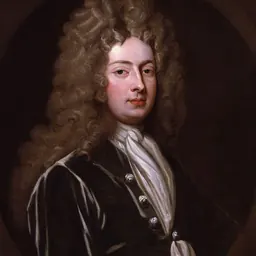
One year after her performance in The Fatal Marriage, Barry decided to leave the United Company due to a salary dispute in 1695. She then proceeded to work for a new company with actor Thomas Betterton and actress Anne Bracegirdle. Barry was one of the original patent-holders of the actors' company, which opened at Lincoln's Inn Fields with the smash hit of William Congreve's Love For Love in 1695 and continued to successfully challenge Rich's United Company. There was a huge wage gap between men and woman performers as Betterton was paid £4 and 20s per week and Barry received only £2 and 10s shillings.
Barry officially retired from the stage in 1710 at 52 years old; her acting career lasted a total of 35 years. Her retirement fell short as she died three years later at the age of 55 due to a fever.
Selected list of plays and roles Play Playwright Role Alcibiades (1675) Thomas Otway Draxilla Mustapha (1676) Earl of Orrery Queen Isabelle The Man of Mode (1676) George Etherege Mrs. Loveit The Wrangling Lovers (1676) Edward Ravenscroft Elvira Titus and Berenice (1676) Thomas Otway Phaenice Tom Essence (1676) Thomas Rawlins Theodocia Madam Fickle (1676) Thomas D'Urfey Constantia The Cheats of Scapin (1676) Thomas Otway Lucia The Rover (1677) Aphra Behn Hellena The French Conjuror (1677) Thomas Porter Clorinia A Fond Husband (1677) Thomas D'Urfey Emillia The Destruction of Troy (1678) John Banks Polyxena Friendship in Fashion (1678) Thomas Otway Mrs Goodvile The Virtuous Wife (1679) Thomas D'Urfey Olivia The Woman Captain (1679) Thomas Shadwell Mrs Gripe Caius Marius (1679) Thomas Otway Lavinia Theodosius (1680) Nathaniel Lee Athenais The Orphan (1680) Thomas Otway Monimia The Princess of Cleve (1680) Nathaniel Lee Princess of Cleve The Revenge (1680) Aphra Behn Corina The Loving Enemies (1680) Lewis Maidwell Camilla Lucius Junius Brutus (1680) Nathaniel Lee Teraminta The London Cuckolds (1681) Edward Ravenscroft Arabella Venice Preserv’d (1682) Thomas Otway Belvidera The City Heiress (1682) Aphra Behn Lady Galliard Constantine the Great (1683) Nathaniel Lee Fausta Sir Courtly Nice (1685) John Crowne Leonora Darius, King of Persia (1688) John Crowne Barzana The Injured Lovers (1688) William Mountfort Princess Oryala Don Sebastian (1689) John Dryden Almedya The Massacre of Paris (1689) Nathaniel Lee Marguerite Amphitryon (1690) John Dryden Alcema Distressed Innocence (1690) Elkanah Settle Orundana Edward III (1690) William Mountfort Isabella The Wives Excuse (1691) Thomas Southerne Mrs Friendall Cleomenes, the Spartan Hero (1692) John Dryden Cassandra The Marriage-Hater Matched (1692) Thomas D'Urfey Lady Sutble Henry II (1692) William Mountfort Queen Eleanor Regulus (1692) John Crowne Fulvia The Maid's Last Prayer (1693) Thomas Southerne Lady Malepert The Old Bachelor (1693) William Congreve Laetitia The Fatal Marriage (1694) Thomas Southerne Isabella The Married Beau (1694) John Crowne Mrs Loveley The Ambitious Slave (1694) Elkanah Settle CelestinaLove Triumphant (1694) John Dryden Victoria The She-Gallants (1695) George Granville Lady Dorimen Cyrus the Great (1695) John Banks Panthea Love for Love (1695) William Congreve Mrs Frail The Royal Mischief (1696) Delariviere Manley Homais The City Lady (1696) Thomas Dilke Lady Grumble Boadicea, Queen of Britain (1697) Charles Hopkins Boadicea The Innocent Mistress (1697) Mary Pix Bellinda The Mourning Bride (1697) William Congreve Zara The Intrigues at Versailles: Or, A Jilt in All Humours: A Comedy (1697) Thomas d'Urfey Madam de Vandosme Rinaldo and Armida (1698) John Dennis Armida The False Friend (1699) Mary Pix Adellaida Tamerlane (1701) Nicholas Rowe Arpasia Antiochus the Great (1701) Jane Wiseman Leodice The Fair Penitent (1702) Nicholas Rowe Calista The Biter (1704) Nicholas Rowe Mrs Clever All For Love (1704) John Dryden Cleopatra Ulysses (1705) Nicholas Rowe Penelope Adventures in Madrid (1706) Mary Pix Clarinda The Royal Convert (1707) Nicholas Rowe Rodogune
Fictional portrayals Barry is a supporting character in The Libertine, Stephen Jeffreys' play about John Wilmot's life, as well as its 2004 film adaptation, in which she is portrayed by Samantha Morton. Barry also appears as a character in the 2015 play [exit Mrs Behn] or, The Leo Play by Christopher vanDer Ark.
Don’t just read it —
keep it.
Full-length biographies made to live with: read them, listen on the way to work, watch them tonight.
- E-book
- Audio
- Video
Instant download · yours to keep · every purchase keeps this site free
Important facts
People in Elizabeth Barry's life
Named in this biography and alive at the same time



Related people
Same field, nearest in time


Contemporaries
People whose lives overlapped Elizabeth Barry's




Frequently asked questions
Who was Elizabeth Barry?
British actress (1658-1713)
When was Elizabeth Barry born?
Elizabeth Barry was born in 1658 in London.
When did Elizabeth Barry die?
Elizabeth Barry died on 7 November 1713.
What was Elizabeth Barry's occupation?
Elizabeth Barry was a stage actor.
What nationality was Elizabeth Barry?
Elizabeth Barry was British.
Sources & further reading
Cite this page
APA: Biography.guide. (2026). Elizabeth Barry. https://biography.guide/elizabeth-barry/
MLA: "Elizabeth Barry." Biography.guide, https://biography.guide/elizabeth-barry/.
Chicago: "Elizabeth Barry." Biography.guide. https://biography.guide/elizabeth-barry/.
Data last updated: 2026-09-26 · Spot an error? Report a correction.
Page generated 2026-09-27 05:14 UTC