
About Nicholas Rowe
Lived 1674 – 1718 (aged 44). Nicholas Rowe was a British playwright, poet, writer, literary historian, poet lawyer and jurist.
Nicholas Rowe (; 20 June 1674 – 6 December 1718 His family possessed a considerable estate at Lamerton in Devonshire. His father practised law and published Benlow's and Dallison's Reports during the reign of King James II.
The future Poet Laureate was educated first at Highgate School, and then at Westminster School under the guidance of Richard Busby. In 1688, Rowe became a King's Scholar, which was followed by his entrance into Middle Temple in 1691.
The inscription on his tomb reads as follows: To the Memory of NICHOLAS ROWE Esq: who died in 1718 Aged 45, And of Charlotte his only daughter the wife of Henry Fane Esq; who, inheriting her Father's Spirit, and Amiable in her own Innocence & Beauty, died in the 22nd year of her age 1739.
Thy Reliques, Rowe, to this sad Shrine we trust, and near thy Shakespear place thy honour'd Bust, Oh next him skill'ed to draw the tender Tear, For never Heart felt Passion more sincere: To nobler sentiment to fire the Brave. For never Briton more disdain'd a Slave: Peace to the gentle Shade, and endless Rest, Blest in thy Genius, in thy love too blest; And blest, that timely from Our Scene remov'd Thy Soul enjoys that Liberty it lov'd.
To these, so mourn'd in Death, so lov'd in Life! The childless Parent & the widow'd wife With tears inscribes this monument Stone, That holds their Ashes & expects her own.
Works The Ambitious Stepmother, Rowe's first play, produced in 1700 at Lincoln's Inn Fields by Thomas Betterton and set in Persepolis, was well received. This was followed in 1701 by Tamerlane. In this play the conqueror Timur represented William III, and Louis XIV is denounced as Bajazet. It was for many years regularly acted on the anniversary of William's landing at Torbay.
The Fair Penitent (1702, published 1703), an adaptation of Massinger and Field's The Fatal Dowry, was pronounced by Samuel Johnson as one of the most pleasing tragedies ever written in English. It featured the character of Lothario, whose name, as a result of this play, became synonymous with a rake (womaniser). Calista is said to have suggested to Samuel Richardson the character of Clarissa Harlowe, as Lothario suggested Lovelace.
Jane Shore, professedly an imitation of Shakespeare's style, was played at Drury Lane with Anne Oldfield in the title role in 1714. It ran for nineteen nights, and kept the stage longer than any other of Rowe's works.
Rowe wrote occasional verses addressed to Godolphin and Halifax, adapted some of the odes of Horace to fit contemporary events, and translated the Caractères of Jean de La Bruyère and the Callipaedia of Claude Quillet. He also wrote a memoir of Boileau prefixed to a translation of the Lutrin. Tamerlane (1701), a verse drama largely in blank verse The Biter (1704), a comedy in prose Ulysses (1705), a verse drama largely in blank verse The Royal Convert (1707), a verse drama largely in blank verse The Tragedy of Jane Shore (1714), a verse drama in imitation of Shakespeare's style Lady Jane Grey (1715), a verse drama largely in blank verse
Adaptations and translations The Fair Penitent (1702/3), an adaptation of Massinger and Field's The Fatal Dowry, a verse drama largely in blank verse, with some prose and song lyrics Lucan (1718), a paraphrase of the Pharsalia Callipaedia (1710), translation of Claude Quillet
Edited works The Works of William Shakespear (London: Jacob Tonson, 1709–10), first modern edition of the plays and poems
Miscellaneous works Memoir of Boileau (date unknown), prefixed to translation of Lutrin Some Account of the Life &c. of Mr. William Shakespear
Don’t just read it —
keep it.
Full-length biographies made to live with: read them, listen on the way to work, watch them tonight.
- E-book
- Audio
- Video
Instant download · yours to keep · every purchase keeps this site free
Important facts
People in Nicholas Rowe's life
Named in this biography and alive at the same time

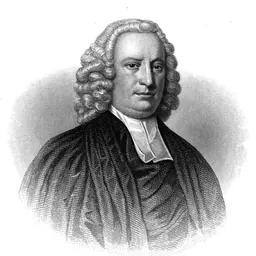


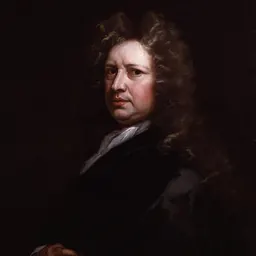


Related people
Same field, nearest in time
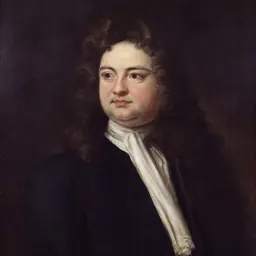
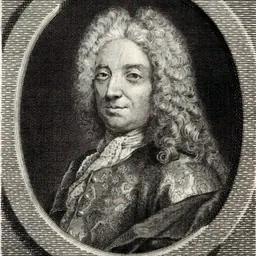

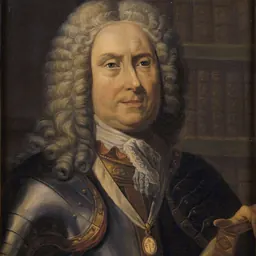

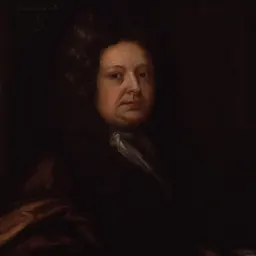
Contemporaries
People whose lives overlapped Nicholas Rowe's


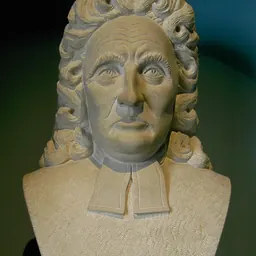

Frequently asked questions
Who was Nicholas Rowe?
English poet, writer (1674-1718)
When was Nicholas Rowe born?
Nicholas Rowe was born on 20 June 1674 in Little Barford.
When did Nicholas Rowe die?
Nicholas Rowe died on 6 December 1718 in London.
What was Nicholas Rowe's occupation?
Nicholas Rowe was a playwright, poet, writer, literary historian, poet lawyer and jurist.
What nationality was Nicholas Rowe?
Nicholas Rowe was British.
Sources & further reading
· DBpedia: Nicholas Rowe (writer)
Cite this page
APA: Biography.guide. (2026). Nicholas Rowe. https://biography.guide/nicholas-rowe-playwright/
MLA: "Nicholas Rowe." Biography.guide, https://biography.guide/nicholas-rowe-playwright/.
Chicago: "Nicholas Rowe." Biography.guide. https://biography.guide/nicholas-rowe-playwright/.
Data last updated: 2026-09-20 · Spot an error? Report a correction.
Page generated 2026-09-27 05:19 UTC