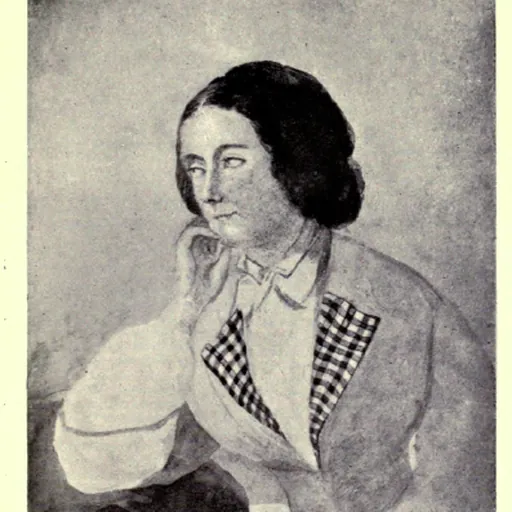
About Elizabeth Ann Ashurst Bardonneau
Lived 1813 – 1850 (aged 37). Elizabeth Ann Ashurst Bardonneau was a British translator.
Eliza Ashurst Bardonneau (born Elizabeth Ann Ashurst; 8 July 1813 – 25 November 1850) was a member of an important family of radical activists in mid-nineteenth-century England and the first translator of George Sand's work into English. The family supported causes ranging from women's suffrage to Italian unification.
Early life On 8 July 1813, Elizabeth Ann Ashurst was born to Elizabeth Ann Brown and William Henry Ashurst. She was the oldest child. Her siblings were William Henry Ashurst Jr., Caroline Ashurst (Stansfeld), Emilie Ashurst (Venturi) and Matilda Ashurst (Biggs). She grew up in the Ashurst home in Muswell Hill, London.
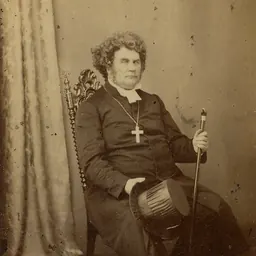
At a period in time when George Sand's advocacy of free-love and her independent lifestyle were quite unusual for a 19th-century woman, Elizabeth Ashurst and Matilda Hays were "broad-minded" and intrigued by the political and social messages addressed in Sand's books. Hays had received support and encouragement from William Charles Macready and George Henry Lewes to translate Sand's novels into English. Both wrote to Sand encouraging the arrangement and a friend of Hays, chaplain Edmund Larken provided funding for the enterprise.
The initial translations of Sand's works were done by Hays and Ashurst. La Derniere Aldini, the first volume, was translated by Hays. Ashurst translated Les Maitres mosaistes (published as The Mosaic Workers in 1844) and Andre (published in 1847). Mazzini wrote a preface for Ashurst's translation of Lettres d'un voyageur (published in 1847). Sand, at Mazzini's urging, invited Ashurt to her home in Nohant. Although they developed a lasting friendship, Sand was quite critical of Ashurst's personality and worldview. Olive Class reported that "Sand was unsettled by the superficial display of feminist rebellion exhibited by her as yet still unmarried disciple and characterized her as 'a prude without modesty.'"
George Henry Lewes suggested to Hays that the translation to the English language toned down some of the rhetoric with an English cultural sensibility.
Published translations Ashurst translated the following books: Sand, George. Letters of a Traveller. Transl. by Eliza A. Ashurst. Ed. by Matilda M. Hays. [Introduction by J. Mazzini]. London: Churton, 1847. Sand, George. Spiridion. Transl. Eliza A. Ashurst. Ed. by Matilda M. Hays. London: Churton, 1842. Sand, George, and Eliza A. Ashurst. The Mosaic Workers: A Tale, to Which Is Added The Orco: a Tradition. London: H.G. Clarke, 1844. Sand, George. The Works of George Sand. By Matilda M. Hays. [Translated by Matilda M. Hays, Eliza A. Ashurst, and E. R. Larken.]. 1847. Sand, George. Andre'''. Transl. Eliza A. Ashurst, Ed. by Matilda M. Hays. London: Churton, 1847.
Personal life Eliza Ashurst was a dear friend of the Italian nationalist Giuseppe Mazzini until her early death. Mazzini and the Ashurst family grew close, and Mazzini considered himself part of the Ashurst family, calling the Ashurst daughters "sister". Eliza, though, may have wished to have been more than a loving sister. His letters to her are reprinted in E. F. Richards' collection: Mazzini's Letters to an English Family''.
In 1840 she, her sister Matilda, and her father attended the World Anti-Slavery Convention in London although she would not have been permitted to speak as the women were not regarded as full delegates.
She met Jean Bardonneau Narcy, a French National Guardsman, in Paris in 1848. They married in Britain in early 1849. Her family and friends, including Mazzini and Sand, opposed the match because they felt he was beneath her in intellect and he had few job prospects. While living in Paris, she miscarried and later died in childbirth on 25 November 1850.
It was Mazzini who relayed the sad news to her sisters, Emilie Ashurst Hawkes (later Venturi) and Matilda Ashurst Biggs, who were in Genoa at the time. The Ashurst family suffered dearly from her death and the radical movement lost an important advocate.
Don’t just read it —
keep it.
Full-length biographies made to live with: read them, listen on the way to work, watch them tonight.
- E-book
- Audio
- Video
Instant download · yours to keep · every purchase keeps this site free
Important facts
People in Elizabeth Ann Ashurst Bardonneau's life
Named in this biography and alive at the same time


Related people
Same field, nearest in time

Contemporaries
People whose lives overlapped Elizabeth Ann Ashurst Bardonneau's






Frequently asked questions
Who was Elizabeth Ann Ashurst Bardonneau?
English translator and activist (1813-1850)
When was Elizabeth Ann Ashurst Bardonneau born?
Elizabeth Ann Ashurst Bardonneau was born on 8 July 1813.
When did Elizabeth Ann Ashurst Bardonneau die?
Elizabeth Ann Ashurst Bardonneau died on 25 November 1850.
What was Elizabeth Ann Ashurst Bardonneau's occupation?
Elizabeth Ann Ashurst Bardonneau was a translator.
What nationality was Elizabeth Ann Ashurst Bardonneau?
Elizabeth Ann Ashurst Bardonneau was British.
Sources & further reading
· Wikipedia: Elizabeth Ann Ashurst Bardonneau
· DBpedia: Eliza Ashurst Bardonneau
Cite this page
APA: Biography.guide. (2026). Elizabeth Ann Ashurst Bardonneau. https://biography.guide/elizabeth-ann-ashurst-bardonneau/
MLA: "Elizabeth Ann Ashurst Bardonneau." Biography.guide, https://biography.guide/elizabeth-ann-ashurst-bardonneau/.
Chicago: "Elizabeth Ann Ashurst Bardonneau." Biography.guide. https://biography.guide/elizabeth-ann-ashurst-bardonneau/.
Data last updated: 2026-09-22 · Spot an error? Report a correction.
Portrait: Wikimedia Commons · author & licence
Page generated 2026-09-27 05:02 UTC