
About Eliseo Verón
Lived 1935 – 2014 (aged 78). Eliseo Verón was an Argentine semiotician, university teacher, philosopher, anthropologist, sociologist and social scientist.
Eliseo Verón (June 12, 1935 – April 15, 2014) was an Argentine sociologist, anthropologist and semiotician, and professor of communication sciences at Universidad de San Andrés. His work is known mainly in Spanish and French-speaking countries.
Academic career He was born in Buenos Aires, where he studied at the university, and began teaching philosophy and sociology as a student from 1957. In 1960, he received a degree in philosophy at the University of Buenos Aires. After graduation, he obtained a scholarship from CONICET to study Social Anthropology Laboratory at the Collège de France with Claude Lévi-Strauss. Verón was in charge of the first translation into spanish of Structural Anthropology, an anthology of Lévi-Strauss's work on that subject, published by Editorial Universitaria de Buenos Aires (Eudeba) in 1961. He recognizes Lévi-Strauss as his main influence during this period. In 1962 he attended a seminar by Roland Barthes at the Ecole Pratique des Hautes Etudes, where he discovered Saussurian semiotics, which became a point of departure for him in future work.
Upon returning to Argentina, Verón became a professor in the Department of Sociology at the University of Buenos Aires. In 1967 and 1968, he directed the Center for Social Research at the Torcuato di Tella Institute. He was professor of Social Psychology at the Universidad Nacional del Litoral and Professor of Sociology at the University of Salvador. In 1970, he won the Guggenheim Fellowship. During the 1970s, he settled in France, where he lived until 1995. He taught at several universities in France (Paris, Bordeaux, Bayonne) and in 1985 received his degree of Doctor of State at the University of Paris VIII. He was professor at the Sorbonne between 1987 and 1992.
In 1995 he returned to Argentina and directed the graduate program in communication sciences at the Universidad Hebrea Argentina Bar Illán. He also taught communication sciences this same discipline taught at the Universidad Nacional de Rosario, the Universidad Nacional del Sur, the University of Fribourg and the University of San Andrés. Between 2000 and 2006, he directed the Master of Journalism program at the University of San Andrés, a joint project with the Clarín Group and Columbia University.
Verón has published books on sociology, social psychology, communication and semiotics since 1968. His early period was influenced by the structuralism of Claude Lévi-Strauss and the binary theory of the sign of Ferdinand de Saussure, and then the triadic sign theory of Charles Sanders Peirce, on whom he relied to develop his theory of social semiosis in 1988.
In 1974 he founded the journal LENGUAjes in Buenos Aires, along with Oscar Steinberg, Juan Carlos Indart, and Oscar Traversa. The publication of this journal was the effective introduction of semiotics in Argentina.
Between 1970 and 1978, Verón was president of the Argentine Association of Semiotics.
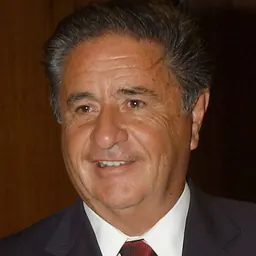
Political activity In December 2010, Verón made a speech contributing to the launch of Eduardo Duhalde, who ran for president of Argentina in 2011.
Death Verón died of cancer on April 15, 2014, at his home in Buenos Aires.
Works Conducta, estructura y comunicación (1968) Imperialismo, lucha de clases y conocimiento: 25 años de sociología en la Argentina (1974) A produçao de sentido (São Paulo, 1980) Construire l'événement (1981) Construir el acontecimiento (Eng: Building the event) (1983). Castellano edition of Construire l'événement, translated by Horacio Verbitsky. Perón o muerte: los fundamentos discursivos del fenómeno peronista (1986). Peron or death: the discursive foundations of the Peronist phenomenon (1986). En colaboración con Silvia Sigal. In collaboration with Silvia Sigal. La semiosis social. The social semiosis. Fragmentos de una teoría de la discursividad (1988) Fragments of a theory of discursivity (1988) Espaces du livre (1989) Espaces du livre (1989) Semiosis de lo ideológico y del poder (1995) Semiosis of the ideological and power (1995) Esto no es un libro (1999) This is not a book (1999) Effectos de agenda (1999) Calendar effects (1999) El cuerpo de las imágenes (2001) The body of images (2001) Espacios mentales. Mental spaces. Effectos de agenda 2 (2002) Effects of schedule 2 (2002) Fragmentos de un tejido (2004) Fragments of tissue (2004)
Awards In 1970 he was named a Guggenheim Fellow by the Guggenheim Foundation. In 2006 he received the Konex Award for his contribution to linguistic and literary theory. In 2006 he was named Doctor Honoris Causa by the Universidad Nacional de Rosario.
Don’t just read it —
keep it.
Full-length biographies made to live with: read them, listen on the way to work, watch them tonight.
- E-book
- Audio
- Video
Instant download · yours to keep · every purchase keeps this site free
Important facts
People in Eliseo Verón's life
Named in this biography and alive at the same time





Related people
Same field, nearest in time




Contemporaries
People whose lives overlapped Eliseo Verón's




Frequently asked questions
Who was Eliseo Verón?
sociologist (1935–2014)
When was Eliseo Verón born?
Eliseo Verón was born on 12 June 1935 in Buenos Aires.
When did Eliseo Verón die?
Eliseo Verón died on 15 April 2014 in Buenos Aires.
What was Eliseo Verón's occupation?
Eliseo Verón was a semiotician, university teacher, philosopher, anthropologist, sociologist and social scientist.
What nationality was Eliseo Verón?
Eliseo Verón was Argentine.
Sources & further reading
Cite this page
APA: Biography.guide. (2026). Eliseo Verón. https://biography.guide/eliseo-veron/
MLA: "Eliseo Verón." Biography.guide, https://biography.guide/eliseo-veron/.
Chicago: "Eliseo Verón." Biography.guide. https://biography.guide/eliseo-veron/.
Data last updated: 2026-09-20 · Spot an error? Report a correction.
Page generated 2026-09-27 05:13 UTC