
About Dan Ben-Amos
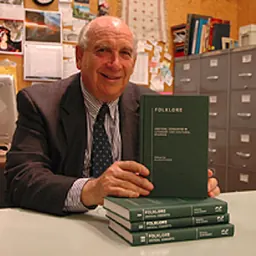
Lived 1934 – 2023 (aged 88). Dan Ben-Amos was an American semiotician, folklorist and university teacher.
Dan Ben-Amos (; September 3, 1934 – March 26, 2023) was an Israeli-American folklorist and academic who worked as a professor at the University of Pennsylvania, Philadelphia, where he held the Graduate Program Chair for the Department of Folklore and Folklife.
Early life and education Ben-Amos was born in Tel Aviv (then in Mandatory Palestine) and grew up in Petah Tikva.
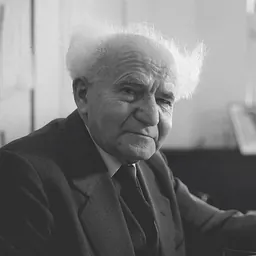
Before starting his studies at Hebrew University of Jerusalem, he served in the Nahal Brigade of the Israel Defense Forces, and in the course of his service he was in a unit that guarded the first prime minister of Israel, David Ben-Gurion, until he retired to kibbutz Sde-Boker in the Israeli Desert. Upon discharge he was a member of Kibbutz Yiftaḥ where he was a shepherd. At Hebrew University of Jerusalem and Bloomington, Ben-Amos was trained in the comparatist tradition.
Towards the end of his education and beginning of his career, Ben-Amos, along with other young folklorists, Roger Abrahams, Alan Dundes, Robert Georges, and Kenneth Goldstein, became affectionately labeled "the Young Turks" by Richard Dorson, prominent folklorist and teacher of Ben-Amos. Although Richard Bauman was not originally included in this group, his work has come to be associated with that of the Young Turks; these young folklorists broke with traditional perspectives of folkloristics, which focus on the text and its content. Collectively, they focused on context in an effort to better understand folklore and the way people use folklore.
In his influential essay “Toward a Definition of Folklore in Context” (1971) Ben-Amos promoted a new way of defining folklore based on its context.
In 1967, Ben-Amos began teaching at the University of Pennsylvania, Philadelphia, serving as an assistant professor for three years and associate professor for seven. He became professor of Folklore and Folklife in 1977, holding the title for 22 years. In 1999 he joined Penn's department of Asian and Middle Eastern Studies; after the split of the department into sub-specialties in 2004, he became professor of Near Eastern Languages and Civilizations.
Awards 2006 National Jewish Book Award, winner in the Sephardic Culture category for Folktales of the Jews. Volume 1: Tales from the Sephardic Dispersion
2006 National Jewish Book Award, finalist in the Scholarship category for Folktales of the Jews. Volume 1: Tales from the Sephardic Dispersion. Edited with Commentary (Dov Noy, Consulting Editor). Philadelphia: The Jewish Publication Society, 2006.
2014 American Folklore Society Lifetime Scholarly Achievement Award
Fellowships 1972–1973 American Council for Learned Societies
1975–1976 John Simon Guggenheim Fellowship
1980–1981 National Endowment for the Humanities
Books In Praise of the Baal Shem Tov, editor and translator, in collaboration with Jerome R. Mintz. Bloomington: Indiana University Press. 1970. Folklore: Performance and Communication, ed. in collaboration with Kenneth S. Goldstein. Approaches to Semiotics, 40. The Hague:Mouton Press. 1975. Sweet Words: Storytelling Events in Benin. Philadelphia: Institute for the Study of Human Issues, 1975. Folklore Genres, ed. American Folklore Society Bibliographical and Special Series, Volume 26, Texas: University of Texas Press, 1976. (Reprint of 1969a with an 'Introduction' and a "Selected Bibliography") Folklore in Context: Essays. New Delhi, Madras: South Asian Publishers. 1982. Cultural Memory and the Construction of Identity, ed. (With Liliane Weissberg), Detroit: Wayne State University Press. (1999). Folktales of the Jews. Volume 1: Tales from the Sephardic (2006). Volume II: 1970, In Praise of the Baal Shem Tov, editor and translator, in collaboration with Jerome R. Mintz. Bloomington: Indiana University Press. (Paperback edition, 1972. 2nd paperback edition, New York: Schocken, 1984; 3rd edition Northvale, New Jersey: Jason Aronson, Jewish Book Club, Main Selection, January 1994). The Diary, The Epic of Everyday Life, with Batsheva Ben-Amos. Bloomington: Indiana University Press (2020).
Relevant literature Juweng Zhang. "Dan Ben Amos (1934-2023)". Western Folklore 83.1:111-134.
Don’t just read it —
keep it.
Full-length biographies made to live with: read them, listen on the way to work, watch them tonight.
- E-book
- Audio
- Video
Instant download · yours to keep · every purchase keeps this site free
Important facts
People in Dan Ben-Amos's life
Named in this biography and alive at the same time


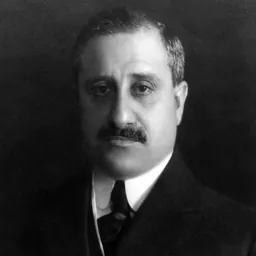

Related people
Same field, nearest in time






Contemporaries
People whose lives overlapped Dan Ben-Amos's


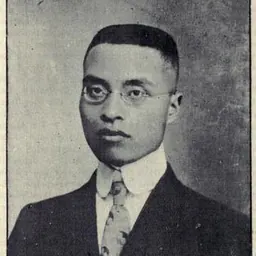

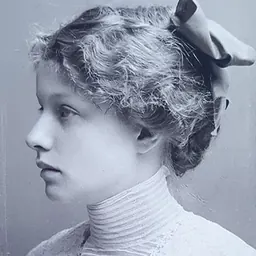
Frequently asked questions
Who was Dan Ben-Amos?
Israeli-American folklorist (1934–2023)
When was Dan Ben-Amos born?
Dan Ben-Amos was born on 3 September 1934 in Israel, Jaffa.
When did Dan Ben-Amos die?
Dan Ben-Amos died on 26 March 2023 in Philadelphia.
What was Dan Ben-Amos's occupation?
Dan Ben-Amos was a semiotician, folklorist and university teacher.
What nationality was Dan Ben-Amos?
Dan Ben-Amos was American.
Sources & further reading
Cite this page
APA: Biography.guide. (2026). Dan Ben-Amos. https://biography.guide/dan-ben-amos/
MLA: "Dan Ben-Amos." Biography.guide, https://biography.guide/dan-ben-amos/.
Chicago: "Dan Ben-Amos." Biography.guide. https://biography.guide/dan-ben-amos/.
Data last updated: 2026-09-20 · Spot an error? Report a correction.
Page generated 2026-09-27 05:23 UTC