
About Elisabeth Christina von Linné
Lived 1743 – 1782 (aged 38). Elisabeth Christina von Linné was a Swedish botanist.
Elisabeth Christina von Linné (June 14, 1743 – April 15, 1782) was a Swedish botanist, daughter of Carl Linnaeus and Sara Elisabeth Moræa.
Life There is no direct information about the education of Elisabeth Christina von Linné, as it is not clearly mentioned anywhere. However, as her brother was given home tuition in preparation for university studies, and she is confirmed to have socialized with the students of her father, who were also tutored in the family home, it is seen as likely that she was given home tuition by the same teachers as her brother and her father's students, perhaps also with them, which was not uncommon in Sweden at the time.
She was acquainted with several of her father's students, among them Erik Gustaf Lidbeck and Daniel Solander, the latter of whom she reportedly wished to marry, but as he did not return from his expedition, the marriage never took place.
Linné married major Carl Fredrik Bergencrantz in 1764 and had two children.
Scientific activity Linné is referred to as the first female botanist in Sweden in a modern sense, despite not having received any formal education. It was she who first described the optic phenomenon in which the Tropaeolum majus appears to send out small bursts of lightning, now named the Elizabeth Linnæus Phenomenon (or, in German, ) after her.
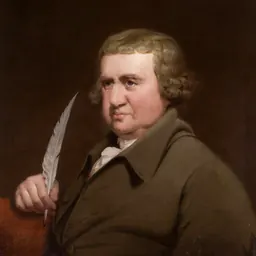
She published her observations on the topic in a paper for the Royal Swedish Academy of Sciences in 1762, aged 19. This paper came to the notice of the English doctor, scientist and poet, Erasmus Darwin. He included a reference to it in his "The botanic garden, part II, containing the loves of the plants" (1789) in which he also reported a confirmation of the phenomenon by M. Haggren, a lecturer in natural history who had published his findings in Paris in 1788.
The poets William Wordsworth and Samuel Taylor Coleridge read Darwin's accounts early in their careers and, influenced by these accounts, they referred to flashing flowers in their poems, Wordsworth in "I wandered lonely as a cloud" also called "Daffodils" ('They flash upon that inward eye') and Coleridge in his "Lines Written At Shurton Bars..." ('Flashes the golden-coloured flower / A fair electric flame'). Thus Elizabeth Linnaeus came, through Darwin, to influence the pioneers of English Romantic poetry.
Don’t just read it —
keep it.
Full-length biographies made to live with: read them, listen on the way to work, watch them tonight.
- E-book
- Audio
- Video
Instant download · yours to keep · every purchase keeps this site free
Important facts
People in Elisabeth Christina von Linné's life
Named in this biography and alive at the same time




Related people
Same field, nearest in time




Contemporaries
People whose lives overlapped Elisabeth Christina von Linné's





Frequently asked questions
Who was Elisabeth Christina von Linné?
Swedish botanist (1744-1782)
When was Elisabeth Christina von Linné born?
Elisabeth Christina von Linné was born on 14 June 1743 in Sweden.
When did Elisabeth Christina von Linné die?
Elisabeth Christina von Linné died on 15 April 1782 in Linnaeus Hammarby.
What was Elisabeth Christina von Linné's occupation?
Elisabeth Christina von Linné was a botanist.
What nationality was Elisabeth Christina von Linné?
Elisabeth Christina von Linné was Swedish.
Sources & further reading
· Wikipedia: Elisabeth Christina von Linné
· DBpedia: Elisabeth Christina von Linné
Cite this page
APA: Biography.guide. (2026). Elisabeth Christina von Linné. https://biography.guide/elisabeth-christina-von-linne/
MLA: "Elisabeth Christina von Linné." Biography.guide, https://biography.guide/elisabeth-christina-von-linne/.
Chicago: "Elisabeth Christina von Linné." Biography.guide. https://biography.guide/elisabeth-christina-von-linne/.
Data last updated: 2026-09-20 · Spot an error? Report a correction.
Page generated 2026-09-27 05:25 UTC