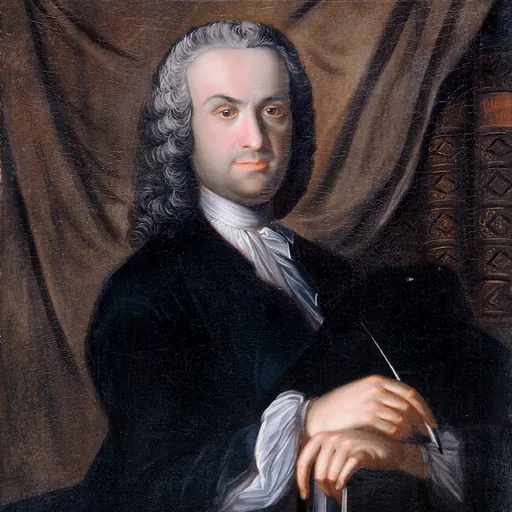
About Élie Bertrand
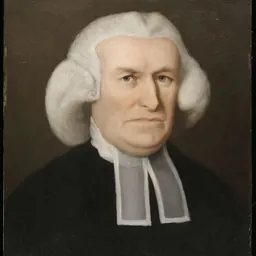
Lived 1713 – 1797 (aged 84). Élie Bertrand was a Swiss theologian, encyclopédistes, geologist, naturalist, philologist and scholar.
Elie Bertrand (17 May 1713 – 23 August 1797) was a Swiss geologist, naturalist, pastor and theologian.
Biography Bertrand was born on 17 May 1713 in Orbe, Vaud, Switzerland, as the son of Elie Bertrand, an apothecary and president of the consistory of Orbe, and Marie Faure (or Favre). He was a descendant of French Huguenots from Nyons, Dauphiné, who took refuge in Switzerland in 1684 and acquired the bourgeoisie of Orbe in 1699. His older brother, , was a pastor and agronomist.
Bertrand studied theology at Lausanne, Geneva and Leiden from 1731 to 1738. He was ordained in Lausanne in 1740 and served as pastor at Ballaigues and Orbe from 1740 to 1744. Bertrand then entered the service of the French church of Bern as a deacon in 1744, then as pastor until 1765. A close advisor to King Stanisław August Poniatowski of Poland in 1765, Bertrand directed the Department of Industry, Agriculture and Natural Sciences at Warsaw from 1765 to 1766, and was admitted to the Polish nobility in 1768.
In 1767, Bertrand returned to Switzerland, settling in Champagne near Yverdon, where he founded the city's library and economic society and devoted himself to science. His natural history cabinet was at the origin of the museum of Yverdon . Bertrand corresponded with Voltaire, Albrecht von Haller, Linnaeus, was secretary of the Romand Economic Society of Bern, and was a member of the academies of Berlin, Göttingen, Leipzig, Basel, Stockholm, Munich, Lyon and Florence. In addition to his theological treatises, sermons, and the Recueil des ordonnances ecclésiastiques pour le Pays de Vaud (1758), Bertrand published numerous works which attest to the variety and scope of his research in philosophy, linguistics, natural history, seismology and hydrography. He died on 23 August 1797 in Yverdon, aged 84.
Publications (selection) Mémoires sur la structure intérieure de la terre (Heidegguer, Zurich, 1752). Essai sur les usages des montagnes, avec une lettre sur le Nil (Heidegguer, Zurich, 1754). Mémoires historiques et physiques sur les tremblemens de terre (Pierre Gosse junior, La Haye, 1757). Recherches sur les langues anciennes et modernes de la Suisse et principalement du pays de Vaud (C. et A. Philibert, Genève, 1758).
Essai sur l'art de former l'esprit, ou Premiers élémens de la logique (G. Regnault, Lyon, 1764). Recueil de divers traités sur l'histoire naturelle de la terre et des fossiles (L. Chambeau, Avignon, 1766) Read online. Lettre à M. le Cte de Buffon... ou Critique et Nouvel essai sur la théorie générale de la terre, avec une notice du dernier discours de M. Pallas, sur la formation des montagnes, sur les changemens arrivés au globe, etc. (Besançon, 1782).
Don’t just read it —
keep it.
Full-length biographies made to live with: read them, listen on the way to work, watch them tonight.
- E-book
- Audio
- Video
Instant download · yours to keep · every purchase keeps this site free
Important facts
People in Élie Bertrand's life
Named in this biography and alive at the same time
Related people
Same field, nearest in time




Contemporaries
People whose lives overlapped Élie Bertrand's





Frequently asked questions
Who was Élie Bertrand?
Swiss scientist
When was Élie Bertrand born?
Élie Bertrand was born on 17 May 1713 in Orbe.
When did Élie Bertrand die?
Élie Bertrand died on 23 August 1797 in Yverdon-les-Bains.
What was Élie Bertrand's occupation?
Élie Bertrand was a theologian, encyclopédistes, geologist, naturalist, philologist and scholar.
What nationality was Élie Bertrand?
Élie Bertrand was Swiss.
Sources & further reading
Cite this page
APA: Biography.guide. (2026). Élie Bertrand. https://biography.guide/elie-bertrand/
MLA: "Élie Bertrand." Biography.guide, https://biography.guide/elie-bertrand/.
Chicago: "Élie Bertrand." Biography.guide. https://biography.guide/elie-bertrand/.
Data last updated: 2026-09-21 · Spot an error? Report a correction.
Portrait: Wikimedia Commons · author & licence
Page generated 2026-09-27 04:59 UTC