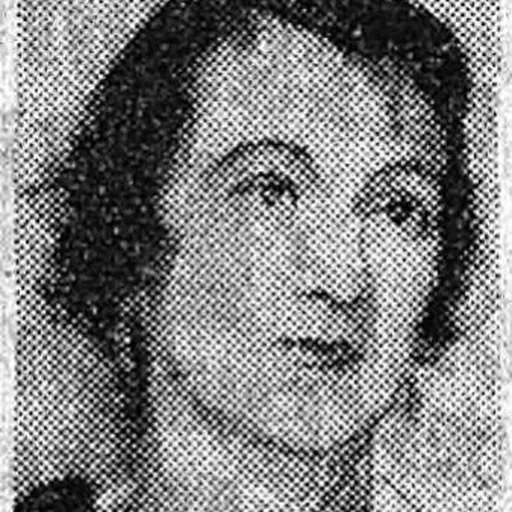
Éliane Brault
French resistance fighter, politician and journalist
About Éliane Brault
Lived 1895 – 1982 (aged 86). Éliane Brault was a French politician, journalist, french resistance fighter and french resistance.
Éliane Brault (18 September 1895 — 25 August 1982) was a French Resistance member, a political personality and a French journalist, also known for her commitment to feminism and her involvement in Freemasonry, especially within the Universal Mixed Grand Lodge, of which she was the first Grand Mistress.
Biography Éliane Brault was born in the 9th arrondissement of Paris to a rich family. Her father, Élie-Simon Alexandre Brault (1868–1898), was a lawyer at the Court of Appeal of Paris and also a doctor at Hôpital Saint-Louis. He'd just completed his month as an aide-major in the south when he caught typhoid fever by treating soldiers from the 22nd Chasseurs Alpins Battalion; he died a month later, a victime du devoir professionnel (victim of professional duty), at the age of thirty-one. Her mother, Isabelle Moses (1867–1942), was born in Lima to a Jewish Peruvian middle-class family that had converted to Catholicism.
During World War I, she married her childhood friend, Jean Sabourdin (1890–1918), who died in the front. It was in 1917, with Sabourdin, that she gave birth to her first son, Roger Sabourdin. She remarried in 1923; this time, she married a lawyer, Louis Gallié (1883–1974), with whom she had her second son, Alexandre Brault Gallié (1925–1971). In 1933, Éliane Brault and Louis Gallié divorced.
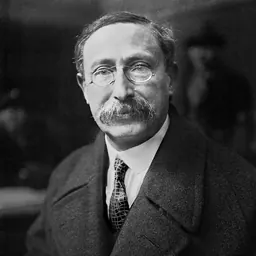
Radical Party Her second husband, Louis Gallié, and Émile Borel, a pacifist, introduced her to the Radical Party, which she went on to join in 1925. She was committed to her work with the party, which she did largely with Marcelle Kraemer-Bach, a lawyer and member of the French Union for Women's Suffrage. She worked as a speaker and journalist for the papers Le Radical, La France radical, Le Républicain jacobin and L’Ère nouvelle. She was a member of the journalists' union and, through her articles and speeches, expressed her expectation of a society where the principles of freedom as well as equality of rights and labour are applied indistinctly. She had recognised expertise and she was one of the five women members of the party's bureau before 1940. She was elected in 1933—an election which was considered a feminist success against her opponents within the party. She worked towards a policy of social works and solidarity.
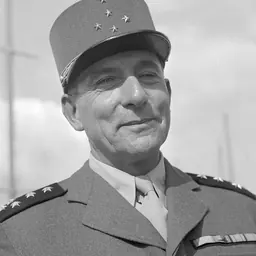
In 1934, amidst political crisis and the rise of the extreme right, Éliane Brault started l'Action démocratique des femmes (the Democratic Action of Women) and regularly marched in demonstrations in support of the Republic. In 1935, she founded la Fédération des femmes radicale (the Federation of Radical Women), of which she became president. After a trip to the Soviet Union, she became interested in the Soviet regime's position on women and children. It was because of this interest that she became closer to the Communist Party. The 1936 elections were a success for her and left-wing politics in France as many radical and socialist members of the Popular Front won their elections. She was part of the fight against fascism, and openly supported the Spanish Republicans as well as the victims of fascism throughout Europe. With the fall of Léon Blum's government in April 1938, she joined the left wing of the Radical Party. In 1939, she used her influence to open the borders and welcome children who had to flee from, or were orphaned by, Franco's regime. and followed the French corps in the Italian Campaign where, from General Jean de Lattre de Tassigny, she received authorisation to create a unit of "liaison-relief" intended to give first aid and bring essential aid to liberated populations and combat zones.
After taking part in the Provence landings and the Battle of Alsace with her unit, she was summoned to assist in the perilous evacuation of Thann. She crossed the Rhine and stayed in the Black Forest until November 1945.
Postwar At the end of the war, she resumed her duties at the Ministry of Public Health and Population. She received a certificate of higher administrative studies at École nationale d'administration, allowing her to work under the direction of the ministry until her retirement. She left the Radical Party and joined the French Section of the Workers' International (SFIO), where she committed herself to social work.
Freemasonry Éliane Brault began her long Masonic career in the Masonry of Adoption at the Grande Loge de France. She was initiated 28 June 1927—thirty-two years old—at the adoption lounge, Union et Bienfaisance, then quickly became secretary. She also took part in the creation of Le Général Peigné in 1930. She was made a Worshipful Master from 1934 until the start of the Second World War. Furthermore, she attended the lodges La Nouvelle Jérusalem (the New Jerusalem) and Minerve (Minerva).
In 1945, she rejoined La Nouvelle Jérusalem within the Women's Grand Lodge of France. Later, she joined the Marie Bonnevial lodge at Le Droit Humain (DH). As the DH does not recognise the Rite of Adoption, she agreed to be initiated with the Ancient and Accepted Scottish Rite. She was successive secretary-general and vice president of the national council and the grand inspector of the order until 1969.
Feeling her role in DH was too heavily constraining and looking for a less symbolist approach which, according to her, tends to move away from societal reflection,
End of life Éliane Brault died 25 August 1982, in Paris at the age of 86. She was cremated, in accordance with her will, and her ashes were deposited in the Père Lachaise Cemetery.
Family Her son, Roger Sabourdin, married Gratienne Nada, daughter of René Nada (Pathé Studios director), in 1938 at Notre-Dame-de-Lorette. The groom's witnesses were Marc Rucart and Paul Bastid; the bride's witnesses were Gratien Candace and Pierre Calvet, head of the film department of the Army.
Publications Éliane Brault published a number of books regarding the experiences and battles throughout her life.
À l'ombre de la croix gammée (préf. Hassolt Davis), Le Caire, R. Schindler, 1943 U.R.S.S., terre inconnue, une Française revient de Russie, 1946 La Franc-maçonnerie et l'émancipation des femmes, 1953 L'Épopée des A.F.A.T., 1954 Maria Deraismes, 1962 Psychanalyse de l'initiation maçonnique, 1965 Le mystère du Chevalier de Ramsay, Prisme, 1973
Don’t just read it —
keep it.
Full-length biographies made to live with: read them, listen on the way to work, watch them tonight.
- E-book
- Audio
- Video
Instant download · yours to keep · every purchase keeps this site free
Important facts
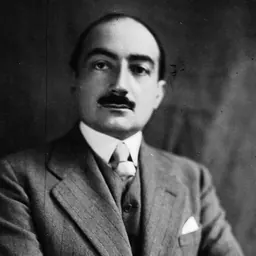
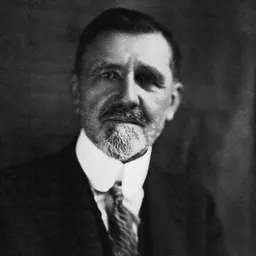
People in Éliane Brault's life
Named in this biography and alive at the same time



Related people
Same field, nearest in time






Contemporaries
People whose lives overlapped Éliane Brault's

Frequently asked questions
Who was Éliane Brault?
French resistance fighter, politician and journalist
When was Éliane Brault born?
Éliane Brault was born on 18 September 1895 in 9th arrondissement of Paris.
When did Éliane Brault die?
Éliane Brault died on 25 August 1982 in 9th arrondissement of Paris.
What was Éliane Brault's occupation?
Éliane Brault was a politician, journalist, french resistance fighter and french resistance.
What nationality was Éliane Brault?
Éliane Brault was French.
Sources & further reading
Cite this page
APA: Biography.guide. (2026). Éliane Brault. https://biography.guide/eliane-brault/
MLA: "Éliane Brault." Biography.guide, https://biography.guide/eliane-brault/.
Chicago: "Éliane Brault." Biography.guide. https://biography.guide/eliane-brault/.
Data last updated: 2026-09-24 · Spot an error? Report a correction.
Portrait: Wikimedia Commons · author & licence
Page generated 2026-09-27 05:08 UTC