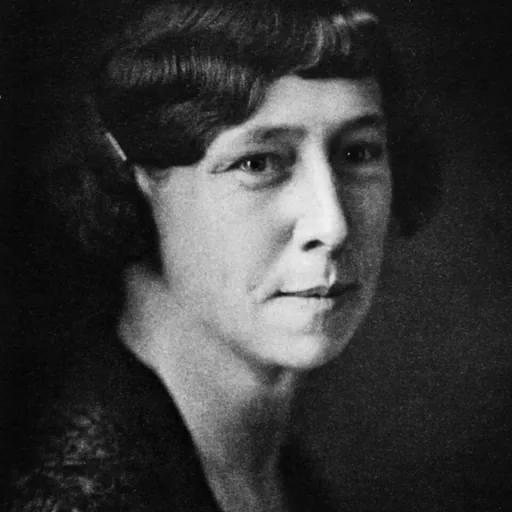
Eleanor Williams
Australian bacteriologist and serologist
About Eleanor Williams
Lived 1884 – 1963 (aged 78). Eleanor Williams was an Australian serologist and bacteriologist.
Fannie Eleanor Williams MBE, ARRC (4 July 1884 – 16 June 1963), known as Eleanor Williams, was an Australian scientist. She served as a bacteriologist during World War I, and was the third scientist and the first woman appointed to work at the Walter and Eliza Hall Institute of Medical Research after its establishment in 1915. She directed a laboratory studying infectious diseases, and had particular expertise in dysentery, hydatid disease and snake venom. She co-founded Australia's first blood bank.
Early life and education
Fannie Eleanor Williams was born in Adelaide, South Australia on 4 July 1884. She was the second child and eldest daughter of James Williams and his wife Helen DuBois. Williams grew up in The Reedbeds, near Henley Beach, where her father was a farmer.
Williams trained as a nurse at the Adelaide Children's Hospital between 1904 and 1907. She was appointed sister in charge of the Thomas Elder Laboratory in 1907, and worked there for two years as an assistant to pathologist Dr. Thomas Borthwick. In December 1909, Williams took up a position as nurse inspector with the Unley Local Board of Health for which she undertook home visits and tested patients for diphtheria, measles, and other notifiable diseases.
Williams' record at the Australian War Memorial states that she enlisted with the rank of Staff Nurse on 20 July 1915, and rose to the rank of Temporary Sister. She served in Egypt, Lemnos, England and France, was mentioned twice in despatches, and was awarded the Royal Red Cross (2nd Class). Working alongside Dr Charles James Martin, Director of the Lister Institute, she performed ground-breaking work on dysentery, and quickly became known as an expert in this field. She continued to work with Martin throughout the war, on a variety of infectious diseases, including meningitis, streptococci, staphylococci, gas gangrene, and epidemic influenza.
Scientific career
Following her repatriation in 1919, Eleanor Williams moved to Melbourne, and was appointed to the position of 'second assistant' at the newly-established Walter and Eliza Hall Institute of Medical Research by director Sydney Patterson. Williams had worked with Patterson on influenza during the war. She was the third staff member appointed to the Institute, and the first woman. She was also the only researcher with no medical or university qualification.
In the early 1920s, the Institute's focus was on respiratory and intestinal infections, and Williams worked on pneumonia, syphilis and dysentery, as well as the serological diagnosis of hydatid tapeworms. From 1923, she worked with Charles Kellaway on snake venom serology, and later worked on tuberculosis. She also trained junior scientists in practical bacteriology techniques. Among her trainees was Frank Macfarlane Burnet, who later described her as "the centre of commonsense and helpfulness around which all the activities of the Institute rotated".
The ability to deliver blood transfusions was limited by the lack of a blood bank, which would allow donated blood to be stored for future needs. In 1938, with World War II approaching, the decision was made to establish a blood bank at the Royal Melbourne Hospital, and Williams and Wood turned their attention to developing new techniques for storing blood and plasma, as well as to the logistical aspects of obtaining and administering the blood. She was recognised with an obituary in The Medical Journal of Australia, written by Frank Macfarlane Burnet and Dr Ian Wood, which spoke of her 'remarkable knowledge, keen sense of humour, and tenacity of purpose'.
In 1964, as part of their Golden Jubilee celebrations, the Red Cross Blood Transfusion Service named their new laboratories the F. Eleanor Williams Serological Research Laboratories in her honour.
Don’t just read it —
keep it.
Full-length biographies made to live with: read them, listen on the way to work, watch them tonight.
- E-book
- Audio
- Video
Instant download · yours to keep · every purchase keeps this site free
Important facts
People in Eleanor Williams's life
Named in this biography and alive at the same time





Contemporaries
People whose lives overlapped Eleanor Williams's



Frequently asked questions
Who was Eleanor Williams?
Australian bacteriologist and serologist
When was Eleanor Williams born?
Eleanor Williams was born on 4 July 1884 in Adelaide.
When did Eleanor Williams die?
Eleanor Williams died on 16 June 1963 in Melbourne.
What was Eleanor Williams's occupation?
Eleanor Williams was a serologist and bacteriologist.
What nationality was Eleanor Williams?
Eleanor Williams was Australian.
Sources & further reading
· DBpedia: Fannie Eleanor Williams
Cite this page
APA: Biography.guide. (2026). Eleanor Williams. https://biography.guide/eleanor-williams-serologist/
MLA: "Eleanor Williams." Biography.guide, https://biography.guide/eleanor-williams-serologist/.
Chicago: "Eleanor Williams." Biography.guide. https://biography.guide/eleanor-williams-serologist/.
Data last updated: 2026-09-20 · Spot an error? Report a correction.
Portrait: Wikimedia Commons · author & licence
Page generated 2026-09-27 04:57 UTC