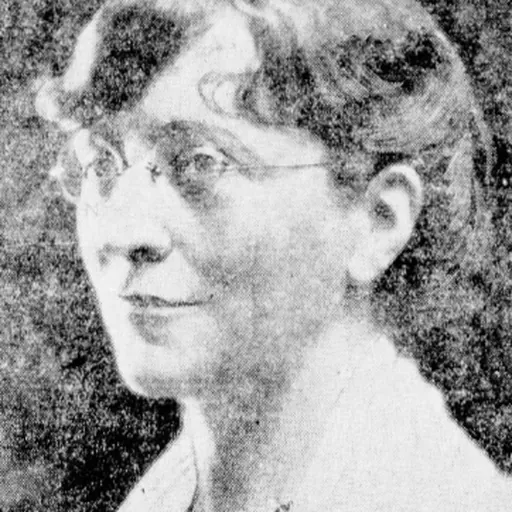
Eleanor Hague
American ethnomusicologist
About Eleanor Hague
Lived 1875 – 1954 (aged 79). Eleanor Hague was an American ethnomusicologist.
Eleanor Hague (October 7, 1875 – December 25, 1954) was an American folklorist and musicologist, who specialized in the traditional music of Latin America.
Early life and education
Hague was born in San Francisco, California, the daughter of geologist and mining engineer James Duncan Hague and Mary Ward Foote Hague. Through the Foote family, she was related to the Beechers and to many other prominent New England families. Writer Kate Foote Coe was her aunt; her uncle Arthur De Wint Foote was a noted engineer, and husband of book illustrator Mary Hallock Foote. Another aunt married politician Joseph Roswell Hawley; his daughter, her first cousin Margaret Foote Hawley, was an artist.
Hague studied music in New York and Massachusetts, and abroad in France and Italy. She was credited as arranger on a 1925 Victor recording of "Carmela" by Dusolina Giannini. She is best known for discovering the bound manuscript notebooks of Joseph María García, an eighteenth-century Mexican dance master, who made shorthand notations about how to perform specific dance steps. She also translated folksongs from Spanish to English, working with Luisa Espinel, Juan Bautista Rael, and Marion Leffingwell.
In 1932, Hague lectured on early Spanish music at the Los Angeles Public Library. In the 1930s, she funded studies of Native American music, including composer Harry Partch's transcription of Charles Fletcher Lummis's wax cylinder recordings, and Frances Densmore's anthropological work.
Hague founded the Jarabe Club at a settlement house in Pasadena, California, to teach Mexican traditional music and dance to young people, and she directed the students' performances. In 1941, she directed the Jarabe Club dancers when they performed in the National Folk Festival in Washington, D.C.
Publications
"Mexican Folk-Songs" (1912) "Brazilian Songs" (1912) Folk songs from Mexico and South America (1914, with Edward Kilenyi) "Spanish Songs from Southern California" (1914) "Eskimo Songs" (1915) "Five Mexican Dances" (1915) "Five Danzas from Mexico" (1915) Spanish-American Folk Songs (1917) Early Spanish-Californian folk-songs (1922, with Gertrude Ross) Latin-American Music Past and Present (1934) "Regional Music of Spain and Latin America" (1943)
Personal life and legacy Hague died in 1954, at the age of 79, in Flintridge, California. She left her papers to the Southwest Museum, including the Joseph María García manuscript. In 1996, the Children of the Hague Manuscript, an ensemble of young musicians in Atascadero, California, performed music based on the Joseph María García notes at several concerts.
Don’t just read it —
keep it.
Full-length biographies made to live with: read them, listen on the way to work, watch them tonight.
- E-book
- Audio
- Video
Instant download · yours to keep · every purchase keeps this site free
Important facts
People in Eleanor Hague's life
Named in this biography and alive at the same time

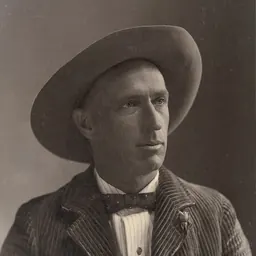
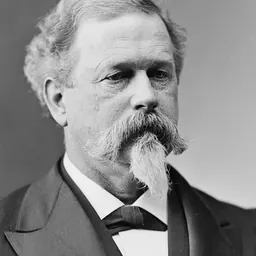
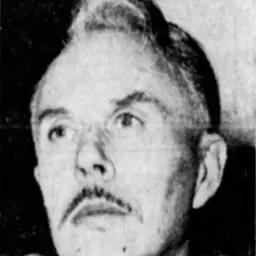

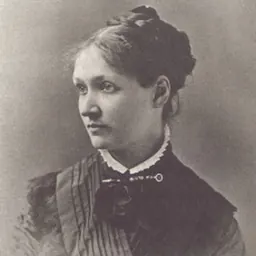
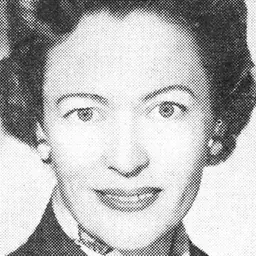

Related people
Same field, nearest in time



Contemporaries
People whose lives overlapped Eleanor Hague's
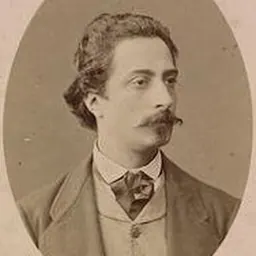

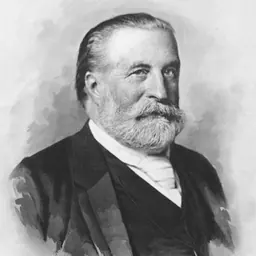
Frequently asked questions
Who was Eleanor Hague?
American ethnomusicologist (1875–1954)
When was Eleanor Hague born?
Eleanor Hague was born on 7 November 1875 in San Francisco.
When did Eleanor Hague die?
Eleanor Hague died on 25 December 1954 in Pasadena.
What was Eleanor Hague's occupation?
Eleanor Hague was an ethnomusicologist.
What nationality was Eleanor Hague?
Eleanor Hague was American.
Sources & further reading
Cite this page
APA: Biography.guide. (2026). Eleanor Hague. https://biography.guide/eleanor-hague/
MLA: "Eleanor Hague." Biography.guide, https://biography.guide/eleanor-hague/.
Chicago: "Eleanor Hague." Biography.guide. https://biography.guide/eleanor-hague/.
Data last updated: 2026-09-22 · Spot an error? Report a correction.
Portrait: Wikimedia Commons · author & licence
Page generated 2026-09-27 05:04 UTC