
About James Duncan
Lived 1857 – 1928 (aged 71). James Duncan was a British diplomat, trade unionist, president (corporate title), stonemasonry and trade union, known for American Federation of Labor.
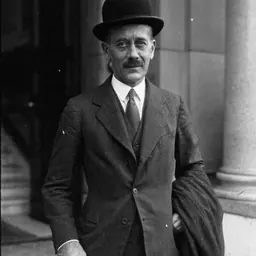
James Duncan (May 5, 1857 – September 14, 1928) was a Scottish American union leader, and president of the Granite Cutters' International Association from 1895 until his death in 1928. He was an influential member of the American labor movement, helping to co-found the American Federation of Labor.
Early life Duncan was born on May 5, 1857, in Portlethen, Kincardineshire in Scotland. His parents were David and Mary (Forbes) Duncan. His father was a farmer, and David was raised Presbyterian. He attended public elementary school in Aberdeen, then apprenticed as a granite cutter.
Union career In 1880, Duncan emigrated to the United States and settled in New York City.
In May 1895, Duncan was elected secretary of the Granite Cutters' National Union. He was also named the editor of the union's journal, the Granite Cutters' Journal. He moved the union's headquarters to Quincy, Massachusetts, in 1900, where he took up residence. During his first few years in office, Duncan proposed and won passage of numerous amendments to the union's constitution, forming the Granite Cutters' National Union into one of the most effective unions in the country. He was not, however, a supporter of civil rights for African Americans. Duncan negotiated several contracts in the Deep South which required employers to fire black granite cutters and hire Eiro-American ones. When the American Federation of Labor (AFL) later complained about the agreements, Duncan strongly defended them and invoked the AFL's principle of autonomy for member unions in defense. The matter was dropped.
In 1886, Duncan attended the founding convention of the American Federation of Labor as a delegate of the Granite Cutters' union. He was elected second vice-president of the AFL in 1894 and served on its executive council, positions he would hold until his death. Duncan became one of Samuel Gompers' closest friends and confidantes. A political independent, Duncan successfully pushed Gompers to avoid making political endorsements and support for a single political party.
In 1900, Duncan led the granite cutters out on a nationwide strike. The strike began on March 1, 1900, and was settled on May 16, 1900, after the intervention of former Senator William Andrews Clark (whose home needed granite for its construction). The strike was successful, and the subsequent collective bargaining agreement made the Granite Cutters' National Union the first American labor union to win the eight-hour day for every single local.
Duncan's success in securing the eight-hour day for his members led him to be elected first vice-president of the AFL later that year.
In 1903, Duncan proposed expanding the union's jurisdiction across North America. His proposal was not approved by the union's national convention, but he won passage of the jurisdictional expansion in 1905. Afterward, the union was known as the Granite Cutters' International Association.
Duncan served in a number of capacities for the federal government as well. In 1913, President Woodrow Wilson appointed him to a national commission to study workers' compensation insurance. In 1918, Wilson chose Duncan to be one of the American trade union delegates to the Paris Peace Conference. He served as a member of the commission which established the International Labour Organization.
In 1924, Samuel Gompers named Duncan one of the AFL delegates to the Pan-American Federation of Labor in Mexico City. The ailing 74-year-old Gompers collapsed on December 6, and doctors said he did not have long to live. Gompers, Duncan and the AFL delegation rushed back to the United States. When the train reached San Antonio, Texas, on December 12, Gompers was taken to a private home. As he lay dying, Duncan held his hand. Gompers died at 4:10 a.m. on December 13, and Duncan was highly distraught for several hours after his death.
James Duncan was nominated for president of the American Federation of Labor after Gompers' death. But Matthew Woll, not Duncan, was the first choice of the "Gompers faction" on the council. The anti-Gompers faction, led by John L. Lewis, was adamantly opposed to Woll's election. Woll promoted Duncan as the candidate of the status quo, but he was easily defeated by William Green, a member of the United Mine Workers and a man generally considered subservient to Woll and Lewis.
Duncan died at his home in Quincy, Massachusetts, on September 14, 1928.
Don’t just read it —
keep it.
Full-length biographies made to live with: read them, listen on the way to work, watch them tonight.
- E-book
- Audio
- Video
Instant download · yours to keep · every purchase keeps this site free
Important facts
People in James Duncan's life
Named in this biography and alive at the same time



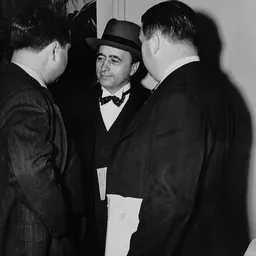
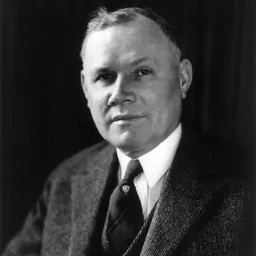
Related people
Same field, nearest in time
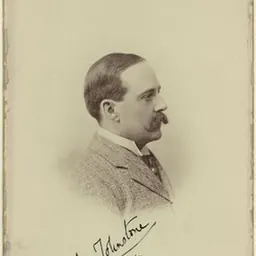

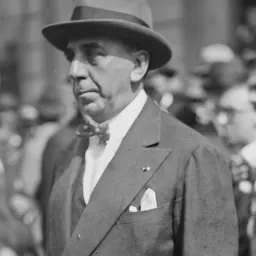
Contemporaries
People whose lives overlapped James Duncan's






Frequently asked questions
Who was James Duncan?
American union leader (1857-1928)
When was James Duncan born?
James Duncan was born on 5 May 1857 in Portlethen.
When did James Duncan die?
James Duncan died on 14 September 1928 in Quincy.
What was James Duncan's occupation?
James Duncan was a diplomat, trade unionist, president (corporate title), stonemasonry and trade union.
What was James Duncan known for?
James Duncan was known for American Federation of Labor.
What nationality was James Duncan?
James Duncan was British.
Sources & further reading
· DBpedia: James Duncan (union leader)
Cite this page
APA: Biography.guide. (2026). James Duncan. https://biography.guide/james-duncan-diplomat/
MLA: "James Duncan." Biography.guide, https://biography.guide/james-duncan-diplomat/.
Chicago: "James Duncan." Biography.guide. https://biography.guide/james-duncan-diplomat/.
Data last updated: 2026-09-22 · Spot an error? Report a correction.
Page generated 2026-09-27 05:33 UTC