
Moshe Beregovski
Jewish folklorist and ethnomusicologist
About Moshe Beregovski
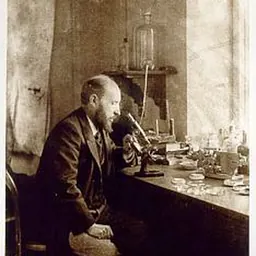
Lived 1892 – 1961 (aged 68). Moshe Beregovski was a Russian ethnomusicologist, folklorist and musicologist.
Moisei Beregovsky (1892 – 12 August 1961, ; ) was a Soviet Jewish folklorist, musicologist and ethnomusicologist from the Ukrainian SSR who was a key figure in the study of Jewish music. He collected, studied and published about klezmer music, Yiddish song, wordless nigun melodies, and the music of Purim plays. His published collections, mostly only released after his death, remain important sources of Jewish music from the late Russian Empire and early Soviet period. Most of his research was done during the period of 1927–1949, during the Stalin era, during which he was faced not only with ideological restrictions, but a period of imprisonment in a forced labour camp from 1950 to 1955. He was rehabilitated after 1955 and continued his work in his final years during the Khrushchev-era.
Biography Early life Beregovsky was born in 1892 in hamlet, Radomyshl district, Kiev Governorate in the Russian Empire (today in Kyiv Oblast, Ukraine). Conflicting dates exist for his exact birth date, which is often given as December 28. While he was still an infant, the family was forced by antisemitic legislation to relocate to Makarov. In 1905, at age 13, he was sent to Kyiv and studied in Gymnasiums there until 1912. The Kultur Lige closed in 1920, and in 1922 he relocated to Petrograd and enrolled in the Petrograd Conservatory, where he studied composition until 1924 but did not complete his studies. A phonograph archive was founded at the Institute, which took in field recordings made decades earlier by Joel Engel and Susman Kiselgof. Beregovsky was spared and he became a researcher in the smaller successor organization, the Bureau for Research on Jewish Language, Literature and Folklore, as well as head of the Office of Folklore of the Jewish Arts Section of the AUAS, and head of the Office for Musical Ethnography. He also collected revolutionary songs in Yiddish, many which came from the pre-Soviet period. Due to the ideological framework of the institutions he was working in, he mostly avoided studying religious aspects of Jewish music, focusing on folklore, instrumental dances and the aforementioned revolutionary songs, as well as the interactions between Jewish and non-Jewish folk music. His writings often contained the type of polemics typical of academic works produced in the Stalin era; he often accused Russian Empire and American Jewish musicologists of "petty bourgeois reactionary" attitudes and attacked the basis of their conclusions.
Following the Nazi invasion of Russia in 1941, Beregovsky and many academics from the AUAS were evacuated to Ufa in the Bashkir Autonomous Soviet Socialist Republic. During his time there he researched Bashkir music as well as the music of Ukrainians who had migrated there decades earlier. Some of Beregovsky's most significant work and collections have been published in English by American ethnomusicologist Mark Slobin, beginning in 1982 with Old Jewish Folk Music (University of Pennsylvania Press), followed by a more expansive volume in 2001 devoted to Beregovsky's study of the klezmer instrumental tradition, Jewish Instrumental Folk Music (Syracuse Univ Press), translated by Michael Alpert and Slobin, annotated by Alpert, and edited by Slobin, Robert Rothstein and Alpert. The latter has been reissued in a 2015 second edition, extensively revised by Kurt Bjorling with annotations by Bjorling and Alpert, including the restoration of an entire chapter of text missing in the 2001 edition. Beregovsky's collections of melodies have made their way into the repertoire of many current-day klezmer musicians, including recordings by Joel Rubin, Joshua Horowitz, Alicia Svigals, Pete Rushefsky, Brave Old World, and Veretski Pass. Anna Shternshis of the University of Toronto and Russian-American scholar/avant-bard Psoy Korolenko worked with Beregovsky's archive of song texts, with Shternshis spearheading the production of the 2018 album Yiddish Glory (61st Grammy-nominated).
Works (published) Jewish Musical Folklore (in Yiddish and Russian), USSR, 1934 Jewish folksongs (in Yiddish) (in collaboration with Itzik Feffer), Kyiv, 1938 Jewish Instrumental Folk Music (in Russian) (edited by Max Goldin, translation and transliteration by Velvl Chernin), "Muzyka" Publishing, Moscow, 1987 Jewish wordless tunes (in Russian), "Kompozitor" Publishing, Russia, 1999 Jewish Instrumental Folk Music (edited by Mark Slobin, Robert Rothstein, Michael Alpert) Syracuse University Press, 2001 Purimshpils (in Russian ) (compiled by E. Beregovska), "Dukh i litera" Publishing, Kyiv, 2001 Jewish Instrumental Folk Music, Second Edition (edited by Mark Slobin, Robert Rothstein, Michael Alpert, revised by Kurt Bjorling and Michael Alpert) www.muziker.org musical services, Evanston IL USA, 2015
Recordings Beregovsky’s Wedding, CD (by Joel Rubin’s ensemble), Schott Wergo Publishing, Germany, 1997 Midnight Prayer, CD (by Joel Rubin’s ensemble), Traditional Crossroads, New York City, 2007 Beregovski Suite, CD (by Alicia Svigals & Uli Geissendoerfer), Vegas Records, New York, 2018 Yiddish Glory, Six Degrees Records, 2018
Don’t just read it —
keep it.
Full-length biographies made to live with: read them, listen on the way to work, watch them tonight.
- E-book
- Audio
- Video
Instant download · yours to keep · every purchase keeps this site free
Important facts
People in Moshe Beregovski's life
Named in this biography and alive at the same time



Related people
Same field, nearest in time




Contemporaries
People whose lives overlapped Moshe Beregovski's




Frequently asked questions
Who was Moshe Beregovski?
Jewish folklorist and ethnomusicologist (1892–1961)
When was Moshe Beregovski born?
Moshe Beregovski was born on 28 December 1892 in Termakhivka.
When did Moshe Beregovski die?
Moshe Beregovski died on 12 August 1961 in Kyiv.
What was Moshe Beregovski's occupation?
Moshe Beregovski was an ethnomusicologist, folklorist and musicologist.
What nationality was Moshe Beregovski?
Moshe Beregovski was Russian.
Sources & further reading
Cite this page
APA: Biography.guide. (2026). Moshe Beregovski. https://biography.guide/moshe-beregovski/
MLA: "Moshe Beregovski." Biography.guide, https://biography.guide/moshe-beregovski/.
Chicago: "Moshe Beregovski." Biography.guide. https://biography.guide/moshe-beregovski/.
Data last updated: 2026-09-20 · Spot an error? Report a correction.
Page generated 2026-09-27 05:15 UTC