
About Eleanor Hadley
Lived 1916 – 2007 (aged 90). Eleanor Hadley was an American economist.
Eleanor Martha Hadley (July 17, 1916 – June 1, 2007) was an American economist and policymaker. Because of her relatively rare research specialization in Japanese economics, during World War II Hadley was recruited first into OSS and then the State Department to support the United States' war effort while she was a doctoral candidate in economics at Radcliffe College. Hadley helped draft the United States' plans for dissolving zaibatsu business conglomerates as part of a planned effort to democratize Japan after the war, and she participated in implementing this economic deconcentration program when the postwar occupation brought her to Japan to work for SCAP as an economist.
After ending her time with SCAP in the occupation of Japan, Hadley completed her dissertation, earning her doctorate at Radcliffe College. Although interested in continuing a career in working for the United States, she discovered that she could not obtain meaningful work in government because Charles A. Willoughby, an ultraconservative military officer in the occupation, had blacklisted her, resulting in the denial of necessary security clearance. Hadley turned to academia, and she taught at Smith College and George Washington University. After Hadley finally cleared her name and achieved clearance, she worked in government for the U. S. Tariff Commission and General Accounting Office from 1967 to 1981.
In 1970, Princeton University Press published Hadley's monograph Antitrust in Japan. Economist George Cyril Allen called Antitrust "undoubtedly the most comprehensive and authoritative" study on zaibatsu and their dissolution available in the Western world. Hadley received the Order of the Sacred Treasure, third degree, from the Japanese government in 1986, and in 1997 she received the Association for Asian Studies' Award for Distinguished Contributions.
Early education Eleanor Martha Hadley was born July 17, 1916, in Seattle, Washington to parents Homer and Margaret Hadley. Homer Hadley was a locally famous civil engineer and later the namesake of the Homer M. Hadley Memorial Bridge spanning part of Lake Washington. Margaret Hadley was a teacher who specialized in preschool education and the education of children with disabilities. Growing up, Hadley's family was relatively well off.
After graduating from Seattle's Franklin High School in 1934, Hadley enrolled at Mills College in Oakland, California.
Hadley received a fellowship from Tokyo Imperial University which financed a stay in Tokyo from 1938 to 1940, during which time she also traveled extensively in Japan and China.
State Department career After the Empire of Japan's December 7, 1941 attack on Pearl Harbor, the United States formally entered World War II. After completing her comprehensive examinations but not her dissertation, Hadley was recruited by Charles Burton Fahs—chief of the Research and Analysis Division (Far East) at the State Department —to work as a research analyst for the Office of Strategic Services (OSS) starting in 1943.
Hadley was transferred to the State Department in late 1944, called upon for what the Association for Asian Studies later described as her "rare expertise on the Japanese economy," When SWNCC drafted the Basic Directive—policy directions to guide Douglas MacArthur during the anticipated occupation of Japan—Hadley drafted the research policy paper undergirding the portion of the Directive which recommended dissolving the zaibatsu in order to democratize the Japanese economy.
Occupation of Japan Japan publicly announced its surrender on August 15, 1945, and formally surrendered to the United States on September 2, 1945. The Allied Powers, with the United States leading, began a military occupation of Japan with Douglas MacArthur as Supreme Commander for the Allied Powers (SCAP). Early in the occupation, the Yasuda zaibatsu submitted an economic plan to SCAP which called for dissolving the zaibatsu holding companies but not the business combines themselves. When MacArthur approved this plan, the American press criticized the decision as too lenient, and United States president Harry S. Truman sent a team of economists led by Corwin Edwards to address these concerns in January 1946. Hadley was interested in immediate assignment to work for SCAP as part of the Edwards mission, but she was kept off the all-male team, despite having written the zaibatsu policy paper, because she was a woman. Hadley, still a doctoral candidate with an in-progress dissertation, finally joined the occupation in April 1946 when SCAP's Government Section issued a request for staff familiar with Japan. Hadley worked directly for the Government Section, but she also assisted the Economic and Scientific Section's Anti-Trust and Cartels Division.
Hadley's first memorandum, written to Major General Courtney Whitney in June 1946, pointed out the Yasuda plan's deviation from the Basic Direction, which called for dissolving business combines as well as holding companies. Hadley's memo eventually influenced MacArthur to pursue more vigorous deconcentration policy, including purging more than 1,500 corporate officers as part of dissolving the zaibatsu, and Hadley was assigned to help implement this. Hadley was also involved in establishing the Japan Fair Trade Commission and creating antitrust competition laws. Ultimately, deconcentration laid the groundwork for modern Japan becoming a "more open and democratic society as well as a more competitive and stronger economy," Kuwayama and Patrick explain. Concurrently, Major General Charles Willoughby, the ultraconservative chief of SCAP's intelligence division and an opponent of the deconcentration program, claimed without basis that there was a "leftist infiltration" in SCAP and investigated Eleanor Hadley without the knowledge of those she worked with, resulting in her blacklisting as an uncleared potential security risk in the eyes of the FBI. She finished her program in 1949 with a dissertation titled "Concentrated Business Power in Japan", about zaibatsu before World War II. participated in the interuniversity Japan Economic Seminar, Antitrust advocates for free market economics, and the book generally assumes that American capitalism and its institutions are superior to Japan's economy. Nevertheless, Hadley organizes and productively analyzes the large amount of information on zaibatsu and deconcentration, and she offers multiple novel interpretations, such as on banking group behavior and oligopoly. Selected writings
Translated into and published in Japanese by Toyo Keizai as 日本財閥の解体と再編成 (1973).
Reissued (2018). New York: Routledge. .
Translated into and published in Japanese by Toyo Keizai as 財閥解体: GHQ エコノミストの回想.
Don’t just read it —
keep it.
Full-length biographies made to live with: read them, listen on the way to work, watch them tonight.
- E-book
- Audio
- Video
Instant download · yours to keep · every purchase keeps this site free
Important facts
People in Eleanor Hadley's life
Named in this biography and alive at the same time




Related people
Same field, nearest in time

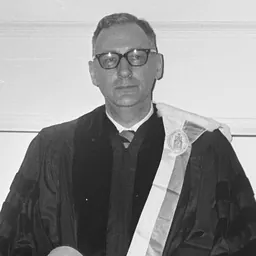


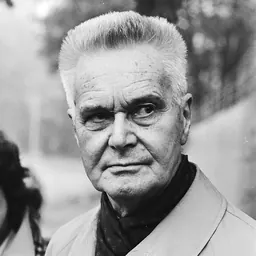
Contemporaries
People whose lives overlapped Eleanor Hadley's



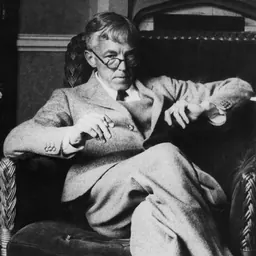
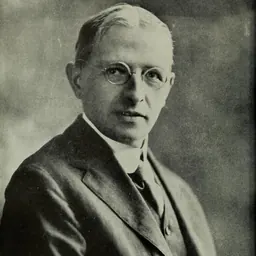
Frequently asked questions
Who was Eleanor Hadley?
academic, economist
When was Eleanor Hadley born?
Eleanor Hadley was born on 17 July 1916 in Seattle.
When did Eleanor Hadley die?
Eleanor Hadley died on 1 June 2007 in Seattle Heights.
What was Eleanor Hadley's occupation?
Eleanor Hadley was an economist.
What nationality was Eleanor Hadley?
Eleanor Hadley was American.
Sources & further reading
Cite this page
APA: Biography.guide. (2026). Eleanor Hadley. https://biography.guide/eleanor-hadley/
MLA: "Eleanor Hadley." Biography.guide, https://biography.guide/eleanor-hadley/.
Chicago: "Eleanor Hadley." Biography.guide. https://biography.guide/eleanor-hadley/.
Data last updated: 2026-09-20 · Spot an error? Report a correction.
Page generated 2026-09-27 05:22 UTC