
About Egon Kornauth
Lived 1891 – 1959 (aged 68). Egon Kornauth was an Austrian composer, conductor, music educator, pianist, musicologist and répétiteur.
Egon Kornauth (14 May 1891 – 28 October 1959) was an Austrian composer and music teacher. Kornauth was among the most important 20th-century composers active in Salzburg.
Life Kornauth was born in Olmütz, Moravia. A cellist and pianist from his youth, he went in 1909 to Vienna, where he studied with Robert Fuchs, Guido Adler, Franz Schreker (with whom he quarrelled) and Franz Schmidt.
After teaching music theory at Vienna University from 1919, Kornauth embarked on an international career as pianist, accompanist and conductor that took him to Indonesia (1926-9) and to South America (1934-5). In 1940 he resumed a teaching career in war-time Vienna and Salzburg. He joined the Nazi-sponsored Reichsmusikkammer, but continued to support his teacher Adler, who was held under house arrest as a Jew, until the latter's death in 1941. In post-war Austria, Kornauth became director of the Salzburg Mozarteum (1946-1947), and was elected to the Austrian Arts Senate in 1954. He died in Vienna in 1959. Kornauth himself recognised in his 1958 autobiography that "epigonism was inherent in my personality." The musicologist Cliff Eisen described Kornauth as among the most important 20th-century composers active in Salzburg.
A recording of some of Kornauth's piano works by Jonathan Powell was released by Toccata Classics in 2013.
Selected works Orchestral Orchestral Suite No. 1 (Sinfonische Suite Nr. 1) Aus der Jugendzeit, Op. 7 (1913; revised 1928) Elegie auf den Tod eines Freundes (Elegy on the Death of a Friend) (1916); published 1932 Sinfonische Ouvertüre (Symphonic Overture), Op. 13 Orchestral Suite No. 2, Op. 20 (published 1925) Musik for string orchestra, Op. 25a (1920); after the String Sextet Orchestral Suite No. 3 (Sinfonische Suite Nr. 2), Op. 35 (1931; revised 1937); also for Piano Quintet, Op. 35a Orchestral Suite No. 5 Romantische Suite, Op. 40 (1936) Orchestral Suite No. 4 (Sinfonische Suite Nr. 4), Op. 42 (1938) Irish Tune from County Derry for string orchestra (or string quintet)
Concertante Notturno (Andante) for viola and chamber orchestra, Op. 3b (1912); movement II from the Viola Sonata Ballade for cello and orchestra, Op. 17 (1917) Konzertstück (Concert Piece) for violin and chamber orchestra (or piano), Op. 19 (1917)
Chamber music Sonata in C minor for viola and piano, Op. 3 (1912); also for clarinet and piano (1914); movement II, Notturno, also for viola and chamber orchestra Sonata for clarinet and piano, Op. 5 2 Vortragsstücke: Scherzo und Andante (2 Concert Pieces) for violin and piano, Op. 5b (published 1932) Sonata in E minor for violin and piano, Op. 9 (1914) Burleske in E minor for flute and piano (or orchestra), Op. 11 (1916) Kleine Abendmusik for 2 violins, viola and cello, Op. 14 (1915) Sonata (Sonatina) in D major for violin and piano, Op. 15 (1916) Piano Quartet in C minor, Op. 18 (1917) String Sextet in A minor for 2 violins, 2 violas and 2 cellos, Op. 25 (1918–1919); also for string orchestra String Quartet in G minor, Op. 26 (1920) Piano Trio in B minor, Op. 27 (1921) Sonata for cello and piano, Op. 28 (published 1924) String Quintet for 2 violins, 2 violas and cello, Op. 30 (1923) Kammermusik (Chamber Music), Nonet for flute, oboe, clarinet, horn, 2 violins, viola, cello and double bass, Op. 31 (1924); for wind quintet and string quartet, Op. 31a (1924); Dectet for wind and string quintets, Op. 31b Klarinettenquintett (Clarinet Quintet) in F minor for clarinet, 2 violins, viola and cello, Op. 33 (1930) Piano Quintet in F minor, Op. 35a (1931); after the Orchestral Suite No. 3 Kleine Hausmusik (Little Chamber Music; Petite composition facile) for 2 violins, viola and cello, Op. 41a (1939); also for piano, Op. 41b Trio-Suite for violin, cello (or viola) and piano, Op. 45 (1948) Rhapsodie Valse triste Canon I Canon II Canzonetta Valse triste for viola and piano (1948); from Trio-Suite, Op. 45 Sonatina for violin (or flute, or viola) and piano, Op. 46 (1952) 3 Stücke (3 Pieces) for cello (or viola) and piano, Op. 47 (1954) Elegie Romanze Dumka Irish Tune from County Derry for string quintet (or string orchestra)
Piano 5 Klavierstücke (5 Piano Pieces), Op. 2 (1912) Sonata in A major, Op. 4 (1912) Fantasie (Phantasie), Op. 10 (1915) 3 Klavierstücke (3 Piano Pieces), Op. 23 (1920); also for piano 4-hands, Op. 23a Präludium Improvisation Walzer Kleine Suite (Little Suite), Op. 29 (1923) Präludium Intermezzo Barcarole Ländler Notturno Walzer Finale 4 Klavierstücke (4 Piano Pieces), Op. 32 (1926); also for piano 4-hands, Op. 32a In Memoriam Capriccio Notturno Rondo-Burleske Präludium und Passacaglia (Prelude and Passacaglia), Op. 43 (1939) 5 Klavierstücke (5 Piano Pieces), Op. 44 (1940) Präludium Intermezzo Capriccio Mährische Ballade Walzer 3 Canons (published 1951)
Vocal 6 Lieder (6 Songs) for voice and piano, Op. 1 (1911); Nos. 1, 4 and 6 also for voice and chamber orchestra Ganz im Geheimen; words by Franz von Königsbrun-Schaup Landsknechtlied; words by Heinrich von Reder Leid; words by Maria Stona Frühlingsruhe; words by Ludwig Uhland Mein und Dein; words by J. G. Fischer In der Kirschenblüth'; words by J. G. Fischer Erntelied von anno 1914 for medium voice and piano (1914); words by Richard Smekal 4 Gesänge (4 Songs) for high voice and piano, Op. 8 (1914); also for voice and chamber orchestra Zu spät; words by Friedrich Theodor Vischer Traumleben; words by Julius Hart O gib mir nicht den Mund!; words by Ernst Goll Der stille Tag; words by Robert Hohlbaum 8 Gesänge nach Richard Smekal (8 Songs after Richard Smekal) for high or medium voice and piano, Op. 12 (1916); words by Richard Smekal; Nos. 2, 3, 4, 6, 7 and 8 also for voice and chamber orchestra Nächtliche Fahrt Schnitterspruch Versunkenheit Brief am Abend Ringelreihen im Frühling Liebeselegie Abendlied in der großen Stadt Maiwanderung 6 Lieder (6 Songs) for medium voice and piano, Op. 21 (1918); also for voice and chamber orchestra Schließe mir die Augen beide; words by Theodor Storm Lied in die Ferne; words by Richard Smekal Du; words by Ricarda Huch Aus den Frühen Gedichten von Rainer Maria Rilke I: Bange Erwartung; words by Rainer Maria Rilke Aus den Frühen Gedichten von Rainer Maria Rilke II: Nachtwind; words by Rainer Maria Rilke Abendlied; words by Albrecht Schaeffer 6 Lieder nach Hermann Hesse (6 Songs after Hermann Hesse) for medium voice and piano, Op. 22 (1918); words by Hermann Hesse; Nos. 1~5 also for voice and chamber orchestra; No. 5 also with string orchestra Im Grase hingestreckt Böse Zeit Oktober Im Nebel Drüben Die leise Wolke Welt der Zyklamen for voice and piano, Op. 24 No. 3 4 Lieder nach Brentano (4 Songs after Brentano) for high voice and piano, Op. 34 (1931); words by Clemens Brentano; No. 1 also for high voice, solo flute and string orchestra; Nos. 2 and 3 also for voice and chamber orchestra Abendständchen Der Spinnerin Lied Wiegenlied Säusle, liebe Myrthe Schwanenlied for high voice and piano, Op. 34b; words by Clemens Brentano 8 Lieder nach Eichendorff (8 Songs after Eichendorff) for low voice and piano, Op. 36 (1932); words by Joseph Freiherr von Eichendorff; No. 1 also for voice and chamber orchestra Der Einsiedler Nachts I Erinnerung Der Abend Nachts II Sterbeglocken Herbstweh Abschied 6 Lieder nach Eichendorff (6 Songs after Eichendorff) for high voice and piano, Op. 37 (1932); words by Joseph Freiherr von Eichendorff Lockung Treue Nachklänge I Waldeinsamkeit Die Nachtigallen Herbst 8 Lieder nach Eichendorff (8 Songs after Eichendorff) for medium-high voice and piano, Op. 38 (1933); words by Joseph Freiherr von Eichendorff; Nos. 4 and 8 also for voice and chamber orchestra Im Alter Die Nacht Am Strom Winternacht Nachtwanderer Seliges Vergeßen Nachklänge II Valet
Choral Gesang der späten Linden for female chorus and chamber orchestra (or piano quintet), Op. 16 (revised 1933); words by Richard Smekal Der Abend for female chorus, flute, clarinet and string quartet, Op. 34a (1931); words by Clemens Brentano [2 Choruses], Op. 39 (1933); words by Friedrich Hölderlin Lied der Freundschaft for male chorus a cappella Lied der Liebe for mixed chorus a cappella
Don’t just read it —
keep it.
Full-length biographies made to live with: read them, listen on the way to work, watch them tonight.
- E-book
- Audio
- Video
Instant download · yours to keep · every purchase keeps this site free
Important facts
People in Egon Kornauth's life
Named in this biography and alive at the same time
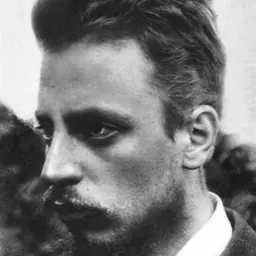
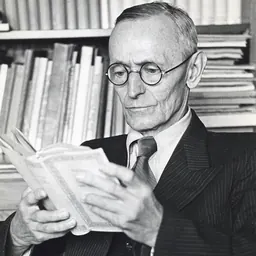
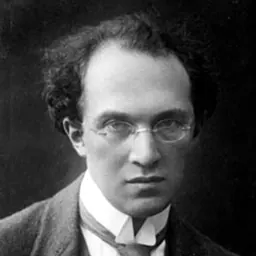



Related people
Same field, nearest in time

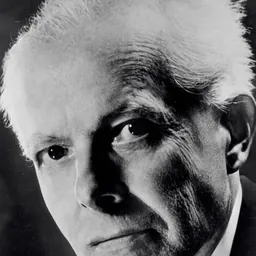

Contemporaries
People whose lives overlapped Egon Kornauth's
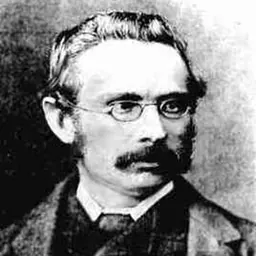
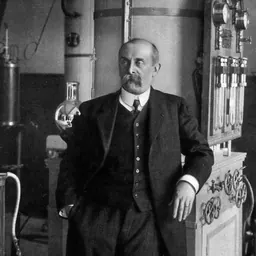


Frequently asked questions
Who was Egon Kornauth?
Austrian musician (1891-1959)
When was Egon Kornauth born?
Egon Kornauth was born on 14 May 1891 in Olomouc.
When did Egon Kornauth die?
Egon Kornauth died on 28 October 1959 in Vienna, Salzburg.
What was Egon Kornauth's occupation?
Egon Kornauth was a composer, conductor, music educator, pianist, musicologist and répétiteur.
What nationality was Egon Kornauth?
Egon Kornauth was Austrian.
Sources & further reading
Cite this page
APA: Biography.guide. (2026). Egon Kornauth. https://biography.guide/egon-kornauth/
MLA: "Egon Kornauth." Biography.guide, https://biography.guide/egon-kornauth/.
Chicago: "Egon Kornauth." Biography.guide. https://biography.guide/egon-kornauth/.
Data last updated: 2026-09-20 · Spot an error? Report a correction.
Page generated 2026-09-27 05:17 UTC