
About Robert Fuchs
Lived 1847 – 1927 (aged 80). Robert Fuchs was an Austrian composer, music educator, conductor, music arranger and music teacher.
Robert Fuchs (15 February 1847 – 19 February 1927) was an Austrian composer and music teacher. As Professor of music theory at the Vienna Conservatory, Fuchs taught many notable composers, while he was himself a highly regarded composer in his lifetime.
Biography
He was born in Frauental an der Laßnitz, Styria, Austria in 1847. He studied at the Vienna Conservatory with Felix Otto Dessoff and Joseph Hellmesberger among others. He eventually secured a teaching position there and was appointed Professor of music theory in 1875. He retained the position until 1912. He died in Vienna in 1927.
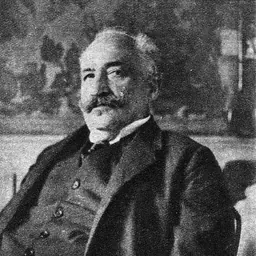
He was the youngest brother of Johann Nepomuk Fuchs,
The reason his compositions did not become better known was largely that he did little to promote them, living a quiet life in Vienna and refusing to arrange concerts, even when the opportunities arose. He certainly had his admirers, among them Brahms, who almost never praised the works of other composers. But with regard to Fuchs, Brahms wrote, "Fuchs is a splendid musician, everything is so fine and so skillful, so charmingly invented, that one is always pleased." Famous contemporary conductors, including Arthur Nikisch, Felix Weingartner and Hans Richter, championed his works when they had the opportunity with few exceptions, but it was his chamber music which was considered his finest work.
In his lifetime, his best known works were his five serenades; their popularity was so great that Fuchs acquired the nickname "Serenaden-Fuchs" ("Serenader Fox"). The serenades have been recorded by the Cologne Chamber Orchestra under Christian Ludwig for Naxos.
List of compositions
Orchestral Symphonies Symphony No. 1 in C major, Op. 37 Symphony No. 2 in E major, Op. 45 Symphony No. 3 in E major, Op. 79 Serenades Serenade for string orchestra No. 1 in D major, Op. 9 Serenade for string orchestra No. 2 in C major, Op. 14 Serenade for string orchestra No. 3 in E minor, Op. 21 Serenade for string orchestra and 2 horns in G minor, Op. 51 Serenade for small orchestra in D major, Op. 53 Andante grazioso & Capriccio for string orchestra, Op.63 Piano Concerto in B minor, Op.27
Vocal Operas Die Königsbraut, in 3 acts, Op.46 (1889) (librettist: Ignaz Schnitzer) premiered in Vienna Die Teufelsglocke, in 3 acts (w/o Op.) (1891) (librettist: Bernhard Buchbinder) Choral works Mass in G, Op. 108 Mass in D minor, Op. 116 Mass in F, without opus number
Chamber Quintets Quintet for clarinet and string quartet in E major, Op. 102 Quartets String Quartet No. 1 in E major, Op. 58 String Quartet No. 2 in A minor, Op. 62 String Quartet No. 3 in C major, Op. 71 String Quartet No. 4 in A major, Op. 106 Piano Quartet No. 1 in G minor, Op. 15 Piano Quartet No. 2 in B minor, Op. 75 Trios Trio in F minor for violin, viola, and piano, Op. 115 Seven Fantasy Pieces for violin, viola and piano, Op. 57 String Trio in A major, Op. 94 Piano Trio in C major, Op. 22 Piano Trio in B major, Op. 72 Terzetti (trios for two violins and viola) Opp. 61 Nos. 1 in E minor, 2 in D minor Terzetto in C minor, Op. 107 Duos Two Violins Twenty Duos, Op. 55 Phantasiestücke, Op. 105 (16 duos) Violin and Viola Twelve Duets, Op. 60 Violin and Piano Violin Sonata No. 1 in F minor, Op. 20 Violin Sonata No. 2 in D major, Op. 33 Violin Sonata No. 3 in D minor, Op. 68 Violin Sonata No. 4 in E major, Op. 77 Violin Sonata No. 5 in A major, Op. 95 Violin Sonata No. 6 in G minor, Op.103 Ten Fantasy Pieces for violin and piano, Op. 74 Viola and Piano Viola Sonata in D minor, Op. 86 Six Fantasies for viola and piano, Op. 117 Cello and Piano Cello Sonata No. 1 in D minor, Op. 29 Cello Sonata No. 2 in E minor, Op. 83 Seven Fantasy Pieces for cello and piano, Op. 78 Double-Bass and Piano Double Bass Sonata, B major, Op. 97 Three Pieces for Double Bass and Piano, Op. 96
Solo Organ Fantasia in C major, Op. 87 Fantasia in E minor, Op. 91 Fantasia in D major, Op. 101 Variations and Fugue on an Original Theme Piano Improvisation for Piano, Op. 11 Piano Sonata No. 1 in G major, Op. 19 Piano Sonata No. 2 in G minor, Op. 88 Piano Sonata No. 3 in D major, Op. 109 Jugendklänge, Op. 32 Lieb' Schwesterlein (Dear Little Sister), Op. 32, No. 14 Twelve Waltzes, Op.110 4 Klavierstücke, Op.111 Dewdrops (Tautropfen), Thirteen Pieces for Piano, Op. 112 Harp Harp Fantasy, Op. 85
Don’t just read it —
keep it.
Full-length biographies made to live with: read them, listen on the way to work, watch them tonight.
- E-book
- Audio
- Video
Instant download · yours to keep · every purchase keeps this site free
Important facts
People in Robert Fuchs's life
Named in this biography and alive at the same time



Related people
Same field, nearest in time


Contemporaries
People whose lives overlapped Robert Fuchs's



Frequently asked questions
Who was Robert Fuchs?
Austrian composer and music teacher (1847–1927)
When was Robert Fuchs born?
Robert Fuchs was born on 15 February 1847 in Frauental an der Laßnitz.
When did Robert Fuchs die?
Robert Fuchs died on 19 February 1927 in Vienna.
What was Robert Fuchs's occupation?
Robert Fuchs was a composer, music educator, conductor, music arranger and music teacher.
What nationality was Robert Fuchs?
Robert Fuchs was Austrian.
Sources & further reading
· DBpedia: Robert Fuchs (composer)
Cite this page
APA: Biography.guide. (2026). Robert Fuchs. https://biography.guide/robert-fuchs/
MLA: "Robert Fuchs." Biography.guide, https://biography.guide/robert-fuchs/.
Chicago: "Robert Fuchs." Biography.guide. https://biography.guide/robert-fuchs/.
Data last updated: 2026-09-20 · Spot an error? Report a correction.
Page generated 2026-09-27 05:34 UTC