
About Edwin Wilkins Field
Lived 1804 – 1871 (aged 66). Edwin Wilkins Field was a British painter and lawyer.
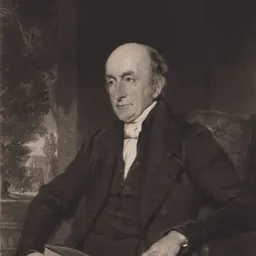
Edwin Wilkins Field (12 October 1804 – 30 July 1871) was a British lawyer and painter who committed much of his life to law reform.
Early life Edwin, a descendant of Oliver Cromwell through his grandmother, was the eldest of thirteen children of William Field and Mary Wilkins, of Leam, near Warwick. He was educated at his father's school, and on 19 March 1821 was articled to the firm of Taylor & Roscoe, solicitors, of King's Bench Walk, Temple. For some years after arriving in London he lived in the family of the junior partner, Robert Roscoe, to the influence of whose artistic tastes he attributed much of the pleasures of his later life. Edgar Taylor (died 1839), the senior partner, was also known as a scholar. At Michaelmas term, 1826, Field was admitted attorney and solicitor. He had thoughts of beginning business in Warwick, but remained in London on the advice of James Booth, joining his fellow-clerk, William Sharpe (1804–1870), brother to Daniel and Samuel and nephew to the poet Samuel Rogers, to form the firm of Sharpe & Field, in Bread Street, Cheapside in 1827. Henry Ellwood was their first clerk. In 1835 Taylor, who was then alone, took Sharpe and Field into partnership with him. The office of the firm was long in Bedford Row, London, afterwards in Lincoln's Inn Fields.
Jurist and dissenter In 1840 Field came forward as an advocate of chancery reform. His Observations of a Solicitor attracted much attention. In 1841 two of his suggestions were carried out, by the abolition of the Exchequer of pleas as a court of equity, and the appointment of two additional Vice-Chancellors. The energy with which he continued to press his views had much to do with the passing of the Court of Chancery Act 1842 (5 & 6 Vict. c. 103), by which the Six Clerks and Sworn Clerks were abolished, and the path was opened for further improvements in the efficiency and economy of chancery proceedings. In 1844 Field was in communication with the Board of Trade on the subject of a winding-up act for joint-stock companies. The Joint Stock Companies Act 1848 substantially embodied the proposals contained in a draft bill laid before the legal adviser of the Board of Trade on 27 April 1846, by Field and his friend Rigge, who had formerly been in his office.
Art From 1857 Field exerted himself in procuring a measure for establishing artistic copyright. He worked hard for the Fine Arts Copyright Act 1862, though it did not do all he desired. In reply to the thanks of the Society of Arts, he wrote that no labour he could ever give would repay his obligations to art and artists. In 1830, to Mary, daughter of Sutton Sharpe and sister of Samuel and Daniel Sharpe. Mary died at Leamington in 1831, soon after the birth of her son Rogers, named after his great-uncle, the poet Samuel Rogers; and In 1833, to Letitia Kinder (1801–1890), daughter of Robert Kinder, by whom he had seven children. His sons Basil and Allen followed the legal profession, Walter Field devoted himself to art. His granddaughter Daisy Field married Nathaniel Lloyd who with Daisy built Great Dixter, Northiam, East Sussex, the home of Edwin's great grandson, the celebrated gardener and author Christopher Lloyd.
The Fields lived in Squire's Mount, Hampstead, a Grade II* listed building later bequeathed by Edwin's daughters to the National Trust, the western end of which Edwin's nephew, the architect Horace Field, altered to create his own house, Chestnut Lodge.
Edwin Wilkins Field drowned in the River Thames at Cleve on 30 July 1871 when his boat Yankee capsized while in company with Henry Ellwood, his old clerk. Both men were good swimmers, but their strength had been exhausted in supporting another clerk, who could not swim, and was saved.
On 4 August he was buried on the eastern side of Highgate Cemetery, in a family vault next to that of his friend Henry Crabb Robinson
Don’t just read it —
keep it.
Full-length biographies made to live with: read them, listen on the way to work, watch them tonight.
- E-book
- Audio
- Video
Instant download · yours to keep · every purchase keeps this site free
Important facts
People in Edwin Wilkins Field's life
Named in this biography and alive at the same time



Related people
Same field, nearest in time




Contemporaries
People whose lives overlapped Edwin Wilkins Field's






Frequently asked questions
Who was Edwin Wilkins Field?
British lawyer and artist (1804-1871)
When was Edwin Wilkins Field born?
Edwin Wilkins Field was born on 12 October 1804 in Warwickshire.
When did Edwin Wilkins Field die?
Edwin Wilkins Field died on 30 July 1871 in Goring-on-Thames.
What was Edwin Wilkins Field's occupation?
Edwin Wilkins Field was a painter and lawyer.
What nationality was Edwin Wilkins Field?
Edwin Wilkins Field was British.
Sources & further reading
· Wikipedia: Edwin Wilkins Field
· DBpedia: Edwin Wilkins Field
Cite this page
APA: Biography.guide. (2026). Edwin Wilkins Field. https://biography.guide/edwin-wilkins-field/
MLA: "Edwin Wilkins Field." Biography.guide, https://biography.guide/edwin-wilkins-field/.
Chicago: "Edwin Wilkins Field." Biography.guide. https://biography.guide/edwin-wilkins-field/.
Data last updated: 2026-09-22 · Spot an error? Report a correction.
Page generated 2026-09-27 05:32 UTC