
About Edwin Thompson Jaynes
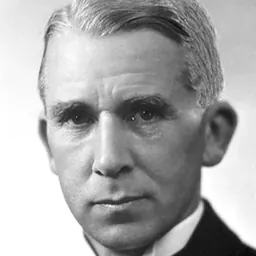
Lived 1922 – 1998 (aged 75). Edwin Thompson Jaynes was an American physicist, statistician, mathematician and statistical physicist, known for Bayesian probability, Jaynes–Cummings model and Maximum entropy thermodynamics.
Edwin Thompson Jaynes (July 5, 1922 – April 30, 1998) was the Wayman Crow Distinguished Professor of Physics at Washington University in St. Louis. He wrote extensively on statistical mechanics and on foundations of probability and statistical inference, initiating in 1957 the maximum entropy interpretation of thermodynamics as being a particular application of more general Bayesian/information theory techniques (although he argued this was already implicit in the works of Josiah Willard Gibbs). Jaynes strongly promoted the interpretation of probability theory as an extension of logic.
In 1963, together with his doctoral student Fred Cummings, he modeled the evolution of a two-level atom in an electromagnetic field, in a fully quantized way. This model is known as the Jaynes–Cummings model.
A particular focus of his work was the construction of logical principles for assigning prior probability distributions; see the principle of maximum entropy, the principle of maximum caliber, the principle of transformation groups and Laplace's principle of indifference. Other contributions include the mind projection fallacy.
Jaynes' book, Probability Theory: The Logic of Science (2003) gathers various threads of modern thinking about Bayesian probability and statistical inference, develops the notion of probability theory as extended logic, and contrasts the advantages of Bayesian techniques with the results of other approaches. This book, which he dedicated to Harold Jeffreys, was published posthumously in 2003 (from an incomplete manuscript that was edited by Larry Bretthorst). Jaynes coined the term 'mind projection fallacy' to describe the error of confusing subjective states of knowledge with objective properties of physical systems. This idea became influential in debates over the interpretation of probability and quantum mechanics.
Other of his doctoral students included Joseph H. Eberly and Douglas James Scalapino.
Don’t just read it —
keep it.
Full-length biographies made to live with: read them, listen on the way to work, watch them tonight.
- E-book
- Audio
- Video
Instant download · yours to keep · every purchase keeps this site free
Important facts
People in Edwin Thompson Jaynes's life
Named in this biography and alive at the same time







Related people
Same field, nearest in time


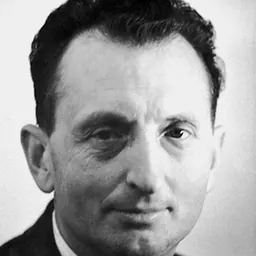
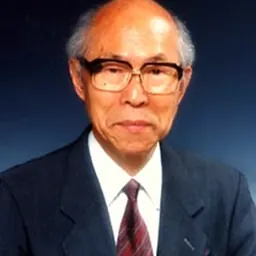


Contemporaries
People whose lives overlapped Edwin Thompson Jaynes's

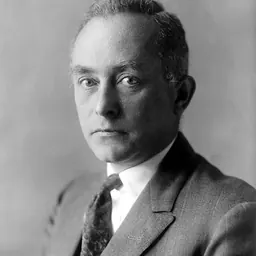
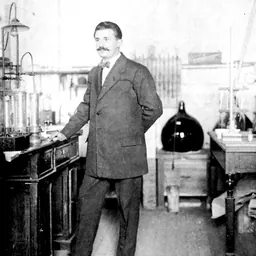
Frequently asked questions
Who was Edwin Thompson Jaynes?
American physicist (1922-1998)
When was Edwin Thompson Jaynes born?
Edwin Thompson Jaynes was born on 5 July 1922 in Waterloo.
When did Edwin Thompson Jaynes die?
Edwin Thompson Jaynes died on 30 April 1998 in St. Louis.
What was Edwin Thompson Jaynes's occupation?
Edwin Thompson Jaynes was a physicist, statistician, mathematician and statistical physicist.
What was Edwin Thompson Jaynes known for?
Edwin Thompson Jaynes was known for Bayesian probability, Jaynes–Cummings model and Maximum entropy thermodynamics.
What nationality was Edwin Thompson Jaynes?
Edwin Thompson Jaynes was American.
Sources & further reading
· Wikipedia: Edwin Thompson Jaynes
· DBpedia: Edwin Thompson Jaynes
Cite this page
APA: Biography.guide. (2026). Edwin Thompson Jaynes. https://biography.guide/edwin-thompson-jaynes/
MLA: "Edwin Thompson Jaynes." Biography.guide, https://biography.guide/edwin-thompson-jaynes/.
Chicago: "Edwin Thompson Jaynes." Biography.guide. https://biography.guide/edwin-thompson-jaynes/.
Data last updated: 2026-09-26 · Spot an error? Report a correction.
Page generated 2026-09-27 05:15 UTC