
About Edwin Ray Guthrie
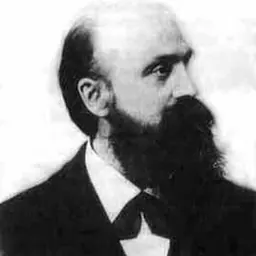
Lived 1886 – 1959 (aged 73). Edwin Ray Guthrie was an American psychologist and university teacher.
Edwin Ray Guthrie (; January 9, 1886 – April 23, 1959), a behavioral psychologist, began his career in mathematics and philosophy in 1917. He spent most of his career at the University of Washington, where he was a full-time professor and later became an emeritus professor in psychology.
Guthrie is best known for his works regarding stimulus–response association, which has been variously described as one-trial theory, non-reinforcement, and contiguity learning.
He theorized: "A combination of stimuli which has accompanied a movement, while on its recurrence, tend to be followed by that movement". Guthrie's works and theories were described as "simple" by his peers, referring to how he described complex ideas in simple terms.
Early life and education Guthrie was born in Lincoln, Nebraska, to a father who owned a store selling pianos and bicycles, and a mother who was a school teacher. He remarked that his theories got an early start when he and a friend read Darwin's Origin of Species and The Expression of the Emotions in Man and Animals while they were both in eighth grade. Guthrie graduated at the age of 17, after writing a senior thesis that argued that religion and science were trivial to the expression of Absolute Truth. Guthrie received the title of lay reader in his local Episcopal Church while pursuing a philosophy degree from the University of Nebraska. He credited the university with helping him pursue his varied interests because "the university had none of the present requirements of required courses and set curricula...This freedom made possible the inclusion of courses in both Latin and Greek which had been begun in high school; mathematics through calculus."
One trial theory
Guthrie's theories went against those of Thorndike's classical conditioning and Skinner's operant conditioning due mainly to Guthrie's insistence that their "desire for results of immediate practical applications" led to their theories being wrong. Guthrie's learning theory is called one-trial learning and he developed it with Smith at the University of Washington. Guthrie and Smith's theory states that all learning is done within a single exposure to a situation.
The principle of the association says that any stimulus that accompanies a behavior or immediately precedes it by less than half a second becomes a cue for that specific behavior. Guthrie's theory required that the presentation of punishment happen while the stimulus is still around. He did warn that if the punishment did not stop the undesirable response or if it was not presented in the presence of the stimulus the punishment could actually strengthen the undesired response.
Breaking habits Guthrie believed that dozens of tiny movements make up what most see as a single behavior; much like waving goodbye actually involves dozens of muscle movements. Guthrie viewed habits as a response connecting with a large number of stimuli, which causes the habit to happen more often to a wide variety of things. He postulated that there were three different ways to break a habit, the threshold method, the fatigue method, and the incompatible response method. The threshold method involves introducing stimuli that are associated with the habit response at such a weak level that it does not actually elicit the response. The strength of the stimuli is increased slowly until the stimuli can be presented at full strength without eliciting the habit response. Guthrie compared this method to "horse whispering." His peers and students turned his theories into more precise ideas that allowed experiments to test them. His theories on learning were wrong, but his ideas about behaviorism helped make the case that psychology as a whole had important applications to real-life issues. His real effect on the course of psychology, however, came from his students. Voeks, a student, was the one who formalized Guthrie's theories into a more testable form and his colleague William Kaye Estes took Guthrie's ideas and created a statistical theory of learning that he is now famous for.
Guthrie on education Edwin Ray Guthrie was interested in the application of psychology and his learning theories in education. In the preface of his book Educational Psychology (1950), he states, " … the ultimate test of a theory of learning is its influence on the all-round growth of young people when applied in the classroom." He hypothesized that pairing a stimulus and response could result in learning after only one trial. Guthrie believed that learning takes place through association and conditioning, and one pairing is often enough to establish a connection, rather than repeated stimulus-response pairings.
Guthrie acknowledged the use of reinforcement and rewards, but he did not deem them necessary for learning. Therefore, he asserts that the students do not learn from what the teacher does, but from what they do themselves. In other words, students do not learn something merely by hearing or reading it; rather, the information must elicit an "active response" in the learner.
The applications of Guthrie's theories have carried on to present education practices. In Educational Psychology (1950), he asserted that effective study skills included a clear goal, mastery of fundamentals, knowledge of learning phenomena, concentration, and practice. Although he believed in one-trial learning, Guthrie valued practice in the classroom. The purpose of practice is to ensure that students continue to "relearn" the material because of the uniqueness of each learning experience.
Don’t just read it —
keep it.
Full-length biographies made to live with: read them, listen on the way to work, watch them tonight.
- E-book
- Audio
- Video
Instant download · yours to keep · every purchase keeps this site free
Important facts
People in Edwin Ray Guthrie's life
Named in this biography and alive at the same time

Related people
Same field, nearest in time



Contemporaries
People whose lives overlapped Edwin Ray Guthrie's


Frequently asked questions
Who was Edwin Ray Guthrie?
American psychologist (1886–1959)
When was Edwin Ray Guthrie born?
Edwin Ray Guthrie was born on 9 January 1886 in Lincoln.
When did Edwin Ray Guthrie die?
Edwin Ray Guthrie died on 23 April 1959 in Seattle.
What was Edwin Ray Guthrie's occupation?
Edwin Ray Guthrie was a psychologist and university teacher.
What nationality was Edwin Ray Guthrie?
Edwin Ray Guthrie was American.
Sources & further reading
· Wikipedia: Edwin Ray Guthrie
Cite this page
APA: Biography.guide. (2026). Edwin Ray Guthrie. https://biography.guide/edwin-ray-guthrie/
MLA: "Edwin Ray Guthrie." Biography.guide, https://biography.guide/edwin-ray-guthrie/.
Chicago: "Edwin Ray Guthrie." Biography.guide. https://biography.guide/edwin-ray-guthrie/.
Data last updated: 2026-09-20 · Spot an error? Report a correction.
Page generated 2026-09-27 05:03 UTC