
About Edwin E. Moise
Lived 1918 – 1998 (aged 79). Edwin E. Moise was an American mathematician, topologist, university teacher and literary critic, known for 3-manifolds, Moise's theorem and School Mathematics Study Group.
Edwin Evariste Moïse (; was an American mathematician and mathematics education reformer. After his retirement from mathematics he became a literary critic of 19th-century English poetry and had several notes published in that field.
Early life and education Edwin E. Moïse was born December 22, 1918, in New Orleans, Louisiana. He graduated from Tulane University in 1940.
He received his Doctor of Philosophy in mathematics from the University of Texas in 1947.
Career Moïse taught at the University of Michigan from 1947 to 1960. He was James B. Conant Professor of education and mathematics at Harvard University from 1960 to 1971. He held a Distinguished Professorship at Queens College, City University of New York from 1971 to 1987.
Moïse started working on the topology of 3-manifolds while at the University of Michigan. During 1949–1951 he held an appointment at the Institute for Advanced Study during which he proved Moise's theorem that every 3-manifold can be triangulated in an essentially unique way.
Moïse joined the School Mathematics Study Group when it started in 1958, as a member of the geometry writing team. The team produced several course outlines and sample pages for a 10th grade geometry course, and then Moïse and Floyd L. Downs wrote a geometry textbook, based on the team's approach, that was published in 1964. The textbook used metric postulates instead of Euclid's postulates, a controversial approach supported by some mathematicians such as Saunders Mac Lane but opposed by others such as Alexander Wittenberg and Morris Kline.
Moïse was a president of the Mathematical Association of America, a vice-president of the American Mathematical Society, a Fellow of the American Academy of Arts and Sciences, and was on the executive committee of the International Commission on Mathematical Instruction.
Moïse retired from Queens College in 1987 and started a second career studying 19th century English poetry. He had six short notes of literary criticism published.
Moise died in New York City on December 18, 1998, aged 79.
Selected publications
Don’t just read it —
keep it.
Full-length biographies made to live with: read them, listen on the way to work, watch them tonight.
- E-book
- Audio
- Video
Instant download · yours to keep · every purchase keeps this site free
Important facts
People in Edwin E. Moise's life
Named in this biography and alive at the same time

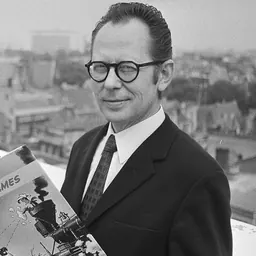

Related people
Same field, nearest in time



Contemporaries
People whose lives overlapped Edwin E. Moise's

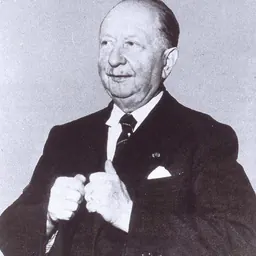
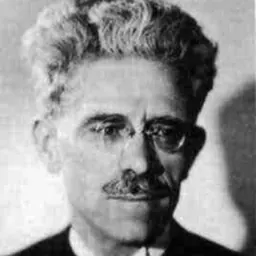

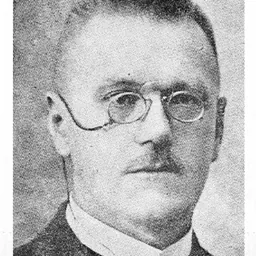
Frequently asked questions
Who was Edwin E. Moise?
mathematician (1918-1998)
When was Edwin E. Moise born?
Edwin E. Moise was born on 22 December 1918 in New Orleans.
When did Edwin E. Moise die?
Edwin E. Moise died on 18 December 1998 in New York City.
What was Edwin E. Moise's occupation?
Edwin E. Moise was a mathematician, topologist, university teacher and literary critic.
What was Edwin E. Moise known for?
Edwin E. Moise was known for 3-manifolds, Moise's theorem and School Mathematics Study Group.
What nationality was Edwin E. Moise?
Edwin E. Moise was American.
Sources & further reading
Cite this page
APA: Biography.guide. (2026). Edwin E. Moise. https://biography.guide/edwin-e-moise/
MLA: "Edwin E. Moise." Biography.guide, https://biography.guide/edwin-e-moise/.
Chicago: "Edwin E. Moise." Biography.guide. https://biography.guide/edwin-e-moise/.
Data last updated: 2026-09-20 · Spot an error? Report a correction.
Page generated 2026-09-27 05:27 UTC