
About Edward Wood, 1st Earl of Halifax
Lived 1881 – 1959 (aged 78). Edward Wood, 1st Earl of Halifax was a British politician and diplomat.
Edward Frederick Lindley Wood, 1st Earl of Halifax (16 April 1881 – 23 December 1959), known as the 1st Baron Irwin from 1925 until 1934 and the 3rd Viscount Halifax from 1934 until 1944, was a British Conservative politician of the 1930s. He held several senior ministerial posts during this time, most notably those of Viceroy of India from 1926 to 1931 and of Foreign Secretary between 1938 and 1940. He was one of the architects of the policy of appeasement of Adolf Hitler in 1936–1938, working closely with Prime Minister Neville Chamberlain. After Kristallnacht on 9–10 November 1938 and the German occupation of Czechoslovakia in March 1939, he was one of those who pushed for a new policy of attempting to deter further German aggression by promising to go to war to defend Poland.
Halifax was the leading candidate to succeed Chamberlain as prime minister early in May 1940, but effectively declined the position as he felt he would be little more than a figurehead with Winston Churchill running the war (Halifax's membership in the House of Lords was given as the official reason). A few weeks later, with the Allies nearing catastrophic defeat and British forces falling back to Dunkirk, Halifax favoured approaching Italy to see if acceptable peace terms could be negotiated. He was overruled by Churchill after a series of stormy meetings of the War cabinet. From December 1940 to May 1946, he served as British Ambassador to the United States.
Early life and education Wood was born on 16 April 1881 at Powderham Castle in Devon at the home of his maternal grandfather, William Courtenay, 11th Earl of Devon. He was born into a Yorkshire family, the sixth child and fourth son of Charles Wood, 2nd Viscount Halifax (1839–1934), and Lady Agnes Elizabeth Courtenay (1838–1919). His father was President of the English Church Union, which pushed for ecumenical reunion, in 1868, 1919, and 1927–1934. His great-grandfather was Charles Grey, 2nd Earl Grey, of tea fame, also the prime minister who introduced the Reform Act 1832.
Between 1886 and 1890, Wood's three older brothers died young, leaving him, at the age of nine, heir to his father's fortune and seat in the House of Lords. He was brought up in a world of religion and hunting. His religiosity as a devout Anglo-Catholic like his father earned him the nickname, possibly coined by Churchill, of the "Holy Fox". He was born with an atrophied left arm and no left hand, which did not stop him from enjoying riding, hunting and shooting.
Wood's childhood was divided mainly between two houses in Yorkshire: Hickleton Hall, near Doncaster, and Garrowby. He attended St David's Prep School from September 1892 and Eton College from September 1894. He was not happy at school as he was not talented either at sport or classics. He went up to Christ Church, Oxford, in October 1899. He took no part in student politics but blossomed academically, graduating with a first class degree in Modern History.
He was on 11 April 1900 commissioned a second lieutenant in the Queen's Own Yorkshire Dragoons, a West Riding volunteer cavalry regiment.
From November 1903 until 1910, he was a Fellow of All Souls College, Oxford. He visited Canada in 1907. He wrote a short biography of the Victorian cleric John Keble (1909).
Early political career and war service Wood had not stood in the 1906 UK general election, at which the Liberals won a landslide victory, choosing to devote his energies to his All Souls Fellowship. By 1909, the political tides had turned enough for Wood to put himself forward for the Conservative candidacy at Ripon in Yorkshire, and he was easily selected through local influence. Ripon had gone Liberal in 1906; Wood won it with a 1,000 vote majority in January 1910 and held it with a reduced majority in December 1910. He remained Member of Parliament for Ripon until his elevation to the Lords in 1925.
Early ministerial career In May 1920, Wood accepted the Governor-Generalship of South Africa; the offer was withdrawn after the South African government announced that it wanted a cabinet minister or a member of the royal family. He left for India on 17 March 1926,
Irwin relished the pomp of the viceroyalty. He was an able horseman, and stood 6' 5". He had a "Cecilian stoop and sympathetic kindly eyes" and gave an impression of a Prince of the Church (R. Bernays Naked Fakir 1931). Several attempts were made to assassinate him. He was more sympathetic to Indians than his predecessors had been, although he had no compunctions about signing death warrants when he thought them justified. He wanted Indians to be more united and friendly to the UK; his first major speech as viceroy, and several more throughout his term of office, urged an end to communal violence between Hindus and Muslims. Indeed, on his return to London, Irwin brought with him a "suggested" draft exchange of letters between MacDonald and Simon. His plan was for Simon to write proposing a Round Table Conference to discuss the findings of the commission, and that MacDonald would then reply pointing out that the 1917 Montagu Declaration implied a commitment to Dominion status (i.e. that India should become completely self-governing, like Canada or Australia). Simon saw the drafts and had serious misgivings about the planned Round Table Conference. The exchange of letters did not mention Dominion status as the other commissioners did not favour it, although Simon did not report the depth of their feeling, which he came to share, that such a declaration would undermine the findings of the Commission and that Dominion status would now become a minimum demand for the Indian leaders rather than an ultimate goal. The author David Dutton finds it "curious" that Irwin, who had believed that Simon would not object to Dominion status, did not understand this. He helped Samuel Hoare draft what became the Government of India Act 1935, the largest single piece of legislation of the 1931–1935 government. The following year, Halifax said the provisions of the Pact "were not so frightfully different from those put forward by the Committee of Five [of the League]. But the latter were of respectable parentage: and the Paris ones were too much like the off-the-stage arrangements of nineteenth-century diplomacy". Effectively, although not formally, Halifax was deputy Foreign Secretary to Eden. Halifax was one of the signatories to the Anglo-Egyptian Treaty of 1936. In general they got on well. In May 1937, when Neville Chamberlain succeeded Baldwin as prime minister, Halifax became Lord President of the Council, as well as remaining Leader of the House of Lords. In these discussions, Halifax spoke of "possible alterations to the European order which might be destined to come about with the passage of time". Ignoring Eden's reservations, he did not object in principle to Hitler's designs on Austria, and parts of Czechoslovakia and Poland, although he stressed that only peaceful processes of change would be acceptable.
Halifax and Winston Churchill in 1938. Note Halifax's artificial left hand, concealed under a black glove. Writing to Baldwin on the subject of the conversation between Carl Jacob Burckhardt (the League of Nations' Commissioner of Danzig) and Hitler, Halifax said: "Nationalism and Racialism is a powerful force but I can't feel that it's either unnatural or immoral! I cannot myself doubt that these fellows are genuine haters of Communism, etc.! And I daresay if we were in their position we might feel the same!"
In December 1937, Halifax told the Cabinet that "we ought to get on good terms with Germany", as despite the best efforts of Eden and Chamberlain, Britain was still faced with the prospect of war with Germany, Italy and Japan. Chamberlain preferred him to the excitable Eden: "I thank God for a steady unruffled Foreign Secretary." Others, especially Churchill, hoped that a strong military alliance with France would permit a more robust foreign policy towards the dictators. Many shared Churchill's confidence in the large French Army, although fewer shared his belief that France would be a resilient ally.
Chamberlain embraced the policy of appeasement as a moral force for good, as did many others who were deeply opposed to war and defence spending. By comparison, Halifax's policy appears more pragmatic, like that of Samuel Hoare, coupled to a firm commitment to rearmament, albeit unenthusiastically. All parties recognised the hostility of public opinion to war or military preparations, and the difficulty of acting without a readiness on the part of America or the Soviet Union to play their part (the Labour Party opposed rearmament until well after the Munich Agreement). Nonetheless, Halifax was criticised as an appeaser, along with Chamberlain, Hoare, and twelve others, in the anonymous 1940 book Guilty Men.
Munich Adolf Hitler greets British Prime Minister Neville Chamberlain on the steps of the Berghof, 15 September 1938 during the crisis over Czechoslovakia. Joachim von Ribbentrop stands on the right. Hitler's annexation of Austria in March 1938 made Halifax keener on British rearmament. Czechoslovakia was clearly next on the agenda, but neither Britain nor France believed they had the military capacity to support her, and in the summer of 1938, Halifax still wanted to urge the Czechoslovaks in private to make concessions to Germany, which was making demands regarding the status of the Sudeten Germans. Halifax remained in London and did not accompany Chamberlain on his dramatic flights to Germany in the autumn of 1938. This was once seen as a sign of Chamberlain's dominance of his Cabinet. It is now known that Halifax, under Cadogan's influence, persuaded the Cabinet to reject the Godesberg terms. Britain and Germany came close to war until Chamberlain flew to Munich. Chamberlain could hardly afford to lose a second Foreign Secretary, and his dominance of his Cabinet was never so overwhelming again.
After Munich
After Munich, Halifax (successfully) advised Chamberlain against capitalising on his popularity by calling a snap general election; instead, he urged (in vain) for Chamberlain to widen the National Coalition by offering jobs not just to Churchill and Eden but also to Labour and Liberal figures. The Foreign Office received intelligence in early April 1939 that Italy was about to invade Albania. At a Cabinet meeting on 5 April 1939, Halifax rejected these reports. Two days later, Italy invaded Albania; Halifax met Sir Alexander Cadogan and "decided we can't do anything to stop it". Although he disliked the Soviet regime, not least because of its atheism, Halifax was quicker than Chamberlain to realise that Britain should attempt to ally with the Soviets. He told the Foreign Affairs committee: "Soviet Russia is something between that of the unconquerable steamroller and looking on her as entirely useless militarily. We cannot ignore a country with a population of 180,000,000 people."
The negotiations (in summer 1939) failed, and the Soviets signed an agreement with the Germans instead on 23 August. It has been suggested that Halifax should have led the negotiations himself, The Foreign Office confirmed to the US chargé d'affaires on 8 August 1939 that "the military mission, which had now left Moscow, had been told to make every effort to prolong discussions until 1 October 1939". Halifax disclosed to the Foreign Affairs Committee on 10 July 1939: "Although the French were in favour of the military conversations commencing, the French Government thought that the military conversations would be spun out over a long time and as long as they were taking place we should be preventing Soviet Russia from entering the German camp."
While Henry Roberts has spoken of Halifax's fellow Foreign Minister (of the Soviet Union), Maxim Litvinov, as having acute perceptive skills and an ability "to detect major trends in the 1930s and to anticipate the course of events indicates his tremendous understanding of the decade", Halifax had completely misunderstood Hitler. On the contrary, what made Hitler worried was the thought of a joint pact between France, Britain and the Soviet Union to prevent a pact between Germany and the Soviet Union. On 2 August 1939, Hitler asked Konstantin von Neurath, a former Foreign Minister and career diplomat during the Weimar Republic, whether the German people would accept such an ideological shift from anti-communism to signing a pact with the Soviet Union. Neurath assured Hitler that he "could do what he liked with the [National Socialist] Party".
With Poland now looking likely to be carved up between Germany and the Soviets (as indeed soon took place), the diarist "Chips" Channon, Parliamentary Private Secretary to Halifax's junior minister Rab Butler, who opposed the guarantee, recorded (25 August 1939) that "the barometer of war kept shifting" and that "the Polish guarantee was [Halifax]'s pet scheme and favourite god-child". Halifax remained opposed to any hint of a compromise peace during the Phoney War.
Churchill as Prime Minister On 8 May 1940, Chamberlain's government survived a motion of no confidence brought about by the deteriorating military situation in Norway. The government had a nominal majority of 213 in the House: at the end of the "Norway Debate", they won the vote with a majority of only 81; 33 Conservatives and 8 of their allies voted with the opposition parties, and 60 abstained. Churchill had only grudgingly been appointed First Lord of the Admiralty. Nevertheless, he mounted a strong and passionate defence of Chamberlain and his government in the debate preceding the vote. Under ordinary circumstances, such a weak vote would not have been politically disastrous, but it was decisive at a time when the Prime Minister was being strongly criticised by both sides of the House and there was a strong desire for national unity. Talking to Churchill after the vote, Chamberlain admitted his dismay and said that he would try for a coalition government with the Labour and Liberal parties, but Churchill opposed that.
At 10.15am the next morning (9 May), Chamberlain met with Halifax and Churchill in the Cabinet Room. Churchill's own account of these events, published eight years later in The Gathering Storm, the first volume of his The Second World War, does not tally exactly with contemporary accounts such as Halifax's own diary and Alexander Cadogan's record of his conversations with Halifax, or accounts given by Chamberlain or by the Chief Whip David Margesson (whose presence at the meeting Churchill does not mention). Churchill described a battle of wills in which Chamberlain opened the meeting by arguing that Churchill could not command the support of the Labour Party after he had had to defend the government at the Norway Debate, only to be met with a lengthy silence before Halifax, with some hesitation, expressed his own unfitness for the job. Other accounts describe Halifax demurring much more rapidly, and Churchill actively agreeing with him. Churchill also misdates the events of 9 May to the following day, and although his writing assistant William Deakin accepted responsibility for this error he later confirmed, in an interview in 1989, that Churchill's account was embellished after numerous retellings and was not meant to be taken seriously. The description of Chamberlain attempting to persuade Churchill to agree tacitly to Halifax's appointment as prime minister is also hard to reconcile with Halifax's having expressed his reluctance to do so to Chamberlain at a meeting between the two men on the morning of the 9th.
At 4.30pm that afternoon Chamberlain held another meeting, attended by Halifax, Churchill, and the leader and the deputy leader of the opposition Labour Party (Clement Attlee and Arthur Greenwood respectively). He asked the Labour leaders if they would agree to serve in a coalition government. They replied that it might be possible but only with a different prime minister and that before they could give an official answer, they would need the approval of Labour's National Executive Committee, then in Bournemouth preparing for the annual conference which was to start on the Monday. They were asked to telephone with the result of the consultation by the following afternoon. In his diary entry for 9 May, written up the following morning, Halifax later wrote:
The Labour leaders telephoned at 5pm on the 10th to report that the party would take part in a coalition government, although it had to be under the leadership of someone other than Chamberlain. Accordingly, Chamberlain went to Buckingham Palace to tender his resignation, recommending that George VI ask Churchill to form a government.
Unlike Simon, Hoare and Chamberlain, Halifax was not the object of Labour hatred in May 1940. Dutton argues that he "drew back" because of "inner self-doubt". "Political ambition had never been the most compelling motivation". He had a stomach ache, possibly psychosomatic, at the thought of becoming prime minister, and also probably thought that he could wield more influence as Churchill's deputy. convincing all who were present that Britain must fight on against Hitler whatever the cost. Churchill also obtained the backing of Neville Chamberlain, who was still Conservative Party leader.
Ambassador to the United States When Chamberlain retired from the Cabinet due to ill health, Churchill tried to ease Halifax out of the Foreign Office by offering him a job as de facto Deputy Prime Minister, living at 11 Downing Street. Halifax refused, although he agreed to become Leader of the Lords once again. Halifax was the last man linked with appeasement to leave the Cabinet, as Chamberlain had by then died, and both Hoare and Simon had already moved to other jobs. Halifax and his wife desperately tried to persuade Anthony Eden to take the Washington job instead, but to no avail. Eden was restored to the Foreign Office in Halifax's place. David Dutton describes it as "an extremely reticent book which added little to the historical record". His will was valued for probate at £338,800 10s 8d (not including settled land – land tied up in family trusts so that no individual has full control over it), equivalent to around £ in . Despite his great wealth, Halifax was notoriously mean with money. Rab Butler recounted a tale of how he had once been having a meeting with Halifax, his boss at the time. An official brought in two cups of tea and four biscuits for them; Halifax passed two of the biscuits back, instructing the official not to charge him for them.
Assessments Halifax could not pronounce his "r"s. He had professional charm and the natural authority of an aristocrat, the latter aided by his immense height. He stood . Harold Macmillan said that Halifax possessed a "sweet and Christian nature." Rab Butler called him "this strange and imposing figure—half unworldly saint, half cunning politician."
In 1968, the official records were released of Halifax's years as Foreign Secretary (the "fifty-year rule" was replaced by the "thirty-year rule"). Conservative historian Maurice Cowling argued that Halifax's stance of increasing resistance to Hitler, especially the Polish guarantee in the spring of 1939, was motivated not so much by considerations of strategy but by a need to keep ahead of a sea-change in British domestic opinion. He wrote in 1975: "To history, until yesterday, Halifax was the arch-appeaser. This, it is now recognised, was a mistake. His role, however, was complicated. In these pages he is not the man who stopped the rot, but the embodiment of Conservative wisdom who decided that Hitler must be obstructed because Labour could not otherwise be resisted."
David Dutton argues that Halifax, like Chamberlain, was slow to appreciate the sheer evil of Hitler and was overly confident that negotiation could yield results. His period as Foreign Secretary was "the pivot of his career and it remains the period upon which his historical reputation ultimately depends"; just as Eden saved his reputation by resigning in time, so Halifax damaged his by being Foreign Secretary in 1938–40. "He deserves some credit for abandoning, or at least for decisively modifying, the policy of appeasement". His refusal to seize the premiership in May 1940 was "the most significant act of his long career". He argues that later that month, far from being a potential Quisling, Halifax based his policies on rational considerations, and that "on rational grounds, there had been much to be said for the Foreign Secretary's line that Britain should at least have investigated what peace terms were on offer." However, his "most important role in public life" was, in Dutton's view, as Ambassador to the United States, where he helped to smooth a relationship which was "often more fraught than early interpretations ... tended to suggest".
Halifax College at the University of York is named after him. Lady Irwin College, a women's college in Delhi, was established under the patronage of Dorothy, Lady Irwin, in 1931.
Styles and honours
Garter-encircled shield of Arms of Edward Wood, 1st Earl of Halifax, KG, OM, GCSI, GCMG, GCIE, TD, PC (as displayed on his Garter stall plate in St. George's chapel) 16 April 1881 – 8 August 1885: Edward Frederick Lindley Wood 8 August 1885 – 10 February 1910: The Hon. Edward Frederick Lindley Wood 10 February 1910 – 25 October 1922: The Hon. Edward Frederick Lindley Wood MP 25 October 1922 – 22 December 1925: The Rt. Hon. Edward Frederick Lindley Wood MP 22 December 1925 – 3 April 1926: The Rt. Hon. The Lord Irwin PC 18 April 1931 – 19 January 1934: The Rt. Hon. The Lord Irwin PC 19 January 1934 – December 1940: The Rt. Hon. The Viscount Halifax PC December 1940 – 1944: His Excellency The Rt. Hon. The Viscount Halifax PC, HM Ambassador to the United States of America 1944–1946: His Excellency The Rt. Hon. The Earl of Halifax PC, HM Ambassador to the United States of America 1946–1959: The Rt. Hon. The Earl of Halifax PC
Private life Halifax married Lady Dorothy Evelyn Augusta Onslow (1885–1976), daughter of William Onslow, 4th Earl of Onslow, former Governor-General of New Zealand, on 21 September 1909.
Lady Anne Dorothy Wood, (31 July 1910 – 25 March 1995); married Charles Duncombe, 3rd Earl of Feversham, on 14 December 1936. 26 October 1942 while serving with the Royal Armoured Corps in Egypt ) Richard Frederick Wood, Baron Holderness (5 October 1920 – 11 August 2002); MP from 1950, holding office from 1955. Halifax was also portrayed, as an antagonist, in the 2017 film Darkest Hour by Stephen Dillane.
Don’t just read it —
keep it.
Full-length biographies made to live with: read them, listen on the way to work, watch them tonight.
- E-book
- Audio
- Video
Instant download · yours to keep · every purchase keeps this site free
Important facts
Family & relationships
People in Edward Wood, 1st Earl of Halifax's life
Named in this biography and alive at the same time


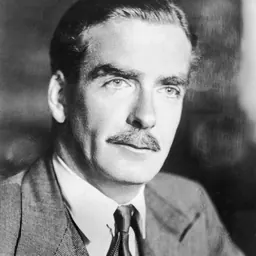

Related people
Same field, nearest in time





Contemporaries
People whose lives overlapped Edward Wood, 1st Earl of Halifax's


Frequently asked questions
Who was Edward Wood, 1st Earl of Halifax?
British politician (1881-1959)
When was Edward Wood, 1st Earl of Halifax born?
Edward Wood, 1st Earl of Halifax was born on 16 April 1881 in Powderham Castle.
When did Edward Wood, 1st Earl of Halifax die?
Edward Wood, 1st Earl of Halifax died on 23 December 1959 in Yorkshire, Garrowby.
What was Edward Wood, 1st Earl of Halifax's occupation?
Edward Wood, 1st Earl of Halifax was a politician and diplomat.
What nationality was Edward Wood, 1st Earl of Halifax?
Edward Wood, 1st Earl of Halifax was British.
Sources & further reading
· Wikipedia: Edward Wood, 1st Earl of Halifax
· DBpedia: Edward Wood, 1st Earl of Halifax
Cite this page
APA: Biography.guide. (2026). Edward Wood, 1st Earl of Halifax. https://biography.guide/edward-wood-1st-earl-of-halifax/
MLA: "Edward Wood, 1st Earl of Halifax." Biography.guide, https://biography.guide/edward-wood-1st-earl-of-halifax/.
Chicago: "Edward Wood, 1st Earl of Halifax." Biography.guide. https://biography.guide/edward-wood-1st-earl-of-halifax/.
Data last updated: 2026-09-20 · Spot an error? Report a correction.
Page generated 2026-09-27 05:29 UTC