
About Edward Trelawny
Lived 1699 – 1754 (aged 54–55). Edward Trelawny was a politician.
Colonel Edward Trelawny ( – 16 January 1754) was a British Army officer, politician and colonial administrator who served as the governor of Jamaica from April 1738 to September 1752. He is best known for his role in signing the treaty which ended the First Maroon War between the colony of Jamaica and the Jamaican Maroons. Trelawny also sat in the British House of Commons from 1724 to 1732, representing the constituencies of West Looe and East Looe.
Early life
Edward Trelawny was born in Trelawne, Pelynt. His father was Sir Jonathan Trelawny, 3rd Baronet, a Church of England bishop who played a major role in the Glorious Revolution. After studying at Westminster School and the University of Oxford, Trelawny entered into a political career, being elected to the British House of Commons in January 1724 after a parliamentary by-election, representing the constituency of West Looe. He was also given the position of commissioner of victualling, and spoke both in favour and against the policies of the Walpole–Townshend and Walpole ministries, claiming that he did not wish to be thought of "as a party man, which I think I am as little as any one, perhaps too little to please any one". Trelawyn wrote to Thomas Robinson on the matter:
The elections, you know, are void of course upon account of my place. If Sir Charles does not get me out before a new election can be made, I can’t receive the benefit of the Looers’ favour so voluntarily bestowed on the mad volunteer: but I have left everything to Sir Charles Wager and whether I am to be senator, commissioner, or neither, I shall be easy under his decision and management.
He stopped serving as commissioner of customs in Edinburgh in 1737, having given up his office as commissioner of victualling in December 1732.
During his tenure as governor, Trelawny, at the rank of colonel, raised Edward Trelawney's Regiment of Foot in 1743 from eight independent companies of the British Army stationed in Jamaica during the War of Jenkins' Ear between Great Britain and Spain. In 1745, Trelawny wrote and published a pamphlet titled An Essay concerning Slavery, in which he expounded his abolitionist sentiments, arguing that slavery in Jamaica should be abolished. The pamphlet immediately proved controversial among the Jamaican slavocracy, who Trelawny felt owned too many slaves and mistreated those they already enslaved. However, Trelawny was aware that the Jamaican economy would collapse without slavery, and so stipulated that he would ultimately be content with merely the slave trade to Jamaica being abolished, which in his view would lead to the eventual abolition of slavery in the colony. He left the office in September 1752, being replaced by Charles Knowles.
Later life and death
While serving as governor, Trelawny married Catherine Penny on 2 February 1752. Penny was the widow of Attorney General of Jamaica Robert Penny, and had inherited from her husband between £30,000 and £40,000 "in Jamaican money". However, shortly after marrying her, Trelawny requested that he be replaced due to having contracted a cardiovascular disease. He subsequently received praise from the Jamaican House of Assembly for conducting a "just administration" and the "many important services" he had made during his tenure as governor. On November 1752, Trelawny returned to England onboard the Royal Navy frigate Assurance. In April 1753, as Assurance was nearing the Isle of Wight, it struck Goose Rock near The Needles and was wrecked, though Trelawny was rescued. He died on 16 January 1754 in London at the age of 55, bequething his properties in Trelawne and Looe to his brother John, as his marriage with Penny produced no children.
Don’t just read it —
keep it.
Full-length biographies made to live with: read them, listen on the way to work, watch them tonight.
- E-book
- Audio
- Video
Instant download · yours to keep · every purchase keeps this site free
Important facts
People in Edward Trelawny's life
Named in this biography and alive at the same time

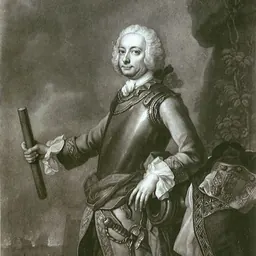


Related people
Same field, nearest in time

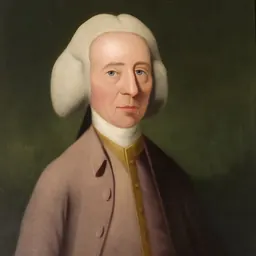

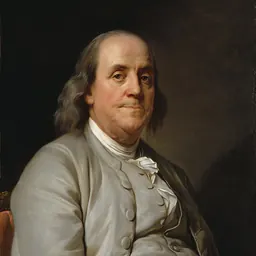
Contemporaries
People whose lives overlapped Edward Trelawny's




Frequently asked questions
Who was Edward Trelawny?
British colonial administrator
When was Edward Trelawny born?
Edward Trelawny was born in 1699 in Trelawny.
When did Edward Trelawny die?
Edward Trelawny died on 16 January 1754 in London.
What was Edward Trelawny's occupation?
Edward Trelawny was a politician.
What nationality was Edward Trelawny?
Edward Trelawny's recorded nationality: British people.
Sources & further reading
· DBpedia: Edward Trelawny (colonial administrator)
Cite this page
APA: Biography.guide. (2026). Edward Trelawny. https://biography.guide/edward-trelawny/
MLA: "Edward Trelawny." Biography.guide, https://biography.guide/edward-trelawny/.
Chicago: "Edward Trelawny." Biography.guide. https://biography.guide/edward-trelawny/.
Data last updated: 2026-09-20 · Spot an error? Report a correction.
Page generated 2026-09-27 05:10 UTC