
About Edward Sagarin
Lived 1913 – 1986 (aged 72). Edward Sagarin was an American novelist, criminologist, sociologist and writer.
Edward Sagarin (September 18, 1913 – June 10, 1986), also known by his pen name Donald Webster Cory, was an American professor of sociology and criminology at the City University of New York, and a writer. His book The Homosexual in America: A Subjective Approach, published in 1951, was considered "one of the most influential works in the history of the gay rights movement", and inspired compassion in others by highlighting the difficulties faced by homosexuals. However, Vern L. Bullough believes the title is undeserved as Sagarin did not actively participate in resistance and did not join any homophile organisations until 1962, a time when he was seeking a topic to analyse in his thesis.
Biography Early life Sagarin was born in Schenectady, New York, to Russian Jewish parents. Sagarin was born with scoliosis, which produced a hump on his back. He attended high school and, after graduating, spent a year in France where he met André Gide. Upon his return to New York, he enrolled at City College of New York, but was forced to drop out of college due to the Great Depression.
The publication of the book was considered a "radical step", as it was the first publication in the United States that discussed homosexual politics and sympathetically presented the plight of homosexuals. Sagarin described how homosexuals were discriminated against in almost all aspects of their lives and called for a repeal of anti-homosexuality laws;
One great gap separates the homosexual minority from all others, and that is its lack of recognition, its lack of respectability in the eyes of the public, and even in the most advanced circles.
A research report by Alfred Kinsey et al., Sexual Behavior in the Human Male (1948), had a beneficial effect on the reception of Sagarin's publication. In 1952, due to the success of The Homosexual in America: A Subjective Approach, Sagarin established a subscription book service called "Cory Book Service", which chose a gay-themed literary work each month.
Sagarin continued using his pseudonym, and released a second publication in 1953 called Twenty-One Variations on a Theme, an anthology of short stories dealing with homosexuality to which included pieces by Sherwood Anderson, Paul Bowles, Christopher Isherwood, Denton Welch, Charles Jackson, and Stefan Zweig.
In 1965 as Cory, he failed in his bid for presidency of the Mattachine Society. The loss of the presidency, and his difference in beliefs from other members of the Society, resulted in a disparity that directly influenced his education. Sagarin entered New York University's PhD program in sociology, graduating in 1966, submitting a dissertation titled "Structure and Ideology in an Association of Deviants", which was a study of the Mattachine Society. He did not, however, reveal his involvement in the society as Cory. His acceptance of the position of assistant professor at Baruch College, a campus of City University of New York, led some to characterise it as the beginning of his rise to "giant in the field of sociological deviance" and the recession of his part in the homophile movement.
1970s In the 1970s, Sagarin pursued an active homosexual life, though he continued to characterise homosexuals as disturbed, and frequently urged them to seek therapy. He rejected the idea that homosexuality was a natural sexual variant, and criticised the new psychological and sociological studies of Evelyn Hooker and John Gagnon. However, he argued that homosexuality should be decriminalized.
The real identity of Sagarin's persona, Donald Webster Cory, remained unknown until a 1974 convention of the American Sociological Association in Montreal. On a panel entitled "Theoretical Perspectives on Homosexuality", Sagarin levelled criticism at the liberationist scholarship, and in response, Laud Humphreys exposed Sagarin by calling him "Mr. Cory". After the convention, Sagarin withdrew from issues concerning homosexuality.
On June 10, 1986, he died of a heart attack. At the time, he was serving as Dean Of The Graduate School Of The John Jay College of Criminal Justice in New York City.
Literary works Edward Sagarin The Science and Art of Perfumery (1945) New York, London: McGraw-Hill Book Company, Inc. The anatomy of dirty words (1962) New York: L. Stuart Nymphomania: a study of the oversexed woman (1964) New York: Gilbert Press (coauthor: Albert Ellis) A pictorial history of the world's great trials, from Socrates to Eichmann (1967) New York: Crown Publishers (coauthor: Brandt Aymar)
People in places; The sociology of the familiar (1973) New York: Praeger Laws and trials that created history (1974) New York: Crown Structure and Ideology in an Association of Deviants (1975) New York: Arno Press Norms and human behavior (1976) New York: Praeger Sex, crime, and the law (1977) New York: Free Press (coauthor: Donal E.J. MacNamara) Deviance and social change (1977) Beverly Hills, California: Sage Publications The Sociology of sex: An introductory reader (1978) New York: Schocken Books (coeditor: James M. Henslin) Taboos in criminology Beverly Hills, California: Sage Publications (1980) Raskolnikov and others: Literary images of crime, punishment, redemption, and atonement (1981) New York: St. Martin's Press Crime and Punishment: An Introduction to Criminology: Allen, Harry E.; Paul C. Friday; Julian B. Roebuck; Edward Sagarin . Free Press, 1981 .
Donald Webster Cory The Homosexual in America: A Subjective Approach (1951) New York: Greenberg. Spanish translation: Mexico City: EDIAPSA, 1952. Twenty-One Variations on a Theme (1953) New York: Greenberg Homosexuality; A cross cultural approach (1956) New York: Julian Press The Homosexual and his Society: A View from Within (1963) New York: Citadel Press (coauthor: John P. Leroy) Violation of taboo; Incest in the great literature of the past and present (1963) New York: Julian Press (coauthor: R.E.L. Masters) The Lesbian in America (1964) New York: Citadel Press
Don’t just read it —
keep it.
Full-length biographies made to live with: read them, listen on the way to work, watch them tonight.
- E-book
- Audio
- Video
Instant download · yours to keep · every purchase keeps this site free
Important facts
People in Edward Sagarin's life
Named in this biography and alive at the same time


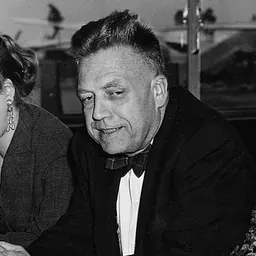


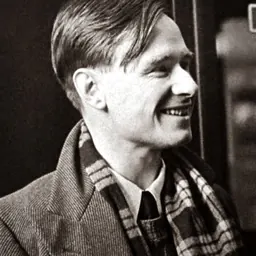
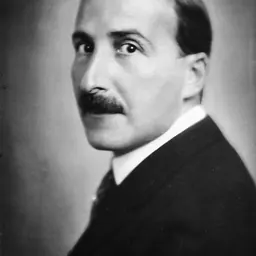
Related people
Same field, nearest in time
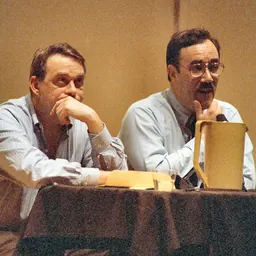
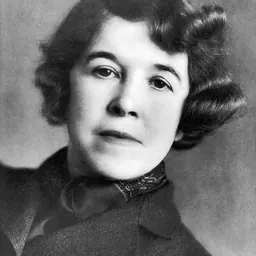
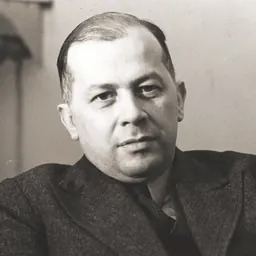


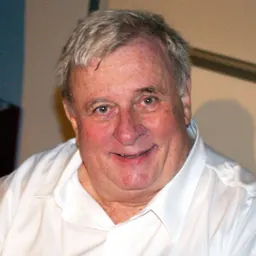
Contemporaries
People whose lives overlapped Edward Sagarin's


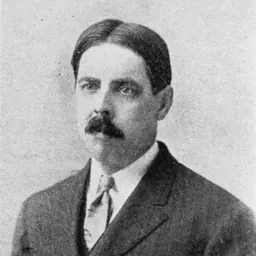

Frequently asked questions
Who was Edward Sagarin?
American writer (1913–1986)
When was Edward Sagarin born?
Edward Sagarin was born on 18 September 1913 in New York City.
When did Edward Sagarin die?
Edward Sagarin died on 10 June 1986 in New York City.
What was Edward Sagarin's occupation?
Edward Sagarin was a novelist, criminologist, sociologist and writer.
What nationality was Edward Sagarin?
Edward Sagarin was American.
Sources & further reading
Cite this page
APA: Biography.guide. (2026). Edward Sagarin. https://biography.guide/edward-sagarin/
MLA: "Edward Sagarin." Biography.guide, https://biography.guide/edward-sagarin/.
Chicago: "Edward Sagarin." Biography.guide. https://biography.guide/edward-sagarin/.
Data last updated: 2026-09-20 · Spot an error? Report a correction.
Page generated 2026-09-27 05:02 UTC