
About Edward Routh
Lived 1831 – 1907 (aged 76). Edward Routh was a British mathematician, known for Derivation of the Routh array, Kirchhoff–Routh function and Romanovski polynomials.
Edward John Routh (; 20 January 18317 June 1907) was an English mathematician, noted as the outstanding coach of students preparing for the Mathematical Tripos examination of the University of Cambridge in its heyday in the middle of the nineteenth century. He also did much to systematise the mathematical theory of mechanics and created several ideas critical to the development of modern control systems theory.
Biography
Early life Routh was born of an English father, Sir Randolph Isham Routh (1782–1858), and a French-Canadian mother, Marie Louise Taschereau (1810–1891), at Quebec City in the British colony of Lower Canada.
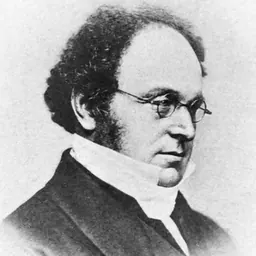
Routh came to England aged eleven and attended University College School and then entered University College, London in 1847, having won a scholarship. There he studied under Augustus De Morgan, whose influence led to Routh to decide on a career in mathematics. In 1854, Routh graduated just above James Clerk Maxwell, as Senior Wrangler, sharing the Smith's Prize with him. Routh was elected fellow of Peterhouse in 1856.
Mathematics tutor On graduation, Routh took up work as a private mathematics tutor in Cambridge and took on the pupils of William John Steele during the latter's fatal illness, though insisting that Steele take the fees. Routh inherited Steele's pupils, going on to establish an unbeaten record as a coach. He coached over 600 pupils between 1855 and 1888, 28 of them making Senior wrangler, as to Hopkins' 17 with 43 of his pupils winning Smith's Prize. On the reformation of the college statutes, removing the celibacy requirement, Routh was the first person elected to an honorary fellowship by Peterhouse.
Work
Mechanics Routh collaborated with Henry Brougham on the Analytical View of Sir Isaac Newton's Principia (1855). He published a textbook, Dynamics of a System of Rigid Bodies (1860, 6th ed. 1897) in which he did much to define and systematise the modern mathematical approach to mechanics. This influenced Felix Klein and Arnold Sommerfeld. In fact, Klein arranged the German translation. Routh also devised a new method for solving problems in mechanics. Although Routh's procedure does not add any new insights, it allows for more systematic and convenient analysis, especially in problems with many degrees of freedom and at least some cyclic coordinates.
Stability and control In addition to his intensive work in teaching and writing, which had a persistent effect on the presentation of mathematical physics, he also contributed original research such as the Routh–Hurwitz theorem.
Central tenets of modern control systems theory relied upon the Routh stability criterion (though nowadays due to modern computers it is not as important), an application of Sturm's theorem to evaluate Cauchy indices through the use of the Euclidean algorithm.
Don’t just read it —
keep it.
Full-length biographies made to live with: read them, listen on the way to work, watch them tonight.
- E-book
- Audio
- Video
Instant download · yours to keep · every purchase keeps this site free
Important facts
more
Routh's theorem, Routhian, Routh–Hurwitz theoremPeople in Edward Routh's life
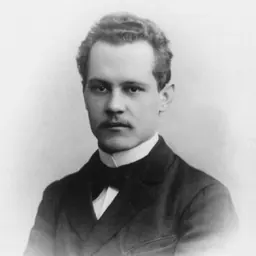
Named in this biography and alive at the same time





Related people
Same field, nearest in time



Contemporaries
People whose lives overlapped Edward Routh's


Frequently asked questions
Who was Edward Routh?
English–Quebecois mathematician (1831–1907)
When was Edward Routh born?
Edward Routh was born on 20 January 1831 in Quebec City.
When did Edward Routh die?
Edward Routh died on 7 June 1907 in Cambridge.
What was Edward Routh's occupation?
Edward Routh was a mathematician.
What was Edward Routh known for?
Edward Routh was known for Derivation of the Routh array, Kirchhoff–Routh function, Romanovski polynomials, Routh stability criterion, Routh's algorithm and Routh's rule.
What nationality was Edward Routh?
Edward Routh was British.
Sources & further reading
Cite this page
APA: Biography.guide. (2026). Edward Routh. https://biography.guide/edward-routh/
MLA: "Edward Routh." Biography.guide, https://biography.guide/edward-routh/.
Chicago: "Edward Routh." Biography.guide. https://biography.guide/edward-routh/.
Data last updated: 2026-09-20 · Spot an error? Report a correction.
Page generated 2026-09-27 05:25 UTC