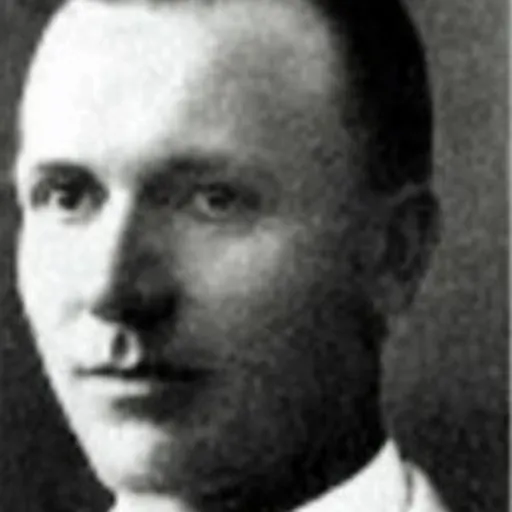
Edward R. Ayrton
English egyptologist and archaeologist
About Edward R. Ayrton
Lived 1882 – 1914 (aged 31). Edward R. Ayrton was a British art historian, archaeologist and egyptologist.
Edward Russell Ayrton (17 December 1882 – 18 May 1914) was an English Egyptologist and archaeologist.
Early life Ayrton was the son of William Scrope Ayrton (1849-1904), a British consular official in China, and his wife Ellen Louisa McClatchie, and was born in Wuhu, China, on 17 December 1882 (coincidentally, the same year as the formation of the Egypt Exploration Fund). His younger sister was the suffragist Phyllis Ayrton (1884-1975).
The Ayrton family originated in Yorkshire. Edward's similarly-named forebear, Edward Ayrton (1698-1774), was mayor of Ripon in 1760, laying the foundations for the family's subsequent prominence. The mayor's son was the leading organist and choirmaster, Dr. Edmund Ayrton (1734-1808) and his son in turn - the mayor's grandson and the great-grandfather of the archeologist - was the theatre-reviewer William Ayrton (1777-1858).
Ayrton was educated at St Paul's School, in London.
Career He began his career in Egyptology at the age of 20, assisting the pioneer of systematic methodology in archaeology William Matthew Flinders Petrie. He joined Petrie on the Egypt Exploration Fund excavations at Abydos (which began in 1899) from 1902 to 1904.
Ayrton's first independent work was the excavation of the Second Dynasty site of Shunet ez Zebib (at Abydos). Later, he worked near Ghurab with William Leonard Stevenson Loat.
In 1904–05, he excavated and recorded graves of several ancient princesses found in the funerary temple complex of king Mentuhotep II at Deir al-Bahari, as part of the expedition led by Édouard Naville and Henry Hall.
Working for Theodore M. Davis in Egypt's Valley of the Kings from 1905 to 1908, he discovered the following tombs:
KV47 (of the pharaoh Siptah, in 1905) KV55 (Amarna Period, interment problematic, in 1907) KV56 (of a royal child, in 1908) and KV57 (of the pharaoh Horemheb, in 1908).
He also led or participated in the excavation of the following tombs:
KV2, KV10, KV46, KV47, KV48, KV49, KV50, KV51, KV52, KV53, KV54, KV56, KV57, KV59, and KV60.
Again working with Loat, in 1908-09 he excavated amongst the Sixth Dynasty tombs at Abydos and also the Predynastic cemetery at El Mahasna.
In 1911, he accepted a position with the Archaeological Survey of Ceylon. On the 18 May 1914 he drowned while on a shooting expedition, in an accident on the Tissa Tank lake, Tissamaharama, in southern Ceylon (now Sri Lanka).
The Times printed his obituary on the 23 May 1914; and his Probate Administration was published in 1915. The Estate of £457 18s 1d was left to his elder sister, Florence Margaret Ayrton.
Don’t just read it —
keep it.
Full-length biographies made to live with: read them, listen on the way to work, watch them tonight.
- E-book
- Audio
- Video
Instant download · yours to keep · every purchase keeps this site free
Important facts
People in Edward R. Ayrton's life
Named in this biography and alive at the same time



Related people
Same field, nearest in time

Contemporaries
People whose lives overlapped Edward R. Ayrton's





Frequently asked questions
Who was Edward R. Ayrton?
English egyptologist and archaeologist (1882–1914)
When was Edward R. Ayrton born?
Edward R. Ayrton was born on 17 December 1882 in Wuhu.
When did Edward R. Ayrton die?
Edward R. Ayrton died on 18 May 1914 in Sri Lanka.
What was Edward R. Ayrton's occupation?
Edward R. Ayrton was an art historian, archaeologist and egyptologist.
What nationality was Edward R. Ayrton?
Edward R. Ayrton was British.
Sources & further reading
Cite this page
APA: Biography.guide. (2026). Edward R. Ayrton. https://biography.guide/edward-r-ayrton/
MLA: "Edward R. Ayrton." Biography.guide, https://biography.guide/edward-r-ayrton/.
Chicago: "Edward R. Ayrton." Biography.guide. https://biography.guide/edward-r-ayrton/.
Data last updated: 2026-09-22 · Spot an error? Report a correction.
Portrait: Wikimedia Commons · author & licence
Page generated 2026-09-27 05:03 UTC