
About Edward Preble
Lived 1761 – 1807 (aged 46). Edward Preble was an American military officer and soldier.
Commodore Edward Preble (August 15, 1761 – August 25, 1807) was an American naval officer who served in the American Revolutionary War and the First Barbary War, leading attacks on Tripoli and forming the officer corps that would go on to command the United States Navy during the War of 1812.
Early life
Edward Preble was born on August 15, 1761 in Falmouth, Massachusetts. He was the son of Jedidiah Preble and his second wife, Mehitable Roberts Preble. In 1775, the American Revolutionary War broke out, and Preble's elder brothers went off to serve in the conflict on the Patriot side. As a result, the responsibility of managing Jedidiah's farming interests fell to Preble, "a job he did not like".
Revolutionary War service
In 1778, Preble joined the privateer Hope as a common sailor after becoming discontented with farming. However, he quickly switched ships to serve on board the West Indiaman Merrimack. In 1780, Preble was appointed as an acting midshipman on board the Massachusetts State Navy frigate Protector "thanks in large part to his father's influence". The frigate spent most of the year cruising off New England and the West Indies; on May 26, 1780, Protector sunk the British merchantman Admiral Duff and captured 55 survivors, who infected Preble and his crewmates with fever. When the frigate reached Boston on August 15, Preble remained on land to recover.
United States Navy service
Fifteen years of merchant service followed his Revolutionary War career and, in April 1798, he was commissioned as a lieutenant in the United States Navy. In January 1799, he assumed command of the 14-gun brig and took her to the West Indies to protect American commerce during the Quasi-War with France. Commissioned as a captain in June 1799, he took command of the 32-gun frigate in December and sailed from Newport, Rhode Island in January 1800 for the Dutch East Indies via the Indian Ocean to convoy home a group of East Indiamen.
On 12 January 1802 he was ordered to take command of USS Adams at New York in a letter from the Navy Secretary. In a letter dated 13 April 1802 Preble asked for a furlough due to a rapid decline in his health since arriving in New York in January. His request was granted in a letter dated 16 April.
During this time, the United States was engaged in naval warfare with the city-state of Tripoli, whose corsairs were causing havoc amongst American merchantmen in the Mediterranean. The U.S. Navy had sent squadrons under two commanders, Richard Dale and Richard Valentine Morris, to protect American interests in the region. While Dale ran an effective blockade of Tripoli, the endless routine bored his officers. Upon his return, Dale left the Navy over a promotion dispute. The tenure of Richard Valentine Morris, on the other hand, was an utter fiasco, as Morris was neither an effective commander nor a very smart one. Morris spent most of his time socializing in Gibraltar and Malta, and he managed to be taken hostage by the Bey of Tunis, who felt that the American did not give him an adequate farewell (the ransom was paid by the American and Danish consuls). When he finally did arrive at Tripoli, he tried to play diplomat and sue for peace, which destabilized the strong negotiating position the Americans had been building up to that point. When Morris returned home, he was stripped of his commission by President Thomas Jefferson without so much as a court-martial. He accepted in a letter dated 19 May, and was given a promotion to commodore along with his new ship. Preble set sail for the Mediterranean on August 14, 1803. After signing a peace treaty with Morocco, Preble established a blockade off Tripoli. Stephen Decatur, William Bainbridge, Charles Stewart, Isaac Hull, Thomas Macdonough, James Lawrence, and David Porter served under his command at Tripoli.
Preble's Mediterranean cruise led directly to the US government's firm anti-negotiation stance. Many Mediterranean states, including Tripoli, had been pirating American shipping vessels, ransoming the sailors, and demanding tribute to prevent future pirate attacks. The tribute rose after each successful payment, as did the brutality and boldness of the attacks.
Preble died in Portland of a gastrointestinal illness on August 25, 1807. He is buried in Eastern Cemetery in Portland, Maine.
Edward Deering Preble (1806–1846), who married Sophia Elizabeth Wattles (1813–1889) in 1833. Preble's widow and son lived in a mansion which stood at the corner of today's Congress Street and Preble Street between 1808 and 1860. It was demolished and replaced firstly by Preble House, then by the Chapman Building in 1924.
Legacy Six ships of the United States Navy named Town of Preble, Cortland County, NY Preble, Wisconsin, a former town in Wisconsin, now part of the city of Green Bay Preble High School in Green Bay, Wisconsin Preble Township, Town of Preble, IN
In popular culture Preble appears as a character in the science fiction novel Time for Patriots, , performing much as he did historically. In the 1926 silent film Old Ironsides, Preble was portrayed by actor Charles Hill Mailes. Preble appears as a character in the James L. Haley historical fiction novel "The Shores of Tripoli". Preble appears In "With Preble at Tripoli : a story of "Old Ironsides" and the Tripolitan war" Pub 1900, Author: James Otis, Publisher: Boston; Chicago : W.A. Wilde Co. Youth Fiction (WorldCat) The Constitution under Preble's command makes a very brief appearance in C. S. Forester's novel Hornblower and the Hotspur.
Don’t just read it —
keep it.
Full-length biographies made to live with: read them, listen on the way to work, watch them tonight.
- E-book
- Audio
- Video
Instant download · yours to keep · every purchase keeps this site free
Important facts
People in Edward Preble's life
Named in this biography and alive at the same time


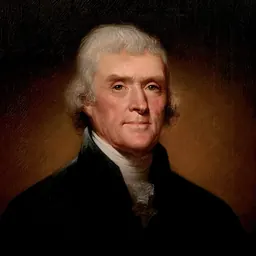


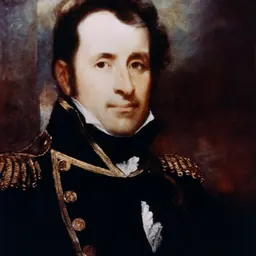
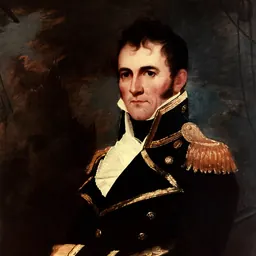

Related people
Same field, nearest in time

Contemporaries
People whose lives overlapped Edward Preble's





Frequently asked questions
Who was Edward Preble?
American commodore (1761-1807)
When was Edward Preble born?
Edward Preble was born on 15 August 1761 in Portland.
When did Edward Preble die?
Edward Preble died on 25 August 1807 in Portland.
What was Edward Preble's occupation?
Edward Preble was a military officer and soldier.
What nationality was Edward Preble?
Edward Preble was American.
Sources & further reading
Cite this page
APA: Biography.guide. (2026). Edward Preble. https://biography.guide/edward-preble/
MLA: "Edward Preble." Biography.guide, https://biography.guide/edward-preble/.
Chicago: "Edward Preble." Biography.guide. https://biography.guide/edward-preble/.
Data last updated: 2026-09-20 · Spot an error? Report a correction.
Page generated 2026-09-27 05:19 UTC