
About Edward Mills Purcell
Lived 1912 – 1997 (aged 84). Edward Mills Purcell was an American physicist, nuclear physicist and university teacher, known for Hydrogen line, Microswimmer and Nuclear magnetic resonance spectroscopy.
Horn antenna used by Harold I. Ewen and Edward M. Purcell in the Lyman Laboratory of Physics at Harvard University in 1951 for the first detection of radio radiation from nuclear atomic hydrogen gas in the Milky Way at a wavelength of 21 cm. Now at National Radio Astronomy Observatory.
Edward Mills Purcell (August 30, 1912 – March 7, 1997) was an American physicist who shared the 1952 Nobel Prize in Physics with Felix Bloch for his independent discovery (published 1946) of nuclear magnetic resonance (NMR) in liquids and in solids. NMR has become widely used to study the molecular structure of pure materials and the composition of mixtures. Friends and colleagues knew him as Ed Purcell.
Biography Edward Mills Purcell was born on August 30, 1912, in Taylorville, Illinois, the son of Edward A. Purcell and Mary Elizabeth Mills. Purcell received his B.S. in Electrical Engineering from Purdue University in 1933, followed by his M.A. (1935) and his Ph.D. (1938) in Physics from Harvard University. He was a member of the Alpha Xi chapter of the Phi Kappa Sigma fraternity while at Purdue.
After spending the years of World War II working at the MIT Radiation Laboratory on the development of microwave radar, Purcell returned to Harvard to do research. In December 1945, he discovered nuclear magnetic resonance (NMR) with his colleagues Robert Pound and Henry Torrey. NMR provides scientists with an elegant and precise way of determining chemical structure and properties of materials, and is widely used in physics and chemistry. It also is the basis of magnetic resonance imaging (MRI), one of the most important medical advances of the 20th century. For his discovery of NMR, Purcell shared the 1952 Nobel Prize in physics with Felix Bloch of Stanford University.
Purcell also made contributions to astronomy as the first to detect radio emissions from neutral galactic hydrogen (the famous 21 cm line due to hyperfine splitting), affording the first views of the spiral arms of the Milky Way. This observation helped launch the field of radio astronomy, and measurements of the 21 cm line are still an important technique in modern astronomy. He has also made seminal contributions to solid state physics, with studies of spin-echo relaxation, nuclear magnetic relaxation, and negative spin temperature (important in the development of the laser). With Norman F. Ramsey, he was the first to question the CP symmetry of particle physics.
In 1963 Purcell was appointed to head up the US government's eponymous Purcell Panel to "consider future reconnaissance operations, with particular emphasis on satellite reconnaissance".
Purcell was the recipient of many awards for his scientific, educational, and civic work. He served as science advisor to Presidents Dwight D. Eisenhower, John F. Kennedy, and Lyndon B. Johnson. He was president of the American Physical Society, and a member of the American Philosophical Society, the National Academy of Sciences, and the American Academy of Arts and Sciences. He was awarded the National Medal of Science in 1979, and the Jansky Lectureship before the National Radio Astronomy Observatory. Purcell was also inducted into his Fraternity's (Phi Kappa Sigma) Hall of Fame as the first Phi Kap ever to receive a Nobel Prize.
Purcell was the author of the innovative introductory text Electricity and Magnetism. The book, a Sputnik-era project funded by an NSF grant, was influential for its use of relativity in the presentation of the subject at this level. The 1965 edition, now freely available due to a condition of the federal grant, was originally published as a volume of the Berkeley Physics Course. The book is also in print as a commercial third edition, as Purcell and Morin. Purcell is also remembered by biologists for his famous lecture "Life at Low Reynolds Number", in which he explained forces and effects dominating in limiting flow regimes (often at the micro scale). He also emphasized the time-reversibility of low Reynolds number flows with a principle referred to as the Scallop theorem.
Purcell died on March 7, 1997, in Cambridge, Massachusetts, aged 84.
Recognition Memberships Year Organization Type 1950 American Academy of Arts and Sciences Member 1951 National Academy of Sciences Member 1954 American Philosophical Society Member 1989 Royal Society Foreign member
Awards Year Organization Award Citation 1952 Royal Swedish Academy of Sciences Nobel Prize in Physics "For their development of new methods for nuclear magnetic precision measurements and discoveries in connection therewith." 1967 AAPT Oersted Medal — 1984 American Physical Society Max Delbruck Prize "For the elucidation of complex biological phenomena, in particular chemotaxis and bacterial locomotion, through simple but penetrating physical theories and brilliant experiments." 1988 American Astronomical Society Beatrice M. Tinsley Prize —
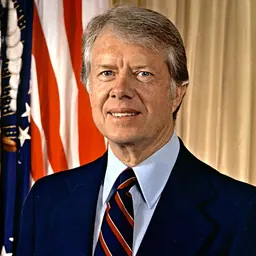
National awards Year Head of state Award Citation 1979 Jimmy Carter National Medal of Science "For contributions to nuclear magnetic resonance in condensed matter and the measurement of interstellar magnetic fields."
Don’t just read it —
keep it.
Full-length biographies made to live with: read them, listen on the way to work, watch them tonight.
- E-book
- Audio
- Video
Instant download · yours to keep · every purchase keeps this site free
Important facts
People in Edward Mills Purcell's life
Named in this biography and alive at the same time




Related people
Same field, nearest in time


Contemporaries
People whose lives overlapped Edward Mills Purcell's





Frequently asked questions
Who was Edward Mills Purcell?
American physicist (1912-1997)
When was Edward Mills Purcell born?
Edward Mills Purcell was born on 30 August 1912 in Taylorville.
When did Edward Mills Purcell die?
Edward Mills Purcell died on 7 March 1997 in Cambridge.
What was Edward Mills Purcell's occupation?
Edward Mills Purcell was a physicist, nuclear physicist and university teacher.
What was Edward Mills Purcell known for?
Edward Mills Purcell was known for Hydrogen line, Microswimmer, Nuclear magnetic resonance spectroscopy, Purcell effect, Scallop theorem and Smith–Purcell effect.
What nationality was Edward Mills Purcell?
Edward Mills Purcell was American.
Sources & further reading
· Wikipedia: Edward Mills Purcell
· DBpedia: Edward Mills Purcell
Cite this page
APA: Biography.guide. (2026). Edward Mills Purcell. https://biography.guide/edward-mills-purcell/
MLA: "Edward Mills Purcell." Biography.guide, https://biography.guide/edward-mills-purcell/.
Chicago: "Edward Mills Purcell." Biography.guide. https://biography.guide/edward-mills-purcell/.
Data last updated: 2026-09-20 · Spot an error? Report a correction.
Page generated 2026-09-27 05:22 UTC