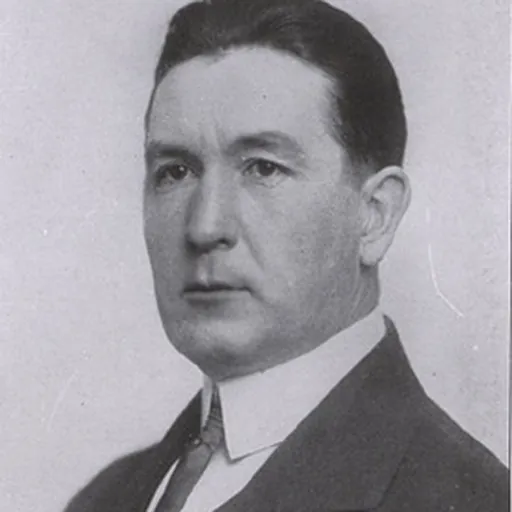
Edward James Stewart
American football, basketball, and baseball player and coach, college athletics administrator
About Edward James Stewart
Lived 1877 – 1929 (aged 52). Edward James Stewart was an American baseball player and basketball coach.
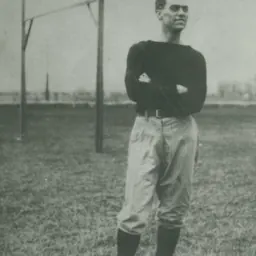
Edward James "Doc" Stewart (January 26, 1877 – November 18, 1929) was an American football, basketball, and baseball player, coach, and college athletics administrator. He was also the founder, and player-coach of the Massillon Tigers professional football team.
Early life Stewart was the son of a Methodist minister and had played football and basketball at Mount Union College, located in Alliance, Ohio. He had attended medical school at Western Reserve University, located in Cleveland, where he played on the football, basketball, baseball, and track teams, graduating in 1903. Stewart was the first athlete to letter in four sports at Case Western Reserve.
Massillon Tigers–Canton Bulldogs rivalry In the early 1900s, Stewart organized a pro football team in Massillon, Ohio called the Massillon Tigers. Ed, a young and ambitious editor of the city newspaper The Evening Independent, was named as the team's first coach. At this time, Massillon was involved in a rivalry with the cross-county, Canton Bulldogs. Both teams spent lavish amounts of money to bring in ringers from out of town. Prior to the 1906 season, a news story in The Plain Dealer alleged that the Bulldogs were financially broke and could not pay its players for that final game. Many Canton followers believed the story had originated in Massillon as a trick to discredit their team and make it tougher for Canton to recruit players for 1906. Since Stewart had newspaper connections, he was believed by Canton to have planted the story.
The Tigers had won every "Ohio League" championship from 1902 to 1906. In 1906, Stewart was promoted from coach to the Tigers' manager. Sherburn Wightman, who was coached by Amos Alonzo Stagg, was named the team's new coach.
Canton Bulldogs–Massillon Tigers betting scandal In 1906, Stewart was a figure in a betting scandal between the two clubs. The Canton Bulldogs–Massillon Tigers betting scandal was the first major scandal in professional football. It was also the first known case of professional gamblers attempting to fix a professional sport. The scandal began with an allegation made by a Massillon newspaper charging the Bulldogs' coach, Blondy Wallace, and Tigers end, Walter East, with conspiring to fix a two-game championship series between the two clubs. When the Tigers won the second and final game of the series and were named pro football's champions, Wallace was accused of throwing the game for Canton.
Stewart charged, through the Massillon Independent, that an actual attempt was made to bribe some of the Tiger players and that Wallace had been involved.
Stewart never stated that either the first or second Canton-Massillon game was fixed. Instead, his accusation was that an attempt had been made to bribe some Massillion players before the first game. According to Stewart, Tiny Maxwell and Bob Shiring of Massillon had been solicited to throw the first game by East. Maxwell and Shiring then reported the offer to Wightman and the scandal ended before it began. East was then released by the Tigers. Only then was Wallace named by Stewart of being East's accomplice.
The scandal was said to have ruined professional football in Ohio until the mid-1910s. However, some others argue that the expense of placing all-star teams on the field each week also put a damper on the sport. The Canton Morning News put a $20,000 price tag on the Massillon Tigers 1906 team, while many speculate that the Bulldogs roster probably cost even more. Still others contend that the games involving top teams such as Canton and Massilon were too one-sided and lacked excitement. Many towns in Ohio still fielded clubs over the next several years, however these new pros consisted more of sandlotters, with only the occasional ringer. A second incarnation of the Bulldogs would be established in 1911 and later won two championships in the National Football League (NFL).
College coaching Mount Union Stewart's first collegiate head coaching position was as the head football coach at Mount Union College. He coached two seasons there. He posted a 9–2 record in 1907. Stewart was also the head coach of the Mount Union men's basketball team for one season. He coached the team for one season posting a record of 18–3 in the 1907–08 season.
Purdue In 1909, Stewart was hired as the head men's basketball coach at Purdue University just days before the season began. He led the team to a record of 8–4, their first winning season in four years.
Oregon State From 1911 to 1916, Stewart was the head coach of the men's basketball team at Oregon State, then known as Oregon Agricultural College. In his five seasons as the head basketball coach at OAC, Stewart posted a record of 67–33.
While at Oregon State, he also coached the Oregon State Beavers baseball team during the 1912 season. He coached the team to a 5–9 record.
Pulling the triple threat for Oregon State, Stewart also coached the Oregon State Beavers football team from 1913 to 1915. In football, he compiled a 15–5–5 record.
Nebraska From 1916 to 1917, Stewart was the head coach of the Nebraska Cornhuskers football team. In his two seasons at the helm, he led the team to the Missouri Valley Intercollegiate Athletic Association title each year and posted an 11–4 record overall.
Clemson In the spring of 1921, Stewart became the head baseball coach at Clemson Agricultural College of South Carolina—now known as Clemson University. That spring was a busy one for Stewart as he also coached the track and field team and ran spring practice for football, all while coaching the baseball team. He coached the baseball team for just the 1921 season and the track program from 1921 to 1923.
In the fall of 1921, Stewart coached his first season of football at Clemson. He remained there for two seasons, the 1921 and 1922 seasons, and compiled a 6–10–2 record. He led the Longhorn football team to an 8–0–1 record during the 1923 season; his following teams finished with records of 5–3–1, 6–2–1, and 5–4.
This decline in his teams' performance resulted in the popular Stewart's controversial dismissal following the 1926–27 season.
Texas Mines Stewart ended his career at the College of Mines and Metallurgy of the University of Texas—now known as the University of Texas at El Paso (UTEP)—where he compiled a 5–6–3 record. He was interred at Lake View Cemetery in Cleveland.
Head coaching record College football
Basketball
Don’t just read it —
keep it.
Full-length biographies made to live with: read them, listen on the way to work, watch them tonight.
- E-book
- Audio
- Video
Instant download · yours to keep · every purchase keeps this site free
Important facts
People in Edward James Stewart's life
Named in this biography and alive at the same time




Related people
Same field, nearest in time


Contemporaries
People whose lives overlapped Edward James Stewart's

Frequently asked questions
Who was Edward James Stewart?
American football, basketball, and baseball player and coach, college athletics administrator (1877-1929)
When was Edward James Stewart born?
Edward James Stewart was born on 26 January 1877 in Cleveland.
When did Edward James Stewart die?
Edward James Stewart died on 18 November 1929 in Kerrville.
What was Edward James Stewart's occupation?
Edward James Stewart was a baseball player and basketball coach.
What nationality was Edward James Stewart?
Edward James Stewart was American.
Sources & further reading
· Wikipedia: Edward James Stewart
Cite this page
APA: Biography.guide. (2026). Edward James Stewart. https://biography.guide/edward-james-stewart/
MLA: "Edward James Stewart." Biography.guide, https://biography.guide/edward-james-stewart/.
Chicago: "Edward James Stewart." Biography.guide. https://biography.guide/edward-james-stewart/.
Data last updated: 2026-09-23 · Spot an error? Report a correction.
Portrait: Wikimedia Commons · author & licence
Page generated 2026-09-27 05:06 UTC