
About Tiny Maxwell
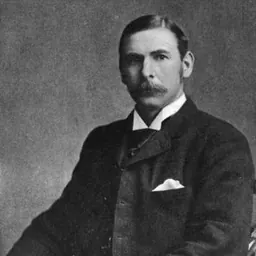
Lived 1884 – 1922 (aged 37). Tiny Maxwell was an American american football player and sports journalist.
Robert Wallace "Tiny" Maxwell (September 7, 1884 – June 30, 1922) was a professional football player and referee. He was also a sports editor with the Philadelphia Public Ledger.
Biography
Early life Maxwell was born in Chicago on September 7, 1884. He is known to have had a sister named Katerine Doust at the time of his death. Maxwell began his athletic career at Englewood High School. There he excelled in football and track and field. He also played the mandolin and was a student actor in the school's Shakespearean plays.
College Before playing professional football, Maxwell played at the college level while attending the University of Chicago. He played for the Maroons in 1902, under coach Amos Alonzo Stagg, who recruited Maxwell for his size and style of play. Maxwell weighed 240 pounds, in an era when the average offensive lineman weighed under 200 pounds. Maxwell's struggle with a speech impediment made his physical presence less intimidating and in fact increased his popularity. He played guard for the Maroons in 1902 and 1903. He also competed for the school as a boxer and in track and field, later set the school's record in the hammer throw. On July 4, 1904, Maxwell set the school's shot put record, when he recorded a 42'9" throw. It was around this time that he was given the nickname "Tiny". According to Amos Stagg, Maxwell was called "Fatty" while attending the University of Chicago. During his two years at Swarthmore, the school's football team went 6–3 in 1904 and 7–1 in 1905, losing only to Penn.
Fact vs. fiction Several writers and scholars have made exhaustive searches for the photo of Maxwell's battered face, but none has ever been found. Though the events surrounding the Roosevelt-Maxwell story supposedly occurred in 1905, the story didn't appear until it was mentioned in the second edition of Frank G. Menke's Encyclopedia of Sports published in 1944, 22 years after Maxwell's death. The 1960s and 1970s update of the Encyclopedia also continued to run the Maxwell-Roosevelt story. The Maxwell Football Club, formed by sportswriters and athletic officials to honor Maxwell, picked up the story and made it more credible. As a result, it became the official account of 1905 and was enshrined in Jack Falla's history of the National Collegiate Athletic Association and is mentioned at the College Football Hall of Fame.
What is absolutely certain is that on October 9, 1905, Teddy Roosevelt held a meeting of football representatives from Harvard, Yale, and Princeton. Though he lectured the group on eliminating and reducing injuries, he never threatened to ban football or mentioned the Maxwell injury. He also lacked the authority to abolish football and was in fact, a fan of the game. The President's sons were playing football at the college and secondary levels at the time.
However E. J. Stewart, the Tigers' coach and the editor of the Massillon Independent, charged that an actual attempt was made to bribe some of the Tiger players and that Wallace had been involved. His accusation was that an attempt had been made to bribe some Massillion players before the first game. According to Stewart, Tiny Maxwell and Bob Shiring of Massillon had been solicited to throw the first game by East. Maxwell and Shiring then reported the offer to the Tigers' manager and the scandal ended before it began. The scandal was said to have ruined professional football in Ohio until the mid-1910s.
Notable officiating experiences During a Yale-Harvard game, Maxwell obstructed a Harvard tackler, preventing him from bringing down a Yale ball carrier. As Yale's players celebrated the resulting big gain, Maxwell told them, "Gentlemen of Yale, I fully expect to be invited to your annual banquet and be awarded my varsity 'Y.' I have j-just turned in the best Yale play of the day." Fearing a holdup, he sped up to go around the car and ran head-on into a truck that was taking a group of Boy Scouts home from a picnic. According to Nan Pollock, one of those in Maxwell's party, Maxwell was pinned beneath the wreckage. He told his friends to "Help the others! I can wait."
Maxwell spent the next few days in a hospital located in Norristown, Pennsylvania, where he was suffering from seven broken ribs, a punctured lung and a dislocated hip. Pneumonia developed, and delirium soon followed. On the night of June 29, Maxwell was visited by his neighbor and close friend, Charles Heeb. Emerging from his delirium he talked of packing his bags and going home. "Take two hours' sleep, and I'll go with you," Heeb told him. Maxwell agreed and he drifted off to sleep where he later died.
In 1937, the Maxwell Football Club was founded in Philadelphia to award trophies in his name and promote football safety. The club also annually awards the Maxwell Award to the best college football player in the nation, as determined by a panel of sportscasters, sportswriters, and NCAA head coaches and the membership of the Maxwell Football Club.
He was elected to the College Football Hall of Fame in 1974.
Don’t just read it —
keep it.
Full-length biographies made to live with: read them, listen on the way to work, watch them tonight.
- E-book
- Audio
- Video
Instant download · yours to keep · every purchase keeps this site free
Important facts
People in Tiny Maxwell's life
Named in this biography and alive at the same time

Related people
Same field, nearest in time



Contemporaries
People whose lives overlapped Tiny Maxwell's

Frequently asked questions
Who was Tiny Maxwell?
American football official (1884-1922)
When was Tiny Maxwell born?
Tiny Maxwell was born on 7 September 1884 in Chicago.
When did Tiny Maxwell die?
Tiny Maxwell died on 30 June 1922 in Norristown.
What was Tiny Maxwell's occupation?
Tiny Maxwell was an american football player and sports journalist.
What nationality was Tiny Maxwell?
Tiny Maxwell was American.
Sources & further reading
Cite this page
APA: Biography.guide. (2026). Tiny Maxwell. https://biography.guide/tiny-maxwell/
MLA: "Tiny Maxwell." Biography.guide, https://biography.guide/tiny-maxwell/.
Chicago: "Tiny Maxwell." Biography.guide. https://biography.guide/tiny-maxwell/.
Data last updated: 2026-09-20 · Spot an error? Report a correction.
Page generated 2026-09-27 05:26 UTC