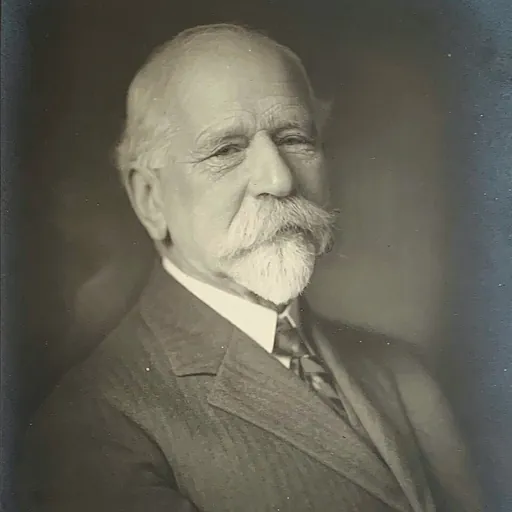
About Eduard Schütt
Lived 1856 – 1933 (aged 76). Eduard Schütt was a Russian pianist, composer and conductor.
Eduard Schütt (; 22 October 1856 – 26 July 1933) was a Russian composer, pianist, and conductor.
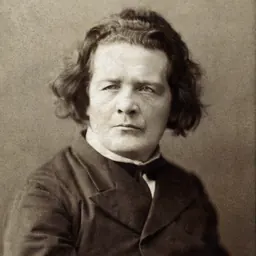
Life Eduard Schütt was born in Saint Petersburg, Russia. His parents were Austrian. His father was a skilled cellist, and the family was acquainted with the pianist Anton Rubinstein. At the age of sixteen, Schütt decided to pursue an artistic career, against the opposition of his father. Rubinstein's influence ultimately convinced Schütt's father to let him pursue his artistic aspirations.
Schütt graduated from the St. Petersburg Conservatory in 1875 with distinction. In 1876, he travelled to Leipzig and studied under Salomon Jadassohn, Ernst Friedrich Richter, and Carl Reinecke. After completing two years of study in Leipzig, he journeyed to Vienna, where he commenced studies with Theodor Leschetizky. Schütt was favored by Leschetizky, and the two remained close lifelong friends. Schütt dedicated his composition Silhouettes-Portraits, Op. 34, to Leschetizky’s assistant Marie Prentner.
During the following few years, Schütt concertized in Hungary, Austria, and Bohemia. Around 1882, he composed and premiered his first piano concerto, Op. 7, in several major European cities. From 26 January 1881 to 20 October 1887, he was conductor of the Wiener akademischer Wagner-Verein (Vienna Academic Wagner Society). In 1887, he declined an invitation from Cosima Wagner to become the music director for the Bayreuth Festival. Thereafter, he devoted himself fully to composition and spent a considerable amount of his time at his villa in Meran, which he called "Mon Repos" ("My Peace" in French). His primary residence, however, remained in Vienna, where he also did a limited amount of teaching. Throughout his life, Schütt composed a wide range of works, primarily for the piano, from miniature piano pieces to piano concertos, trios, and suites. He also composed a comic opera.
Selected works Concertante Piano Concerto No. 1 in G minor, Op. 7 Piano Concerto No. 2 in F minor, Op. 47
Chamber music Piano Quartet in F major, Op. 12 Piano Trio No. 1 in C minor, Op. 27 Suite No. 1 in D minor for violin and piano, Op. 44 Piano Trio No. 2 in E minor, Op. 51 Suite No. 2 in E major for violin and piano, Op. 61 Fantasie in A major for cello and piano, Op. 63 2 Mélodies for cello and piano, Op. 70
Piano Etude mignonne, in D major, Op. 16 No. 1 Valse mignonne, Op. 16 No. 2 3 Intermèdes, Op. 40, including "Cavatine" Carnaval Mignon, Scènes pantomimiques, Op. 48 Papillons d'amour, Op. 59 (of which no. 2, "A la bien-aimée", is his best-known work) Impressions, 5 Pieces, Op. 71 Concert Paraphrases on J. Strauss' Waltz Motives Silhouettes-Portraits, 7 pieces, Op. 34
Don’t just read it —
keep it.
Full-length biographies made to live with: read them, listen on the way to work, watch them tonight.
- E-book
- Audio
- Video
Instant download · yours to keep · every purchase keeps this site free
Important facts
People in Eduard Schütt's life
Named in this biography and alive at the same time




Related people
Same field, nearest in time


Contemporaries
People whose lives overlapped Eduard Schütt's


Frequently asked questions
Who was Eduard Schütt?
Russian pianist and composer
When was Eduard Schütt born?
Eduard Schütt was born on 22 October 1856 in Saint Petersburg.
When did Eduard Schütt die?
Eduard Schütt died on 28 July 1933 in Obermais.
What was Eduard Schütt's occupation?
Eduard Schütt was a pianist, composer and conductor.
What nationality was Eduard Schütt?
Eduard Schütt was Russian.
Sources & further reading
Cite this page
APA: Biography.guide. (2026). Eduard Schütt. https://biography.guide/eduard-schutt/
MLA: "Eduard Schütt." Biography.guide, https://biography.guide/eduard-schutt/.
Chicago: "Eduard Schütt." Biography.guide. https://biography.guide/eduard-schutt/.
Data last updated: 2026-09-21 · Spot an error? Report a correction.
Portrait: Wikimedia Commons · author & licence
Page generated 2026-09-27 04:59 UTC