
About Giuseppe Ferrata
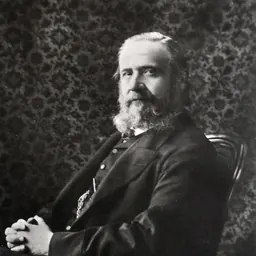
Lived 1865 – 1928 (aged 63). Giuseppe Ferrata was an Italian pianist, musician, composer and music director.
Giuseppe Ferrata (1865–1928) was an Italian-American pianist, composer, and university professor. He was a student of Giovanni Sgambati and Franz Liszt at the Accademia Nazionale di Santa Cecilia (English: National Academy of Saint Cecilia) in Rome, Italy. Ferrata was knighted by the Royal Court of Portugal, the Royal Court of Belgium, and the King of Italy.
Ferrata composed for two different audiences. Some of his works were composed for their popular appeal. Other compositions were intended to advance orchestral music as a musical art form, for audiences that were musicians, other composers, and people with deep appreciation of orchestral music.
Ferrata was also an inventor, having obtained three United States Patents.
Early life and education
Ferrata was born in Gradoli, Italy, to a family of small landowners.
Ferrata played the clarinet. Later in his childhood, he served as assistant conductor for the local municipal band.
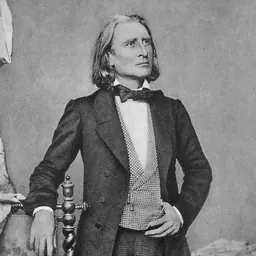
Ferrata initially studied piano with Giovanni Sgambati and musical composition with Antonio Terziani at the Accademia Nazionale di Santa Cecilia and then later while still at the academy with Franz Liszt. Ferrata had auditioned for Liszt who then invited Ferrata to study with him, the studies lasting three years, until nearly the time of Liszt's death (1886).
As a music instructor, Ferrata authored a book of scales and of exercises to improve musical technique.
New Orleans musical culture New Orleans had been a major music center in the United States through the 19th century, with many musicians with European training living and performing there. Even though the musical focus of New Orleans was shifting to Jazz in the early 20th century, significant interest in orchestral music continued in the city for much of the duration of Ferrata's career. He performed publicly in New Orleans from the beginning of his career there for which he gained significant local recognition.
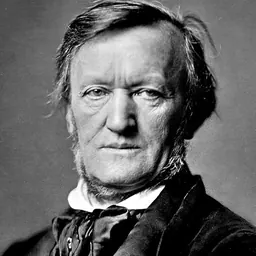
Ferrata became active in the Louisiana Music Teachers Association. At one meeting of the association in 1911, Ferrata described the melodic qualities of composer Richard Wagner, during which he articulated three essential qualities of a composer. These are: Knowledge of what has been composed before the point of departure, Intellect, and Sense of esthetic beauty. He further contended that all three qualities are seldom embodied to a high degree in a single individual.
Inventions
Ferrata was awarded three United States Patents. One of these was for his invention of a piano attachment which enables the piano to bow a string like a violin and producing a sound like a violin. The United States Patent and Trademark Office published the patents with the inventor's name as "Chevalier Giuseppe Ferrata" in apparent recognition of his knighthood, which he had already earned.
Ferrata also invented a type of ventilated shoe heel that provided extra comfort and a novel type of pipe for smoking tobacco. Whether any of Ferrata's inventions were manufactured commercially is uncertain. All of Ferrata's patent applications occurred while he was a faculty member at the Greenville Female College.
Compositions
Ferrata's compositions covered a range of musical genres, from light songs, to solo piano works, masses, string quartets, and operas, with about 300 works in total. He composed approximately 70 musical works for piano or violin, operas, and a symphonic poem. Ferrata's family often traveled with him to Italy for his trips to promote his musical compositions. During World War I, prior to involvement of the United States in the conflict, Ferrata returned to the United States in mid-1914, prior to his family due to responsibilities to the university. The changing global politics resulted in his family being unable to return to the United States, and the family was separated for more than a year during the uncertain political situation.
Ferrata's supporters Henry E. Huntington (seated) with Baron Randolph NatiliDuring his career, Ferrata had other patrons besides Cardinal Ferrata. These included Baron Randolph Natili of Louisiana, a well-connected, art dealer whom Ferrata first met during a stop in Louisiana for his marriage honeymoon. Natili's first cousin was Ernest Lagarde and he was a member of the Dimitry Family. Natili's mother was Mathilde Elizabeth Theophanie Dimitry daughter of Marianne Celeste Dragon and his father was Italian-born Doctor Auguste Natili. Randolph was Creole and the progeny of an interracial couple with powerful connections in Louisiana and within the Huntington railroad magnet family. Randolph was close to Ferrata and tried to secure funding to help his cousin Alice's husband.
Ferrata's first performances in Louisiana were during this visit, in Baton Rouge and in New Orleans.
Ferrata became a citizen of the United States on June 13, 1916, through a Certificate of Naturalization. This is in conflict with the statements in Ferrata's patents issued years before that he was already a citizen of the United States.
Ferrata died on March 28, 1928, of a lung disease. He is buried at St. Louis Cemetery No. 3, one of the Historic Cemeteries of New Orleans.
Honors and legacy Ferrata was awarded knighthood at age 20 by the Royal Court of Portugal and later by the Royal Court of Belgium.
Portrait artist Maurice Fromkes painted a portrait of Ferrata in 1915, which is maintained by Tulane University. Former students created the "Circolo Ferrata", an organization formed after his death to promote his works.
Ferrata was the subject of a doctoral dissertation by music historian Edward Eanes. The dissertation was subsequently published as a book, Giuseppe Ferrata: Émigré Pianist and Composer .
Don’t just read it —
keep it.
Full-length biographies made to live with: read them, listen on the way to work, watch them tonight.
- E-book
- Audio
- Video
Instant download · yours to keep · every purchase keeps this site free
Important facts
more
Joseph Ferrata, Chevalier Giuseppe Ferrata, G. F. Alice LagardePeople in Giuseppe Ferrata's life
Named in this biography and alive at the same time
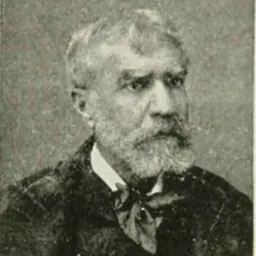
Related people
Same field, nearest in time


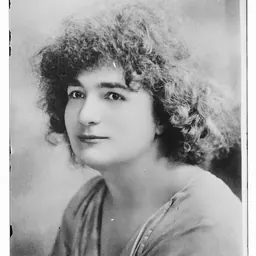

Contemporaries
People whose lives overlapped Giuseppe Ferrata's



Frequently asked questions
Who was Giuseppe Ferrata?
Italian pianist and composer, active in the USA
When was Giuseppe Ferrata born?
Giuseppe Ferrata was born on 1 January 1865 in Gradoli.
When did Giuseppe Ferrata die?
Giuseppe Ferrata died on 28 March 1928 in New Orleans.
What was Giuseppe Ferrata's occupation?
Giuseppe Ferrata was a pianist, musician, composer and music director.
What nationality was Giuseppe Ferrata?
Giuseppe Ferrata was Italian.
Sources & further reading
Cite this page
APA: Biography.guide. (2026). Giuseppe Ferrata. https://biography.guide/giuseppe-ferrata/
MLA: "Giuseppe Ferrata." Biography.guide, https://biography.guide/giuseppe-ferrata/.
Chicago: "Giuseppe Ferrata." Biography.guide. https://biography.guide/giuseppe-ferrata/.
Data last updated: 2026-09-20 · Spot an error? Report a correction.
Page generated 2026-09-27 05:25 UTC