
About Edmund Stone
Lived 1700 – 1768. Edmund Stone was a mathematician and translator.
Edmund Stone ( 1690 – March or April 1768) was an autodidact Scottish mathematician who lived in London and primarily worked as an editor of mathematical and scientific texts and translator from French and Latin into English. He is especially known for his translations of Nicholas Bion's Mathematical Instruments (1723, 1758) and the Marquis de l'Hospital's, and for his New Mathematical Dictionary (1726, 1743). Stone was celebrated for having risen from uneducated gardener's son to accomplished scholar.
Biography The date and place of Edmund Stone's birth are unknown, as are the names of his parents, but he was probably born in Argyllshire, Scotland, at least a few years before 1700. What little is known about his early life comes from a letter by Andrew Michael Ramsay to Louis-Bertrand Castel, excerpted by the . (See below for the letter and a translation.) According to this letter, Stone was the son of the gardener of John Campbell, 2nd Duke of Argyll. He never attended any formal school, but after being taught by a servant to read at age 18, he taught himself arithmetic, geometry, Latin, and French. As the story goes, the Duke found a copy of Isaac Newton's in the grass in his garden, and was astonished to find it belonged to the 28-year-old Stone, and that he understood Latin and advanced mathematics. However, Stone's description of himself having studied mathematical instruments from the age of twelve seems inconsistent with this story. The Duke became his patron.
With the Duke's support, Stone moved to London c. 1720, where he likely worked as a mathematics tutor. (In the advertisement to the supplement to the 2nd edition of Mathematical Instruments (1758, ), Stone claimed he had originally translated the book in the 1720s "with Reluctance, and at the Desire of Friends"; In 1725 he was elected a Fellow of the Royal Society, and from 1725 until at least 1736 he was a member of the Board of Green Cloth.) His New Mathematical Dictionary appeared in 1726, a cheaper alternative to John Harris's Lexicon Technicum. He also translated Euclid's Elements (1728); l'Hospital's differential calculus book , to which he adjoined a second part about integral calculus, as The Method of Fluxions (1730); and Isaac Barrow's Geometrical Lectures (1735).
In 1742, Stone resigned as a Fellow of the Royal Society, perhaps for inability to pay the small annual membership fee. In October 1743 Stone's patron the Duke of Argyll died. Little is known about Stone's life afterward, though he made another translation of Euclid's Elements in 1752, and he published a second edition of Bion's Mathematical Instruments in 1758, with a long appendix covering advancements of the intervening years. In a 1760 review in The Critical Review, Tobias Smollett wrote of Stone's situation, "His abilities are universally acknowledged, his reputation unblemished, his services to the public uncontested, and yet he lives to an advanced age unrewarded, except by a mean employment that reflects dishonour on the donor". In 1766 Stone published a contrarian polemic contesting the scientific validity of the spherical shape of the Earth and suggesting contemporary evidence was insufficient to discount the possibility Earth is an irregular roundish polyhedron; biographers have suggested this book was the product of cognitive decline. Stone died in March or April 1768.
Works The English sector vs. the French , from Mathematical Instruments (1723); engraving by John Senex
1720, An Analytick Treatise of Conick Sections, a translation of the Marquis de l'Hospital's posthumous (1707). 1721, The Description, Nature and General Use, of the Sector and Plain-scale. Anonymous, but the preface is signed E.S., and it was later credited to Stone. 2nd edition 1728. 4th edition 1746. 1721, Clavius's Commentary on the Sphericks of Theodosius Tripolitae: or, Spherical Elements, translated from Christopher Clavius's (1586), a Latin translation of Theodosius of Bithynia's Spherics. 1723, The Construction and Principal Uses of Mathematical Instruments, a translation of Nicolas Bion's (Revised ed. 1723) [1st ed. 1709], expanded with a description of English variants of the French instruments described by Bion, illustrated by the publisher John Senex's handsome engravings. Stone published a 2nd edition in 1758, including "A Supplement: Containing a further Account of some of the most useful Mathematical Instruments as now improved." (pp. 265–325). 1723, Mathesis Enucleata: or, The Elements of the Mathematicks. 2nd ed. of a translation of Johann Sturm's (2nd ed. 1695). The 1st English ed. (1700) was translated by J. R. A. M. & R. S. S. 1724, An Essay on Perspective translated from Willem 's Gravesande's (1711). 1726, A New Mathematical Dictionary. 2nd ed. 1743. This dictionary was at least partly compiled from uncredited previous sources such as Joseph Moxon's Mathematicks made Easie (3rd ed. 1701, revised by James Moxon & Thomas Tuttle). 1728, The Elements of Physical and Geometrical Astronomy, 2nd English ed., translated from David Gregory's (2nd ed. 1726, Vol. 1 & Vol 2). The 1st English ed. (1715) was translated by Gregory from his 1st Latin ed. (1702). 1728, Euclid's Elements of Geometry, Briefly, yet Plainly Demonstrated, a translation of Isaac Barrow's (1659), a Latin translation of Euclid's Elements. 1729, A New Treatise of the Construction and Use of the Sector, a posthumous work by Samuel Cunn revised by Stone for publication. 1730, The Method of Fluxions, both Direct and Inverse, the first part translated from l'Hospital's differential calculus book (2nd ed., 1715) [1st ed. 1696], and the second part on integral calculus written by Stone. Stone's part was translated into French by Rondet as (1735). 1731, Euclid's Elements, Vol. II. Containing the seventh, eighth, ninth, tenth, thirteenth, and fifteenth Books, with the Data. Translated from David Gregory's (1703). Published by Thomas Woodward as a sequel to John Keill's Euclid's Elements of Geometry (Revised ed. 1723), translated from Federico Commandino's Latin edition, containing books 1–6 and 11–12. 1735, Geometrical Lectures, translated from Isaac Barrow's (1674). 1743, The Theory of the Working of Ships, Applied to Practice, translation of Henri Pitot's (1731). 1752, Euclid's Elements of Geometry, The First Six, the Eleventh and Twelfth Books, a translation of the parts of Elements in Gregory's Euclid not previously translated by Stone in 1731. 2nd edition 1765. 1766, Some Reflections on the Uncertainty of Many Astronomical and Geographical Positions
Don’t just read it —
keep it.
Full-length biographies made to live with: read them, listen on the way to work, watch them tonight.
- E-book
- Audio
- Video
Instant download · yours to keep · every purchase keeps this site free
Important facts
People in Edmund Stone's life
Named in this biography and alive at the same time
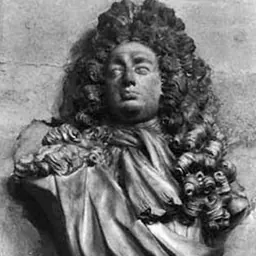

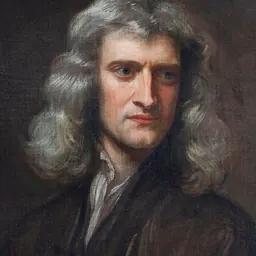
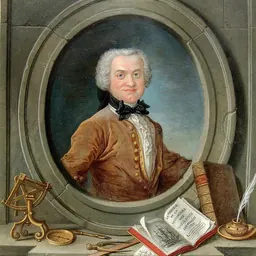

Related people
Same field, nearest in time




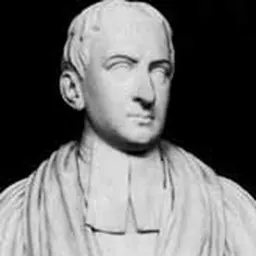
Contemporaries
People whose lives overlapped Edmund Stone's



Frequently asked questions
Who was Edmund Stone?
Scottish mathematician
When was Edmund Stone born?
Edmund Stone was born in 1700 in Scotland.
When did Edmund Stone die?
Edmund Stone died in 1768.
What was Edmund Stone's occupation?
Edmund Stone was a mathematician and translator.
Sources & further reading
Cite this page
APA: Biography.guide. (2026). Edmund Stone. https://biography.guide/edmund-stone/
MLA: "Edmund Stone." Biography.guide, https://biography.guide/edmund-stone/.
Chicago: "Edmund Stone." Biography.guide. https://biography.guide/edmund-stone/.
Data last updated: 2026-09-20 · Spot an error? Report a correction.
Page generated 2026-09-27 05:18 UTC